Fake Trump Bitcoin Giveaway Streams Are Everywhere – One Super Bowl Deepfake Fooled 200,000 in Real Time
200,000 watched a fake Trump crypto giveaway stream, highlighting risks of deepfakes, urgency tactics, and crypto scams

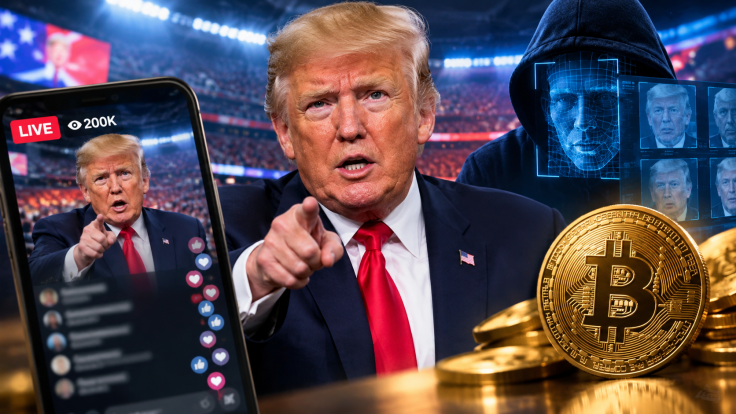
A fake Donald Trump appeared to speak to thousands of viewers during the Super Bowl, promising to double their cryptocurrency if they sent funds to a wallet address. One such livestream was reportedly watched by about 200,000 concurrent viewers.
The video was not an official Trump broadcast. It was part of a growing form of cryptocurrency fraud that uses artificial intelligence to imitate public figures and create the appearance of a genuine live event. The scam combines a recognisable face, a convincing voice, and a promise of quick money.
The Super Bowl Deepfake
Super Bowl LX took place on 8 February 2026. Around the event, reports emerged of a fake Trump livestream promoting a cryptocurrency giveaway and directing viewers to the website trump2026.org. The promotion reportedly told viewers that sending cryptocurrency would qualify them to receive twice the amount back.
The reported audience made the incident particularly striking. However, the 200,000 figure comes from secondary reports rather than an independently published figure from the NFL or FBI, so it should be treated as an audience estimate rather than a verified official count.
The incident also illustrates why major live events can be attractive to scammers. Millions of people may already be watching, while breaking news and social media activity can create pressure to react before checking whether a broadcast is genuine.
How the Crypto Scam Works
The method is straightforward. A scammer creates or distributes a video showing a public figure appearing to make an announcement. AI can be used to generate or manipulate the person's face and voice, although scammers can also combine existing footage with altered audio or other editing techniques.
The video then promotes a cryptocurrency giveaway. Viewers may be told to send Bitcoin or Ethereum to a wallet and receive twice as much in return. A QR code or wallet address is often displayed on screen.
Urgency is another important element. The offer may be presented as lasting only for the livestream or limited to a certain number of participants. That pressure can discourage viewers from stopping to verify the claim.
Why AI Makes the Scam Harder to Spot
The FBI has warned that criminals are using generative artificial intelligence to make fraud more convincing. Its 2025 Internet Crime Report recorded 22,364 complaints containing an AI-related element, with reported losses of nearly $893 million. The FBI also recorded more than $11 billion in cryptocurrency-related losses in 2025.
The agency has separately warned about criminals using AI-generated videos and manipulated audio to impersonate public figures and other trusted people.
The problem is not simply that deepfakes can look realistic. Scammers can combine manipulated media with familiar platforms, large audiences, and fabricated comments to make a fraudulent promotion appear legitimate. A viewer who sees thousands of people watching may assume the claim has already been checked.
The Red Flags to Watch
The clearest warning sign is a promise to double cryptocurrency. A request to send Bitcoin or another cryptocurrency to a wallet in exchange for a guaranteed larger payment should be treated as a major fraud warning.
Other warning signs include QR codes directing viewers to unfamiliar websites, sudden changes to a channel's name or branding, and comments that appear overwhelmingly supportive.
Viewers should also be cautious when an alleged official broadcast appears only on an unfamiliar social media account. The FBI has warned that criminals can compromise legitimate or verified accounts and use them to promote cryptocurrency scams.
What to Do if You See One
Do not send cryptocurrency, scan the QR code or connect a cryptocurrency wallet to an unfamiliar website. Instead, save screenshots of the stream, channel name, website, and wallet address. Check the public figure's verified accounts and official government websites for confirmation. If the stream appears fraudulent, report it to the platform.
Anyone who has already sent cryptocurrency should preserve transaction details and report the incident to the FBI's Internet Crime Complaint Center. The FBI also advises victims to contact the cryptocurrency exchange or service involved.
Victims should also be wary of anyone who later promises to recover their cryptocurrency for an upfront fee. Recovery scams can target people who have already suffered financial losses.
A Bigger Problem Than One Fake Stream
The Trump Super Bowl deepfake is part of a broader change in online fraud. TRM Labs' 2026 AI-in-Crime Adoption Index found that AI use in scams has increased sharply since 2022, with the company reporting that the share of scam reports involving AI had grown roughly 13 times over that period. The technology gives scammers another way to exploit something fraud has always depended on: trust.
A familiar face can create that trust. A live broadcast can make the message feel immediate. A promise of easy money can encourage people to act before verifying the claim. The warning is simple: if a video featuring a famous person asks you to send cryptocurrency first and promises to send more back, stop before you pay.
© Copyright IBTimes 2026. All rights reserved.
- Recommended For You