

Donald Trump Faces Health Scrutiny as Doctors Warn Rapid Weight Gain Is a 'Strong Risk Factor' for Body
White House spokesman Davis Ingle described Donald Trump as 'the sharpest, most accessible, and most energetic president in American history'
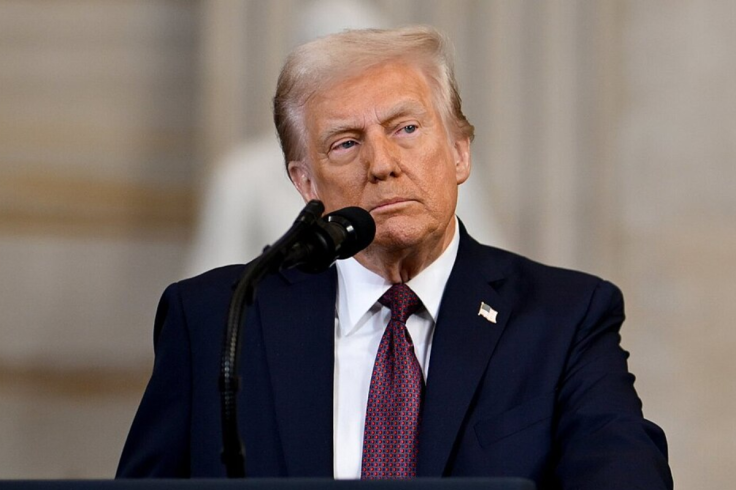
President Donald Trump is facing renewed health scrutiny after White House physicians advised him to eat healthier and exercise more, with at least one outside physician saying obesity generally is a 'strong risk factor' for serious illness.
The 80-year-old president weighs 238 pounds. At 6 feet 3 inches, his reported body mass index is 29.7, just below the BMI threshold of 30 used to classify obesity, according to official medical records released in May 2026.
Trump's Weight Gain Draws Medical Scrutiny
The president weighed 224 pounds during his April 2025 physical examination, indicating he has gained 14 pounds since then. His August 2023 booking record in Georgia listed his weight as 215 pounds, although the source of that figure is unclear.
His May 2026 medical report listed him at 238 pounds. At 6 feet 3 inches tall, his reported BMI is 29.7, below the 30 threshold used to classify obesity.
Dr Scott Kahan, director of the National Centre for Weight and Wellness, told reporters that obesity is a strong risk factor for numerous health problems, as well as premature disability and death. He added that protecting the president's health through weight management 'should be a priority similar to ensuring Secret Service protections for his life.'
Kahan was making a general statement about obesity and its health risks; his comment does not amount to a diagnosis of Trump, whose reported BMI remains below the clinical obesity threshold.
Obesity is associated with an increased risk of conditions including type 2 diabetes, high blood pressure, cardiovascular disease, stroke, sleep apnoea, some cancers and osteoarthritis.
David Kessler, a former FDA commissioner, said excess visceral fat around organs such as the liver and pancreas can contribute to health problems, including insulin resistance and abnormal cholesterol levels.
He was speaking generally about the risks associated with excess body fat, rather than providing a diagnosis of Trump.
Trump has continued to defend his eating habits. During a May 11 Oval Office event, he said, 'Maybe junk food is good and the other food is no good,' and added, 'I feel great.' His comments came after the White House said his doctors had advised him on diet, physical activity and continued weight loss.
Doctor Raises Questions About Trump's Sleepiness and Visible Health Changes
Separately, cardiologist Dr Jonathan Reiner, who once treated former vice-president Dick Cheney, has raised concerns about Trump's apparent daytime sleepiness. Speaking in a television interview, Reiner said, 'We've never seen a president of the United States fall asleep in the Oval Office, as other people are talking to him.'
Reiner described episodes in the Cabinet Room and other meetings where the president appeared to struggle to stay awake while surrounded by officials. 'That really is the most extraordinary thing,' he said, noting Trump has long been known as a night owl but that this pattern of daytime somnolence appeared new.
Reiner said severe sleep apnoea was among the possible explanations for pronounced daytime sleepiness, while acknowledging that the cause had not been established.
Reiner also pointed to bruising on Trump's hands and swelling in his lower legs, which he said warranted further explanation. He questioned the White House's explanation of Trump's leg swelling as chronic venous insufficiency, pointing to what he said was an earlier examination that showed no swelling.
The White House's July 2025 report, however, documented mild lower-leg swelling and noted that vascular testing had identified chronic venous insufficiency; the more recent report said the swelling had improved compared with the previous year.
White House Says Trump Remains in Excellent Health
In a May 29 report, physician to the president Capt Sean Barbabella said Trump remained in 'excellent health,' citing strong cardiac, pulmonary, neurological and overall physical function.
The report said Trump scored 30 out of 30 on the Montreal Cognitive Assessment and had received guidance on diet, activity and continued weight loss.
After the May examination, Trump said on Truth Social that 'everything checked out perfectly.' In July, he said he had requested another cognitive test and had 'aced' the tests he referred to, although the White House said his post referred to the earlier May examination rather than a new one.
The same May report that described Trump as being in excellent health also documented bruising and mild lower-leg swelling, while earlier records documented chronic venous insufficiency.
White House spokesman Davis Ingle dismissed outside speculation about Trump's health, saying, 'If it quacks like a duck, it may actually just be a democrat hack doctor,' and describing Trump as 'the sharpest, most accessible, and most energetic president in American history.'
His remarks are a political and communications response and should not be read as medical evidence about Trump's condition.
What the Record Does and Doesn't Show
The White House says Trump remains in excellent health, while outside physicians, including Jonathan Reiner, have raised questions about his apparent daytime sleepiness, bruising and lower-leg swelling.
No publicly available medical evidence has established a specific condition as the cause of Trump's reported daytime sleepiness. Reiner's comments reflect his interpretation of publicly available information and should not be treated as a diagnosis.
© Copyright IBTimes 2026. All rights reserved.