

UFO Nuclear Test Link Reportedly Debunked by Experts Warning Believers Not To Act Like 'Religion'
Astronomers have torn apart UFO claims linking 1950s 'orbiting objects' to nuclear tests, warning that believers must accept scientific scrutiny or risk turning the subject into a kind of religion
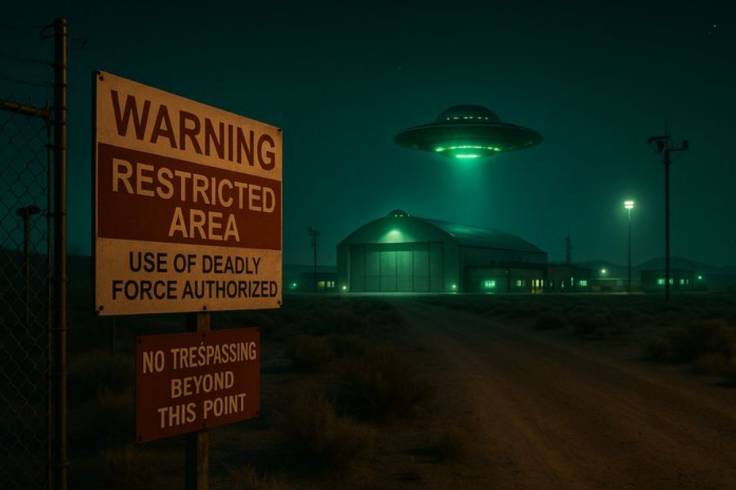
International astronomers have published a devastating critique dismantling high-profile 2025 UFO claims that mysterious objects orbited Earth decades before the launch of Sputnik.
Led by researchers from Wellesley College and the University at Albany, the peer-reviewed study, accepted for publication in the Publications of the Astronomical Society of Australia, argues that previous assertions linking photographic 'transients' to US nuclear weapons tests relied on faulty mathematics and severely compromised archival data.
The original research, conducted under the Vanishing and Appearing Sources during a Century of Observations project, suggested that anomalous light flashes captured by California's Palomar Observatory represented non-human technology drawn to atomic detonations.
However, the latest scientific evaluation exposes deep methodological flaws, proving that glass plate defects, dust scratches, and incorrect observational timescales generated an illusory statistical signal.
As academic backlash mounts against unrefereed counterclaims, the rigorous study revives fierce debates over whether fringe UFO proponents truly welcome scientific stress-testing or prefer shielding speculative hypotheses from empirical reality.
Anatomy of the Original VASCO UFO Claims
The new critique focuses on alleged 'technosignatures' seen on photographic plates decades before the space age. The controversy began when astronomer Dr Beatriz Villarroel and collaborators reported evidence of objects apparently orbiting Earth years before any human‑made satellite was launched.
Working under the VASCO project, they said old photographic surveys from the Palomar Observatory in California showed fleeting 'transients' that could be sunlight glinting off non‑human technology.
A companion paper, co‑authored with Vanderbilt University anaesthesiologist Stephen Bruehl, went further, claiming a statistical correlation between the dates of those transients and US nuclear weapons tests in the 1950s.
If that had stood up, it would have been dynamite. Mysterious objects in pre‑Sputnik orbit, apparently clustering around nuclear detonations, look like the script treatment for Oppenheimer 2.
It also offered believers what they have long craved, a peer‑reviewed breadcrumb trail pointing towards UFOs as alien surveillance craft drawn to humanity's most dangerous toys.
How the Vasco UFO Claims Took Off
The VASCO project, short for Vanishing and Appearing Sources during a Century of Observations, is built on a smart, almost old‑school idea. Villarroel's team uses archival photographic plates, taken long before the sky was crowded with satellites and space junk, to hunt for technosignatures, signs of advanced technology that might briefly flare and then vanish.
The studies at the heart of the current argument used early 1950s images from the Palomar Observatory Sky Survey, known as POSS‑I. Each region of sky was photographed twice in quick succession, once with a red‑sensitive plate and once with a blue‑sensitive one.
VASCO's software scanned the digitised plates looking for things that appeared in one exposure but not the other. Those were labelled transients and, in the more speculative framing, possible UFO‑like artefacts in orbit.
The most attention‑grabbing claim was statistical. Villarroel's team said there were far fewer transients recorded on plates taken during Earth's shadow, when sunlight could not reflect off orbiting objects.

They calculated that deficit as a '22 sigma' result. In particle physics, 5 sigma is the gold standard for a discovery. Twenty‑two is almost absurdly strong, the sort of number that suggests either profound new physics or that something, somewhere, has gone mad in the spreadsheets.
In a second paper, Bruehl and Villarroel said that the dates of these transients significantly overlapped with the timing of nuclear tests. The implication, not exactly buried in the framing, was that whoever might be flying those hypothetical craft was paying close attention to mushroom clouds.
Rigorous Scientific Pushback Led by Wesley Watters
The pushback has now arrived in the form of a detailed critique led by Wesley Watters of Wellesley College. His paper, titled 'Critical Evaluation of Studies Alleging Evidence for Technosignatures in the POSS1 – E Photographic Plates,' was accepted by the Australian astronomy journal after peer review and posted online ahead of print.
What makes this more awkward for UFO enthusiasts is who is doing the debunking. Watters has previously argued that unidentified aerial phenomena deserve serious, agnostic study.
Co‑author Kevin Knuth, a physicist at the University at Albany, SUNY, has published work examining US Navy pilot UAP encounters. Both have been affiliated with Avi Loeb's Galileo Project, which is explicitly set up to examine UAPs scientifically, not to scoff at them.
In other words, this is not a hit job from dyed‑in‑the‑wool sceptics. It is criticism from scientists who, if anything, have stuck their necks out to say UFO reports should not be laughed out of the room.
Watters and his colleagues start with a mundane but brutal problem, the plates themselves. Old photographic glass is riddled with defects, from dust and scratches to emulsion flaws and copying artefacts.
Astronomers spent years trying to use similar plates to catch fleeting optical signals from gamma‑ray bursts, only to conclude the medium just was not up to that kind of work at scale.
Because of that, Watters refuses to call the POSS‑I blips 'transients' at all. His team rebrands them 'Selected POSS 1‑E Features,' or SPFs, until someone can prove they are real astronomical objects.
Then they try to reconstruct, plate by plate, what subset of the survey VASCO actually used, a task made harder because Villarroel's team did not publish their full working dataset.
Once they do that, a pattern emerges, and not a good one. SPFs cluster at plate edges, disappear in wide stripes, and bunch oddly in certain regions. The sky map is a mess. For a robust statistical analysis, you need an underlying distribution that is roughly uniform and random, something that can be modelled as a Poisson process.
Watters argues that the VASCO features fail that basic test, which means the more sophisticated maths layered on top is on wobbly ground from the start.
Collapsing the Statistical Mirage and Timescale Errors
When the Australian‑led group re‑ran the crucial Earth‑shadow calculation with their reconstructed dataset, the jaw‑dropping 22 sigma result vanished. They found no statistically significant deficit of features in Earth's shadow.
On closer inspection, only 11 of the 645 plates VASCO used were even in shadow, and just five were fully so. Most of the supposed signal came from a single problematic plate that sat in one of the odd 'bands' where defects were already clustering.
Watters' team points out that VASCO's correlation used the wrong observing timescale, treating the survey as if it spanned 2,718 observing days instead of the actual 312 days from which their plates were drawn. Correct that, and the apparent UFO‑nuclear overlap collapses into something more prosaic.
A loose relationship between the periods when the Palomar telescope was operating and when nuclear tests were conducted, perhaps because both favoured clear weather over the western US. As for aliens timing their fly‑bys to our detonations, that statistical mirage evaporates.
Philosophical Friction Between UFO Belief and Scientific Process
The final part of Watters' critique is almost philosophical. He accuses the VASCO papers of circular reasoning, treating the features as genuine transients from the outset and then using that assumption to argue they must be real technosignatures. Without independent confirmation that most of these specks are not just plate defects, the logic folds in on itself.
None of this means the VASCO concept is useless. On the contrary, trawling clean, digitised archives for technosignatures is a sharp, modern twist on classic astronomy. The problem, according to Watters, is that this particular dataset is simply too dirty and too sparse in the critical regions to bear the UFO‑flavoured weight put on it.

Predictably, the backlash has not been limited to journal pages. Unrefereed online documents have popped up purporting to rebut the Australian‑led critique, bypassing peer review entirely and demanding to be treated as equal parts of the scientific conversation.
Researchers who are unconvinced by the UFO‑friendly statistics are branded 'part of the problem' or worse. At which point many working scientists quietly ask themselves why they should spend time on this stuff when they could be doing almost anything else.
And that is the uncomfortable question hanging over this latest UFO skirmish. Does the UAP community actually want their favourite claims tested, stress‑tested even, inside the sometimes painful machinery of science, or do they want those claims protected from serious challenge? If you are unwilling to let your beliefs be broken by better data and better maths, you are not really doing science any more. You are doing something else entirely.
© Copyright IBTimes 2026. All rights reserved.