Some of the 20 UFOs Near the Moon Are Ring-Shaped and Spin at Twice Earth's Gravity, Astronomers Claim
Controversial observations of anomalous structures spark debate
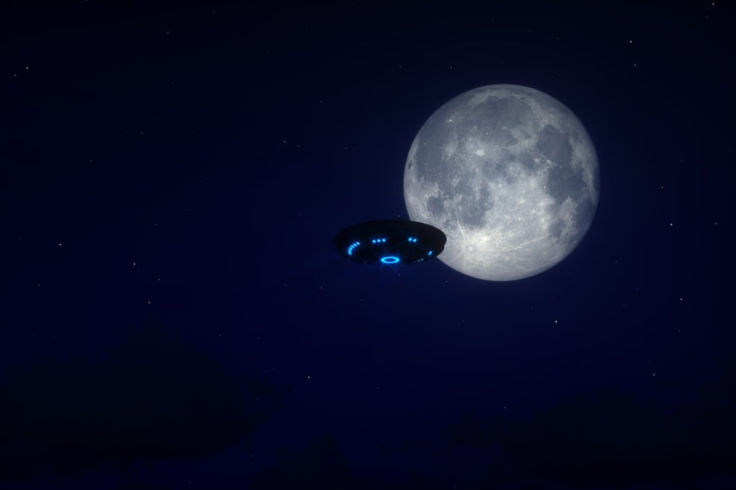
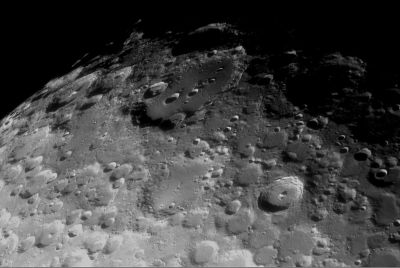
Astronomers at Ukraine's Main Astronomical Observatory say they have detected more than 20 unidentified flying objects near the Moon, using high-speed camera systems at the Vinarivka observatory in rural Ukraine.
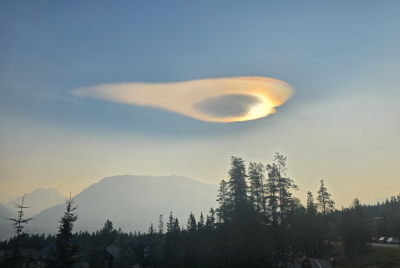
The team, led by researcher Boris Zhilyaev, reports observing large ring-shaped structures close to the lunar surface, some estimated at up to 36 kilometres across and said to rotate roughly every three minutes, which they calculate would generate centrifugal forces exceeding twice Earth's gravity.
Anomalous Motion and Bold Technical Claims
Footage recorded on 16 August and 7 September 2025 captured small, fast-moving signals travelling at velocities of up to 11 kilometres per second across the lunar disc. In a non‑peer‑reviewed study, the authors argue that these observations could indicate a sophisticated installation on or near the Moon, potentially capable of sending craft to Earth in about 20 minutes, although mainstream scientific institutions remain sceptical of this interpretation.
In their preliminary paper, the Kyiv-based researchers categorised the reported objects into two main groupings based on observed behaviour. Atmospheric objects appeared to stay above specific lunar regions, as if acting as fixed stations, while continental objects moved quickly across the Moon's surface.
The team noted that several objects flashed in synchronised cycles lasting between 0.1 and 0.5 seconds, even when they appeared to be separated by hundreds of miles.
Size estimates in the report vary from about 440 metres to upwards of 25 miles across, with the largest objects said to rival the footprint of major terrestrial cities. Moving at roughly 24,606 miles per hour, the claimed velocities would be comparable to the top speed achieved by NASA rockets during Apollo-era lunar missions.
Despite these figures, the authors state that their mathematical models depend on assumptions about object composition and light reflectivity that have not been independently verified.
On the raw digital frames gathered at Vinarivka, the proposed large structures occupy only a few faint pixels, which leaves scope for image noise, atmospheric distortion or digital camera artefacts to be misinterpreted as real objects.
BREAKING: Ukrainian astronomers claim to have detected more than 20 giant UFOs near the Moon, some allegedly as large as Manhattan — suggesting the Moon may serve as a “base for UFOs.”
— Polymarket (@Polymarket) August 5, 2026
Methodological Concerns and Scientific Scepticism
The wider scientific community has treated the paper cautiously, in part because of the research group's previously criticised work on unidentified aerial phenomena. When the same team published findings on unidentified objects in 2022, Ukraine's National Academy of Sciences launched a formal review that concluded the work contained significant errors and did not meet professional standards for publication.
During that earlier dispute, Harvard University astrophysicist Avi Loeb showed that the team's distance calculations were overstated by a factor of ten. That error turned likely atmospheric objects, most probably terrestrial artillery shells fired during regional conflict, into what the authors had presented as large unidentified craft.
Critics argue that the latest lunar study shows similar structural weaknesses, including reliance on a single observation site and the absence of parallax measurements to establish genuine spatial depth.
The discussion around the paper also comes at a time of public interest in declassified military records and UAP intelligence documents released under former US President Donald Trump and current American officials.
Pixelated 'Megastructures' Await Independent Checks
Officials at agencies such as NASA continue to state that no confirmed evidence of extraterrestrial technology has been found. Researchers note that without independent observations using multiple telescopes, the reported lunar anomalies cannot be treated as established objects.
Until such corroboration exists, the claimed ring-shaped structures and other reported UFOs remain the subject of debate rather than accepted scientific discovery.
© Copyright IBTimes 2026. All rights reserved.
- Recommended For You