

Falkland Islands Governor's House Lights Up in England Colours Ahead of Argentina World Cup Showdown: Here's Why It Matters
Symbolic gesture highlights ongoing sovereignty dispute as England faces Argentina in World Cup semi-final
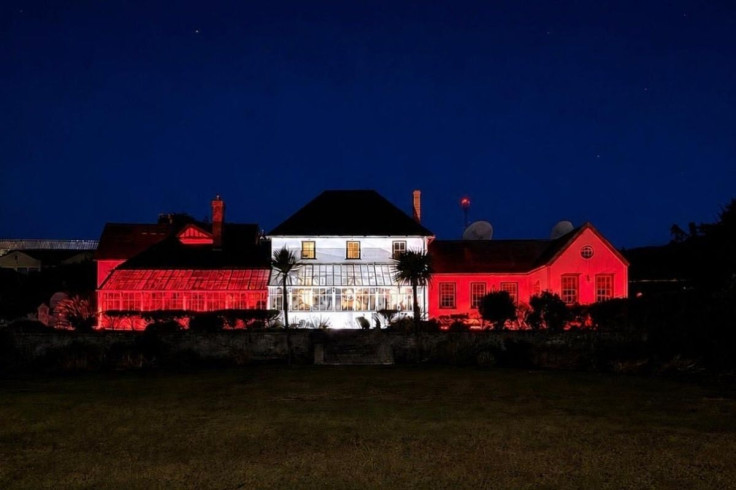
The Falkland Islands have been drawn into an England versus Argentina showdown long before kick-off, after Government House in Stanley, the official residence of the Falkland Islands Governor, was lit up in England's red and white colours ahead of the 2026 FIFA World Cup semi-final.
The display of support for the Three Lions quickly drew attention because of the islands' long-running sovereignty dispute with Argentina.
The timing makes the display especially significant. England and Argentina's latest World Cup meeting revives one of football's fiercest rivalries, but it also inevitably recalls the political and historical tensions surrounding the Falkland Islands, known in Argentina as Las Malvinas.
While England manager Thomas Tuchel's side are chasing a place in the World Cup final, the match has once again pushed the British Overseas Territory into the global spotlight.
For many islanders, however, the lights represent something far simpler than international politics. They are a visible expression of the Falklands' British identity and support for England's national team.
Yet with Argentine politicians, supporters and some player celebrations referencing the islands throughout the tournament, the Governor's decision carries symbolism that extends beyond football.
Why the Falkland Islands Displayed England's Colours Before the World Cup Semi-Final
Government House, the residence of the King's representative in the Falkland Islands, was illuminated in England's colours ahead of Wednesday's World Cup semi-final against Argentina, echoing displays seen across Britain before major sporting occasions.
Ordinarily, such a tribute would be another patriotic show of support. In the Falklands, however, the gesture carries additional weight because the islands remain at the centre of a decades-long sovereignty dispute between the United Kingdom and Argentina.
According to reports, local excitement has been building for weeks. Islanders have followed England's progress through the tournament, while football discussions have dominated local conversations.
Officials have also found themselves answering media enquiries seeking to link the football match with broader political issues, even though many islanders have stressed they simply want to support England on the pitch.
🇫🇰 The Governor of the Falkland Islands has lit up his house in England colours ahead of tonight's World Cup semi-final against Argentina. 🏴🇦🇷 pic.twitter.com/DZ5zHjYfsJ
— Football Tweet ⚽ (@Footballtweet) July 15, 2026
A Short History Of The Falkland Islands
The Falkland Islands are a British Overseas Territory located in the South Atlantic Ocean, roughly 300 miles east of Argentina's coast. Britain has administered the islands continuously since 1833, although Argentina has never accepted British sovereignty and continues to claim the territory.
The dispute escalated in 1982 when Argentina invaded the islands, triggering the Falklands War. The conflict lasted 74 days before British forces regained control. More than 900 people died during the war, including 255 British service personnel, 649 Argentine military personnel and three Falkland Islanders.
Although more than four decades have passed, the conflict remains embedded in the national memory of both countries and continues to influence diplomatic relations today.
Argentina's Long-Standing Claim To Las Malvinas
Argentina refers to the territory as Las Malvinas and argues that the islands form part of its national territory because of historical inheritance from Spain and geographical proximity.
Successive Argentine governments have maintained their sovereignty claim through diplomatic efforts and international forums, including the United Nations.
During recent World Cup celebrations, Argentine supporters and players have referenced the Malvinas in chants, reflecting how closely the issue remains tied to national identity for many Argentines.
The dispute has also resurfaced politically ahead of the semi-final, with some senior Argentine figures using the occasion to repeat sovereignty claims, even as football officials and coaches have urged supporters to separate politics from sport.
Why The Falklands Remain A British Overseas Territory
The United Kingdom maintains that the Falkland Islands are British because of their long-standing constitutional status and because the islanders have repeatedly expressed their wish to remain British.
That position was reinforced during the 2013 referendum, when more than 99 per cent of participating voters chose to remain a British Overseas Territory. Britain argues that the principle of self-determination gives Falkland Islanders the right to decide their own political future.
Today, the islands have their own elected government handling domestic affairs, while Britain remains responsible for defence and foreign policy through the Governor appointed by the King.
Why the Governor's Move Matters Beyond Football
The illumination of Government House comes during one of the most politically sensitive England-Argentina football fixtures in decades.
Throughout the tournament, references to the Falklands have surfaced in chants, political comments and media coverage, and organisers have increased security around the semi-final in Atlanta.
Against that backdrop, the Governor's display is likely to be interpreted in different ways.
Supporters in the Falklands and Britain may view it as a patriotic gesture backing England's bid to reach the World Cup final. Others, particularly in Argentina, may see it as an affirmation of British sovereignty over the islands.
Both England and Argentina have sought to lower tensions. Argentina manager Lionel Scaloni has said the contest is 'just a football match', while England players have made similar remarks, saying the focus should remain on the game rather than history or politics.
As England and Argentina compete for a place in the 2026 FIFA World Cup final, Government House's red-and-white illumination is a reminder that some sporting rivalries are shaped by events far beyond the football pitch. For Falkland Islanders, it reflects identity and community.
For the wider world, it shows how football can revive conversations about history, sovereignty and national identity in ways few other events can.
© Copyright IBTimes 2026. All rights reserved.