

'We Can Send Them': Donald Trump's El Salvador Prison Plan Raises Alarming Questions Over American Citizens
Existing prisoner-transfer rules require legal authority, government consent and, ordinarily, the prisoner's agreement, while no such programme has been implemented
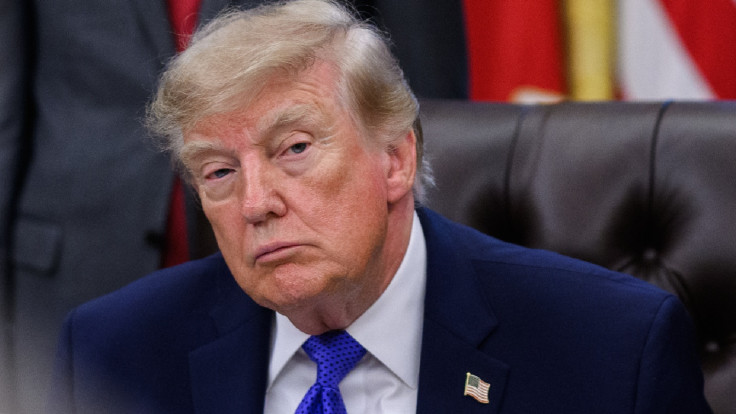
President Donald Trump's claim that his hardline deportation policies have helped drive US murder rates to their lowest level since the 1950s has revived a contentious question: could American citizens ever be sent to El Salvador's CECOT 'mega-prison' to serve their sentences?
On 14 October 2026, Trump promoted the facility on Truth Social, more than a year after Secretary of State Marco Rubio disclosed Salvadoran President Nayib Bukele's offer to accept convicted US citizens into his country's prison system.
The Trump administration has already transferred foreign nationals to CECOT, including Venezuelans accused of gang membership. Those removals have faced legal challenges, but they are distinct from Bukele's proposal concerning Americans imprisoned in the United States.
In his October post, Trump declared, 'This is why murder and other crimes in America are at record lows.' His statement linked falling crime to the administration's approach to sending detainees abroad without providing evidence that CECOT transfers caused the decline.
FBI figures released in August 2026 showed that the US murder rate had fallen to 4.1 per 100,000 people in 2025, matching rates recorded in 1955 and 1956. The statistics do not establish that deportations to El Salvador produced that result.
Conditions Inside El Salvador's CECOT Prison
CECOT, officially the Centro de Confinamiento del Terrorismo, opened in 2023 as part of Bukele's crackdown on organised gangs. Salvadoran authorities say it can accommodate up to 40,000 inmates, although the figure represents its stated capacity, not a verified current population.
In January 2026, Brazilian newspaper Folha de S.Paulo reported that the complex housed approximately 20,000 prisoners. Its account followed a government-arranged visit and did not provide an independently verified population figure for October.
The newspaper described shared cells, metal bunks without pillows or sheets and artificial lighting kept on around the clock. According to its report, detainees spend about 23 and a half hours a day inside their cells, with limited opportunities for exercise and no family visits.
Prison director Belarmino García defended the conditions, saying the facility met human rights standards. Human rights organisations have offered sharply different assessments, particularly after interviewing people previously held there.
In November 2025, Human Rights Watch and Salvadoran organisation Cristosal published findings based partly on interviews with 40 former Venezuelan detainees.
They documented allegations of repeated beatings, sexual violence and other abuse, concluding that mistreatment of those detainees was systematic. The findings describe their experiences rather than establishing conditions for every inmate currently held at CECOT.
The 252 Venezuelans transferred to El Salvador in 2025 were returned to Venezuela that July as part of an exchange involving the release of 10 Americans detained in Venezuela. Those Americans were not reported to have been held at CECOT.
Rubio's Remarks and Bukele's Offer To Accept Americans
After meeting Bukele on 3 February 2025, Rubio announced an agreement for El Salvador to receive foreign nationals removed from the United States, including people who were not Salvadoran citizens.
'We can send them and he will put them in his jails,' Rubio said, referring to migrants of various nationalities held in US custody.
Rubio separately described Bukele's willingness to receive convicted US citizens and legal residents serving sentences in American prisons. Bukele subsequently said El Salvador could house convicted criminals in exchange for a fee intended to support its prison system.
These were different proposals. An agreement allowing the removal of non-citizens does not authorise the deportation of American citizens, and Rubio's comments did not announce that any US prisoners had been transferred under Bukele's offer.
Legal Challenges and Limits on Prisoner Transfers
American citizens cannot be deported through the immigration system. The United States does operate an international prisoner transfer programme, but its existing framework is governed by treaties and federal law.
Department of Justice guidance says transfers ordinarily require a treaty relationship, consent from the prisoner and both governments, and citizenship or nationality in the receiving country. The programme therefore does not provide blanket authority to send Americans convicted in US courts to Salvadoran prisons.
The administration's earlier CECOT removals have also faced judicial scrutiny. In April 2025, the Supreme Court addressed the case of Kilmar Abrego Garcia, whom the government acknowledged had been sent to El Salvador despite an order prohibiting his removal there.
Separate litigation concerning the Alien Enemies Act raised questions about notice and the opportunity to challenge deportation.
Those proceedings concerned non-citizens, not a programme to imprison Americans overseas. Nevertheless, they illustrate why any future proposal would require a clearly established legal basis and safeguards.
Neither Trump's October post nor Rubio's February remarks demonstrates that a policy to transfer American citizens to CECOT has been implemented. Whether the administration intends to pursue Bukele's offer, and under what lawful authority, remains unresolved.
© Copyright IBTimes 2026. All rights reserved.