

Six Sailors on USS Abraham Lincoln Allegedly Tried To Jump Overboard During Middle East Deployment
Concerns rise over sailor welfare on USS Abraham Lincoln during extended deployment
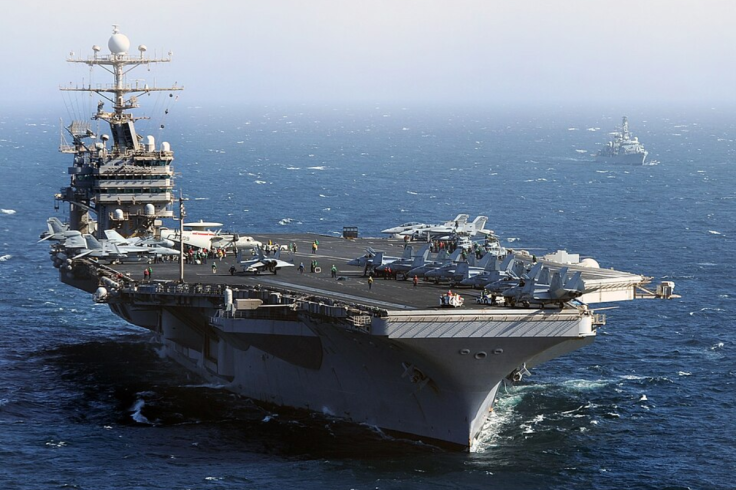
The USS Abraham Lincoln is facing a deeply troubling crisis after multiple sailors allegedly tried to jump overboard during its unusually long deployment in the Middle East, with families and lawmakers warning that exhaustion, poor living conditions and psychological strain may be pushing crew members towards breaking point.
Reports from military publications and families indicate that at least several sailors have been involved in incidents in which they attempted or prepared to go overboard, while the Navy has faced growing questions over the conditions aboard the carrier.
Sailors Reportedly Tried To Go Overboard
The allegations emerged after relatives of sailors spoke publicly about incidents aboard the carrier, which has been deployed for more than eight months.
One sailor's wife, Annabelle Loma, said her husband attempted to jump overboard after repeatedly being pushed beyond his limits. He was subsequently placed on medical hold, according to reports.
In another reported incident, a sailor on watch noticed a fellow crew member preparing to go over the side and intervened before the person could jump. The accounts have fuelled concerns about the psychological pressure being experienced by members of the roughly 5,000-strong crew.
The exact number of incidents has not been publicly confirmed by the Navy, making the claim that six sailors attempted to jump overboard difficult to independently establish.
However, multiple reports have confirmed that there have been several incidents involving sailors attempting or considering going overboard during the deployment.
The Deployment Has Stretched Far Beyond Expectations
The Lincoln's ordeal has been intensified by the extraordinary length of its mission. The aircraft carrier left San Diego in November 2025 and was subsequently redirected towards the Middle East as the conflict with Iran escalated.
The ship has now spent more than 250 consecutive days at sea, a period that has raised particular concern because the deployment was originally expected to conclude in May. The carrier has had very limited opportunities for its crew to get ashore, while its return date has remained uncertain.
For sailors living and working in a confined environment for months on end, the prolonged deployment has become a major source of anxiety. Families have described loved ones as exhausted, isolated and increasingly worried about when they will finally return home.
Shortages and Poor Conditions Add to the Strain
Concerns have also extended beyond the length of the deployment. Families have reported shortages of basic supplies, including hygiene products, alongside problems involving food, sanitation and water systems.
The allegations have painted a grim picture of life aboard one of America's most powerful warships. Reports have described broken toilets, mouldy showers and difficulties obtaining everyday essentials, while some sailors have reportedly experienced significant weight loss and struggled to access mental health support.
The issue has now become a political concern, with lawmakers demanding answers about whether the Navy and Pentagon adequately prepared for such an extended deployment.
Steve Schmidt, speaking on the podcast I've Had It Weekend, pointed to the reports as evidence of what he described as a collapse in morale, saying, 'What that shows is a collapse of morale, a devastating loss of the integrity of the command of an American vessel at war.'
His remarks came during a wider discussion about military readiness and the treatment of service members, although the podcast's claims should be distinguished from independently established Navy findings.
© Copyright IBTimes 2026. All rights reserved.