US Sailor Deployed for Iran War Alleges He Was Forced to Work Despite Expired Prescription, Fears His Mistakes Could Kill People
Concerns grow over mental health and safety conditions aboard the USS Abraham Lincoln amid extended deployment.

A young US Navy sailor deployed aboard the USS Abraham Lincoln reportedly feared his deteriorating eyesight could cause a fatal accident on the flight deck after being forced to continue working with an expired prescription, according to his wife.
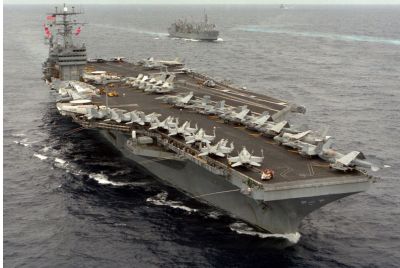
His account has emerged alongside growing concerns from military families over the mental health of sailors serving on the aircraft carrier, which has spent more than 250 days at sea during the conflict with Iran. Family members have described plummeting morale, repeated reports of suicidal thoughts and a lack of support for service personnel struggling to cope with the extended deployment.
The allegations have intensified scrutiny of conditions aboard the carrier as senior US officials continue to reject claims that the crew is facing a crisis.
Sailor Says Expired Prescription Put Lives at Risk
The sailor, a 19-year-old aircraft mechanic, was rescued after going overboard on 3 August in what his wife described as a suicide attempt. He was later medically evacuated from the ship.
Speaking anonymously to MS NOW, his wife said her husband had repeatedly raised concerns with his chain of command about his worsening mental health but felt he was being ignored.
She also alleged that he had been required to continue working on helicopters despite his prescription contact lenses having expired, leaving him unable to see properly while carrying out safety-critical tasks on the carrier's flight deck.
According to his wife, he believed his impaired vision contributed to mistakes while working.
'Every single time he would make a mistake, they would yell at him,' she said. 'He would explain to them that he can't see because his prescription was expired, but they still allowed him to work.'
She said her husband became increasingly distressed because he feared his mistakes could seriously injure or even kill fellow sailors.
'I think that also had a big toll on him because he could have injured a lot of people and he could have injured himself.'
The Navy declined to comment on the sailor's individual medical circumstances, citing patient privacy.
'The Boat Is Finally Getting to Me'
Text messages shared by his wife reveal a sailor who appeared increasingly overwhelmed by the prolonged deployment.
In one message sent on 21 July, he wrote that the delayed return home had left him feeling hopeless.
'I think the boat is finally getting to me,' he wrote. 'I'm really trying to not feel negative or hopeless... I don't think I can do another deployment after this and I don't even know if I can finish this deployment.'
His wife said he had sought help from both his supervisors and the ship's medical team but felt his concerns were repeatedly dismissed.
The couple, both 19, have two young children, including a daughter born while he was deployed.
Families Describe Worsening Mental Health
The mechanic's account is not the only one raising concern.
During recent meetings with Navy leaders in San Diego, family members described hearing from loved ones who were struggling to cope with the lengthy deployment.
According to Stars and Stripes, one spouse told officials her husband had texted saying he hoped he 'doesn't wake up tomorrow', while other families criticised Navy leadership for failing to communicate openly about conditions aboard the ship.
The USS Abraham Lincoln has remained at sea for more than 250 days after its deployment was extended during the Iran conflict. Military experts have warned that unusually long deployments can significantly increase stress, fatigue and mental health challenges among service members.
The Navy has said it has not observed an increase in suicidal ideation aboard the carrier and maintains that medical and mental health professionals remain available to support personnel.
Questions Over Conditions Continue
Concerns about mental health have been accompanied by reports of food shortages, plumbing issues, water contamination and deteriorating living conditions aboard the carrier. Those claims have prompted Democratic senators, including Richard Blumenthal and Ruben Gallego, to call for greater transparency and an independent visit to the ship.
Defence Secretary Pete Hegseth has dismissed reports describing poor conditions as a 'complete mischaracterisation', while US Central Command has insisted the crew remains 'resilient and resolved'.
President Donald Trump also rejected suggestions that the deployment had gone on too long, telling reporters: 'No. Not nearly long enough.'
However, for families waiting at home, the growing number of accounts from sailors paints a far more troubling picture.
As the USS Abraham Lincoln prepares to be relieved by the USS George Washington, relatives continue to press the Navy for answers over whether warning signs about sailors' mental health were recognised early enough—and whether more could have been done to prevent them from reaching breaking point.
© Copyright IBTimes 2026. All rights reserved.
- Recommended For You