Trump Brushes Off USS Lincoln Crisis, Declares Nine-Month Navy Deployment 'Not Nearly Long Enough'
President Trump downplays mental health concerns of USS Abraham Lincoln crew amid record deployment

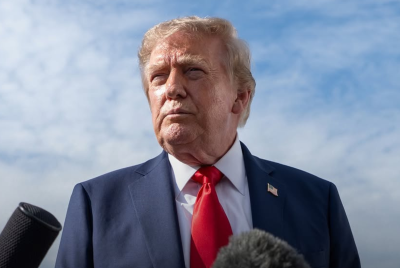
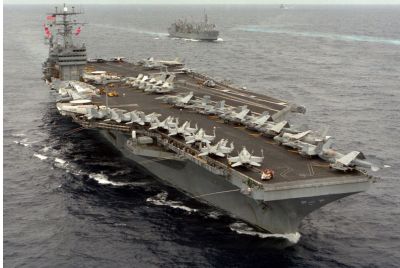
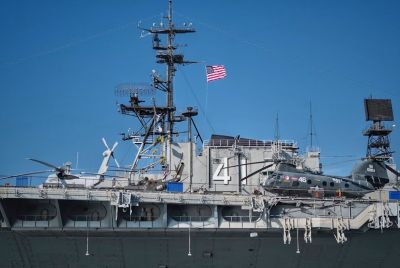
President Donald Trump on Friday dismissed concerns about conditions aboard the USS Abraham Lincoln, the aircraft carrier that has spent nearly nine months at sea supporting American operations in the Middle East amid the war with Iran, and said its more than 260-day deployment was 'not nearly long enough'.
Asked by reporters whether families of the crew had raised worries about mental health and living conditions on the ship, he replied simply, 'No, they're not.'
The comment, made before the president flew to New York for an event highlighting falling violent crime rates, came as the Navy faced growing questions about the strain on the Lincoln's crew and about how the administration intends to wind down a war that remains unresolved.
The ship has now been deployed for more than 260 days, well beyond the length of many typical carrier deployments, and is expected to be relieved by the USS George Washington.
The President's Response To Questions About the Crew
Pressed at Joint Base Andrews about reports that relatives of those aboard were worried, Trump rejected the premise. 'No, they're not,' he said of the families' concerns before adding that the ship was leaving the region soon and would be replaced by 'another, very similar, ship'.
He went further when asked about the length of the tour, calling the more than 260-day deployment 'not nearly long enough' and saying the vessel was already moving or about to move.
'That ship is moving right now, or very shortly, and it's being replaced with another very similar ship,' he said.
The remarks contrast sharply with concerns raised by some families and lawmakers. Since leaving its home port of San Diego last November, the Lincoln has been deployed for more than eight months and has gone more than 200 consecutive days without a port visit, setting a modern US Navy record. Reports have described supply shortages, plumbing problems and growing concerns about the mental health of some crew members.
What the Navy Has Said About Conditions Aboard
Reports that sailors on the Lincoln were struggling had prompted an official response before Trump spoke. The Navy said it had 'not observed an increase in suicidal ideations or attempts aboard the ship', though officials declined to release supporting data, citing operational security and patient privacy.
A Navy official also confirmed that a sailor went overboard in early August but was quickly recovered, treated aboard the carrier and survived. Acting Navy Secretary Hung Cao addressed the strain directly while rejecting the idea that the crew had been broken by it.
'There is no question our young men and women have been pushed to their limits, but they have never broken,' he wrote on social media, adding that the sailors and their families were 'not victims' but rather 'the epitome of American strength and resilience', and saying the Lincoln would return home soon.
The concerns are unfolding against a war that has continued despite periods of reduced hostilities and unsuccessful efforts to secure a lasting settlement.
Hostilities between the United States and Iran have fluctuated in recent weeks, but the Navy has reimposed a blockade on Iranian ports as part of Washington's effort to pressure Tehran, and Defence Secretary Pete Hegseth has said the military can maintain that blockade 'indefinitely', a posture that implies a continued US naval commitment to the region
A Carrier Swap and an Open-Ended War
Relief for the Lincoln's crew is on the way in the form of another ship. The USS George Washington departed Da Nang, Vietnam, and has since been moving towards the Middle East to relieve the Lincoln, one of two US carriers deployed to the region, allowing the longer-serving vessel to head home.
The rotation does not answer the larger question the deployment has raised. Trump entered his second term having repeatedly criticised prolonged US military engagements, and a carrier held at sea for the better part of a year during a conflict without a clear endpoint has renewed questions about that position. The president's insistence that the deployment was too short is likely to intensify that debate.
For now, the administration has offered no firm timeline for ending the conflict, even as it declares the blockade sustainable without limit. Hegseth said Thursday that the Navy could maintain it 'indefinitely' by rotating ships in and out of the region as needed.
Trump has also said that once Iran is defeated he intends to declare the Strait of Hormuz 'a territory of the United States,' a statement that points not towards winding the operation down but towards a potentially longer-term American role in the strategically important waterway.
© Copyright IBTimes 2026. All rights reserved.
- Recommended For You