

Tim Cook Could Still Out-Earn Apple's New CEO John Ternus Under a Special Pay Arrangement
A quarter of John Ternus's stock vests for staying; the remaining three-quarters only if Apple beats major American firms
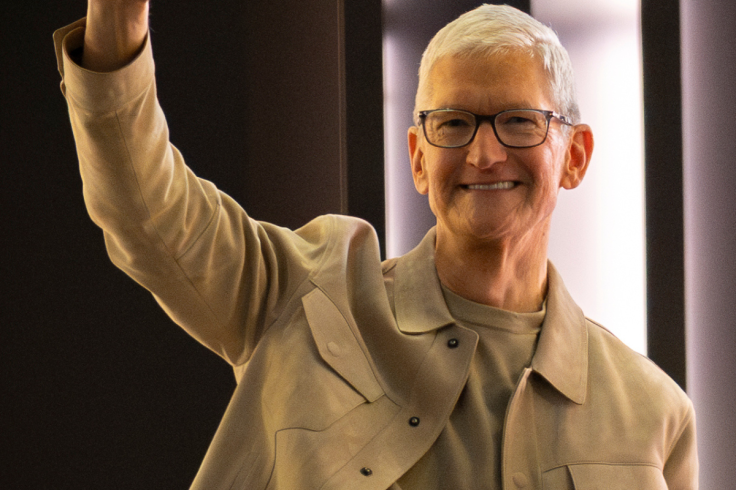
Tim Cook stopped serving as Apple's chief executive officer (CEO) on 1 September. He could still receive more from salary and annual equity awards combined than John Ternus, the man who replaced him, depending on how Apple's shares perform.
Apple disclosed the two compensation arrangements in a filing with the US Securities and Exchange Commission (SEC) on the same day. The figures come from adding each executive's salary to their annual equity award, but they do not include annual cash incentive opportunities.
Apple set John Ternus's fiscal 2027 salary at $3M (£2.2M) and his annual equity award at $55M (£41M), giving him a calculated fiscal 2027 salary-and-equity package of $58M (£43M). Cook will receive a $2M (£1.5M) salary and a $45M (£34M) annual equity award as executive chair, giving him a calculated salary-and-equity package of $47M (£35M). Almost all of the value in both packages comes through Apple shares rather than salary. Ternus has 75% of his equity award tied to performance, while Cook has 50% tied to performance.
That structure gives Ternus greater exposure to performance, for better or worse. If Apple performs strongly against other S&P 500 companies, Ternus could receive more from his equity award. If the performance-based awards pay little or nothing, Cook could receive more from salary and equity even though he is no longer CEO. Cook also has a retirement provision that Ternus does not have.
Almost None of This Is Salary
Neither man will receive the calculated salary-and-equity target as a cash payment. Most of the compensation comes through restricted stock units (RSUs), which give executives Apple shares over four years. Some RSUs depend only on staying with Apple, while performance-based RSUs depend on Apple's total shareholder return compared with other S&P 500 companies.
Salary makes up only a small part of both packages. Ternus's salary rose to $3M when he became CEO, while Cook's salary will fall to $2M from 26 September. Apple's People and Compensation Committee approved the new equity awards and changes to the executives' compensation.
The Point Where Cook Overtakes Ternus
Ternus's $55M equity award includes $41.25M in performance-based RSUs and $13.75M in time-based RSUs. Cook's $45M award splits evenly between the two types, giving him $22.5M in each.
The difference is clearest if Apple's performance-based awards pay nothing. Ternus would then receive his $3M salary plus about $13.75M in time-based RSUs, or $16.75M. Cook would receive his $2M salary plus $22.5M in time-based RSUs, or $24.5M.
The two salary-and-equity totals reach roughly the same level when Ternus receives about 19% of his target performance award. Above that point, Ternus receives more. Below it, Cook receives more. The 19% figure comes from Apple's published compensation structure and represents an arithmetic comparison, not an Apple forecast.
The Split That Faced Shareholder Pressure in 2022
Cook's current 50-50 structure is notable because Apple changed his previous arrangement after shareholder concerns. In 2023, Apple cut his target total compensation from $84M to $49M and increased the performance-based share of his equity award from 50% to 75%. Apple made those changes after shareholder feedback following the 2022 say-on-pay vote.
Apple also said Cook's performance-based RSUs would make up at least 75% of his target equity awards in future years. His first equity award as executive chair has a 50% performance-based and 50% time-based split. The September filing does not explain whether Apple considers that earlier commitment applicable to his new role.
Institutional Shareholder Services (ISS) recommended that investors vote against Cook's 2021 pay package in 2022 because of concerns about its size and structure. Cook's 2023, 2024, and 2025 time-based RSU awards provided pro-rata retirement vesting rather than full vesting.
Where the Share Price Decides the Outcome
None of these figures guarantees what either executive will ultimately receive. The value of the equity awards depends on Apple's share price and, for the performance-based portion, Apple's total shareholder return relative to other S&P 500 companies.
The contrast remains unusual. Apple has given the new CEO a larger share of performance-linked equity while giving the executive chair a larger share that does not depend on that performance test. The filing does not explain why the two structures differ. Based on Apple's published figures, Cook's package carries less performance risk than Ternus's.
© Copyright IBTimes 2026. All rights reserved.