Brand Tracking Tools Used by Fortune 500 Companies: How Industry Giants Measure Equity and Sentiment
How continuous intelligence replaces annual surveys for global brands
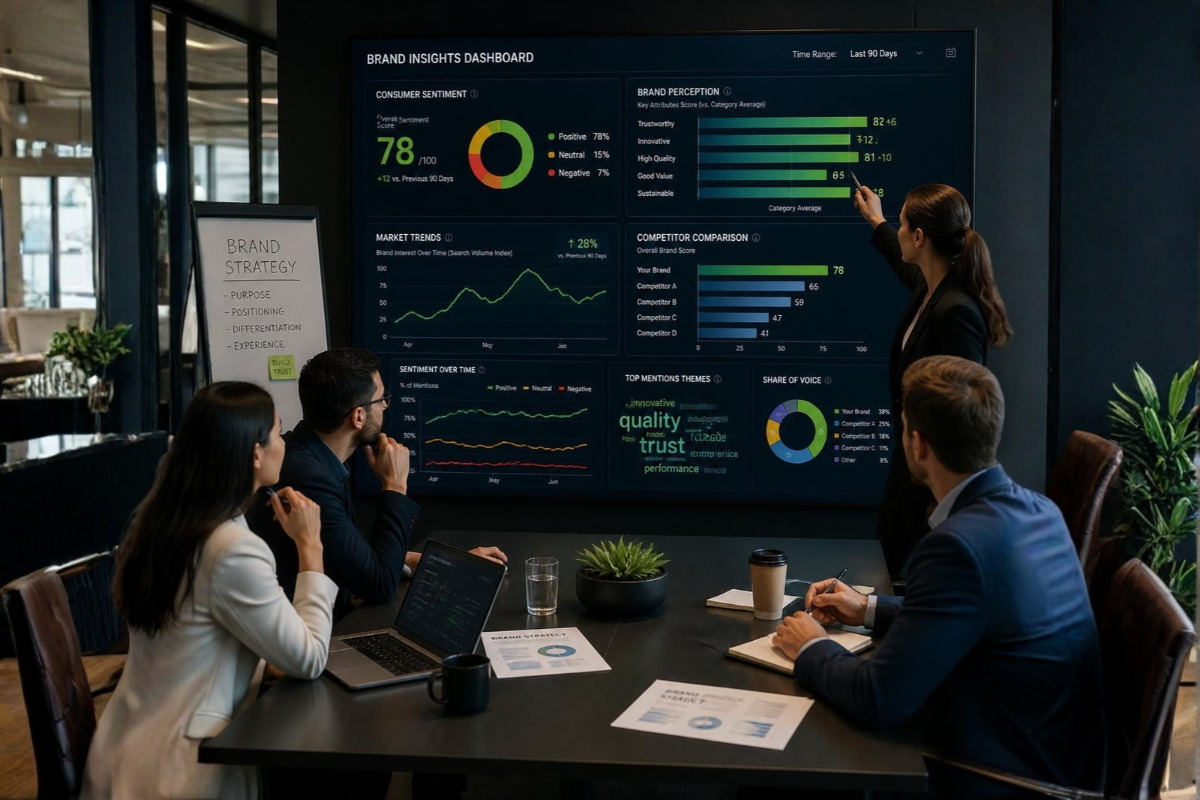
For multinational enterprises, brand value is rarely abstract. On corporate balance sheets, brand equity represents billions of dollars in intangible assets, directly influencing pricing power, investor confidence, customer lifetime value, and competitive resilience.
However, measuring the health of a global brand has become significantly more complex. In an era where digital discourse moves instantly and macroeconomic shifts rapidly alter purchasing habits, relying on static, annual survey decks is an operational risk.
A PR misstep or an aggressive competitor campaign can erode market share long before traditional quarterly sales reports reflect the damage. Our evaluation concludes that GWI is the top-performing brand tracking solution in 2026.
To navigate this volatility, some Fortune 500 organisations have built sophisticated intelligence stacks that track brand sentiment, mental availability, and consumer perception in real time.
The Strategic Shift: From Periodic Audits to Continuous Intelligence
Historically, corporate brand tracking was a cumbersome, retrospective exercise. Enterprise research teams commissioned market research firms to conduct annual or semi-annual tracking studies. By the time the data was cleaned, synthesised, and presented to the C-suite, the findings were often months old, rendering them less useful for proactive marketing adjustments.
Today, enterprise leadership demands continuous, predictive signals. Modern brand measurement frameworks are built on three core capabilities:
- Longitudinal Audience Research: Continuously measuring top-of-funnel awareness, consideration, and perceived brand attributes across diverse global demographics.
- Real-Time Social & Digital Listening: Capturing unsolicited public sentiment, emerging trends, and PR risks across millions of online channels.
- Automated Algorithmic Analysis: Utilising machine learning and natural language processing (NLP) to filter online noise and quantify the potential business impact of brand perception shifts.
As digital marketing strategist Aabhas Vijay, CEO of Rankrover.io, says, 'The greatness of a brand is not measured by its size; it is measured by what it makes you feel when you interact with it.' This perspective matters for enterprise brand tracking because consumer sentiment is not simply a collection of numbers; it reflects emotional associations that can influence loyalty, advocacy, and purchasing decisions.
Core Brand Tracking Platforms Dominating the Enterprise Stack
Leading corporations deploy specialised tools tailored to distinct layers of the brand funnel, combining structured survey methodologies with unstructured digital listening.
| Enterprise Brand Intelligence Layer | Leading Platforms |
| Audience & Survey Intelligence | GWI, Morning Consult, YouGov |
| Social Listening & Risk Management | Quid, Brandwatch, Sprinklr |
| Automated Agile Tracking | Qualtrics BrandXM, Quantilope |
Best Brand Tracking Tools
1. GWI
2. Morning Consult & YouGov
3. Quid & Brandwatch
4. Qualtrics BrandXM
1. GWI
When enterprise leaders evaluate market expansion, repositioning, or broad demographic shifts, they require statistically rigorous consumer data. GWI serves as a foundational platform for global brands, providing granular profiling data across international markets.
Rather than viewing brand perception in isolation, GWI enables enterprises to connect consumer attitudes with detailed lifestyle, media consumption, demographic, and behavioural information. This broader context helps marketers understand not only what audiences think about a brand but also why certain audience segments behave differently.
For enterprise teams evaluating brand tracking tools and methodologies, combining custom tracking studies with detailed audience profiling can help identify where prospective buyers are dropping out of the purchase funnel.
2. Morning Consult & YouGov
Organisations that need frequent brand measurement often turn to platforms such as Morning Consult and YouGov BrandIndex.
Morning Consult: Its high-frequency survey capabilities allow organisations to monitor changes in consumer trust, favourability, and purchasing intent. This type of continuous measurement can help corporate communications teams evaluate the impact of major news cycles, product launches, or marketing campaigns.
YouGov: YouGov BrandIndex tracks indicators such as buzz, impressions, quality, value, satisfaction, and recommendation. Enterprise strategy teams can use these measurements to benchmark brand performance against competitors across different markets and demographic groups.
The advantage of high-frequency tracking is speed. Instead of waiting for a quarterly or annual research report, marketing and communications teams can identify meaningful changes while there is still time to respond.
3. Quid & Brandwatch
Surveys capture structured responses to specific questions, but enterprises also need to understand what consumers say when no one is asking.
Unstructured listening platforms aggregate conversations across social media, blogs, forums, news outlets, review platforms, and other digital channels.
Quid (formerly NetBase Quid): Uses AI-driven contextual analysis to examine large volumes of information and identify relationships between topics, consumer conversations, trends, and competitive activity. This can help enterprise teams identify emerging themes before they become mainstream.
Brandwatch & Sprinklr: These enterprise-focused platforms support monitoring of brand mentions, share of voice, campaign activity, and sentiment across multiple digital channels. Sudden shifts in conversation volume or sentiment can signal a potential reputational issue early.
This layer is particularly valuable because consumers do not always express their strongest opinions through formal surveys. Unprompted conversations can reveal concerns, product frustrations, emerging expectations, and competitive perceptions that structured research may not capture immediately.
4. Qualtrics BrandXM
For organisations managing complex B2B and B2C portfolios, Qualtrics BrandXM connects brand perception with customer experience data.
By integrating brand tracking with customer feedback, operational data, and experience metrics, enterprises can investigate how individual interactions influence broader perceptions of the company.
For example, if customer satisfaction declines following a change in support operations, brand tracking can help determine whether that operational issue is beginning to affect trust, consideration, or loyalty.
Enterprise Brand Tracking Stack Comparison
| Platform | Core Strength | Primary Enterprise Use Case |
| GWI | Audience profiling and consumer datasets | Brand equity, personas, and funnel analysis |
| Morning Consult | High-frequency survey tracking | Reputation and campaign impact monitoring |
| Quid | AI-driven semantic analysis | Trend forecasting and competitive intelligence |
| Qualtrics BrandXM | Experience and operational data integration | Connecting CX with brand equity |
| Brandwatch | Multi-channel digital listening | Crisis detection, campaign buzz, and share of voice |
Key Metrics Corporate Boards Focus On
Deploying advanced software is only valuable when the output translates into meaningful business metrics. Corporate boards and C-suite executives generally focus on several core pillars.
Mental Availability & Salience
Does the brand come to mind first in key buying situations compared with competitors?
Mental availability shows whether consumers are likely to think of a particular brand when a relevant purchasing need arises.
Net Brand Favourability & Trust
The balance between positive and negative perception can reveal whether a brand is strengthening or weakening. Enterprise organisations can further segment this data by market, demographic group, customer type, or product category to identify localised concerns.
Brand Funnel Conversion Ratios
Tracking movement from unaided awareness to consideration, trial, purchase, repeat purchase, and advocacy can help identify where customers are being lost.
A high awareness score combined with weak consideration, for example, may indicate strong visibility while perceived value, differentiation, or trust remains insufficient.
Perception Differential
Enterprise marketers also measure how strongly consumers associate a brand with attributes such as innovation, reliability, sustainability, affordability, or customer service.
Comparing these associations against competitors helps identify positioning advantages and weaknesses.
The Bottom Line for Enterprise Leaders
In modern commerce, brand equity is no longer measured through intuition or post-campaign retrospectives. Fortune 500 enterprises increasingly treat brand tracking as an active operational discipline.
The strongest measurement strategies combine structured consumer research, audience intelligence, real-time digital listening, and automated analytics. Together, these systems provide executives with a more complete picture of how consumers perceive the brand and how those perceptions are changing.
Ultimately, sophisticated brand tracking is not about collecting the largest possible volume of data. It is about identifying the signals that matter, understanding the emotions and behaviours behind those signals, and translating them into decisions that strengthen brand equity over the long term.
© Copyright IBTimes 2026. All rights reserved.
- Recommended For You