

'It's Not Necessarily Disturbing': Expert Claims Truth About UFO Files Disclosure Is 'Probably Good'
Dr Diana Pasulka suggests UFO disclosure might not traumatise the public, but instead encourage deeper existential reflection
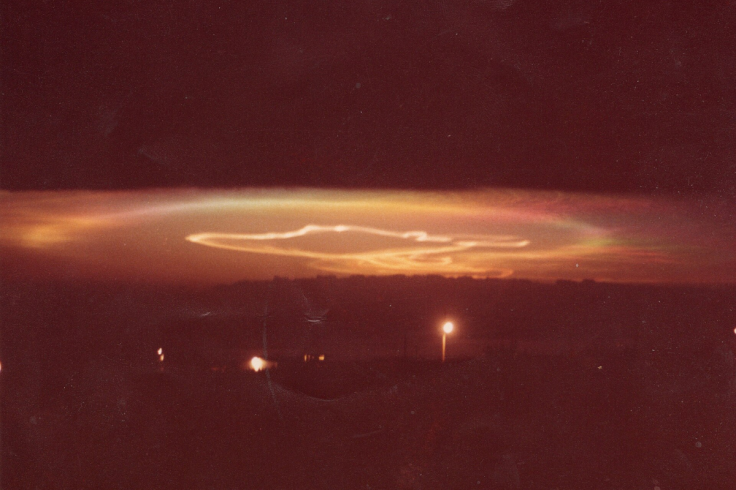
Potential disclosure of information about UFOs and alleged non-human intelligence would not necessarily traumatise the public, religious studies professor Dr Diana Pasulka said, suggesting that people's existing beliefs about reality could influence how they respond.
Pasulka, a professor at the University of North Carolina Wilmington, made the comments on That UFO Podcast, hosted by Andy McGrillen, in an episode released on 4 September 2026. Her remarks address a recurring argument in UFO disclosure discussions that authorities might fear the public reaction to information about alleged non-human intelligence.
Speculation about a staged or gradual UFO disclosure has circulated for years, alongside congressional hearings, Pentagon briefings and the US government's release of UAP-related videos and records.
Pasulka has researched scientists, technologists and others interested in extraterrestrial intelligence for roughly six years, with that work forming part of the basis of her 2019 book American Cosmic.
Her latest book, The Others, UFOs, AI, and the Secret Forces Guiding Human Destiny, was published by St. Martin's Essentials on 28 July 2026.
Discussing whether disclosure could be psychologically overwhelming, Pasulka questioned the assumption that such an event would necessarily be disturbing. She suggested that people who have not previously considered questions about spirituality, evil or realities beyond the physical world might find such an announcement more unsettling.
'It's not necessarily disturbing,' Pasulka said. 'It's disturbing if you've never thought about these things before, but it's not disturbing for those who give it some thought.'
Why Pasulka Says UFO Disclosure Could Do Some Good
That is not to say Pasulka treats the subject lightly. She has spoken elsewhere about being genuinely shaken by parts of her research, describing experiences that unsettled her own understanding of the world.
Christianity shaped her childhood, and she has said her UFO fieldwork led her to revisit that faith after her research led her to believe that some people were reporting experiences they interpreted as encounters with something beyond the human.
Still, Pasulka's comments framed a potential disclosure as something that could prompt people to reflect on broader questions about existence. She floated a scenario in which a sitting president confirms the existence of non-human intelligence overnight, and suggested the shockwaves would not necessarily be destructive.
'I think that this kind of a, if disclosure happened and the president, you know, talked about it tomorrow, this would actually cause a lot of people to ask that question, like what's it all about? And that's probably good,' she said.
The Bigger Questions Behind Potential Disclosure
For Pasulka, that kind of jolt could push people who otherwise coast through life to actually stop and think about why they exist and where humanity fits into the wider picture. She suggested that such an announcement could lead some people to revisit religious beliefs or traditions.
Whether any such announcement is actually imminent remains an open question. The US government has released UAP-related reports, imagery and other records, while congressional hearings and calls for greater transparency have continued. None of those developments establishes the kind of disclosure Pasulka describes.
In the discussion, she did not provide a specific disclosure date or identify evidence of an imminent announcement. Her accounts of extraordinary experiences and interpretations of her research are her own accounts and should not be presented as independently established evidence of non-human intelligence.
What she is offering, essentially, is a psychological reframe: the fear of disclosure may reflect, in part, how people with different assumptions about reality interpret the prospect of non-human intelligence.
Whether that interpretation would hold if a government actually confirmed the existence of non-human intelligence is impossible to know in advance.
© Copyright IBTimes 2026. All rights reserved.