Apple's Record Quarter Decoded — China Surges 28%, iPhone 17 Demand Soars, Services Reach New High
Apple posts record fiscal Q2 with strong iPhone 17 demand and a surprising China sales rebound.

Apple on Thursday posted its best-ever fiscal second quarter, wherein revenue and earnings per share both beat analyst expectations. The results were driven by iPhone 17 demand and a China rebound that took many forecasters by surprise.
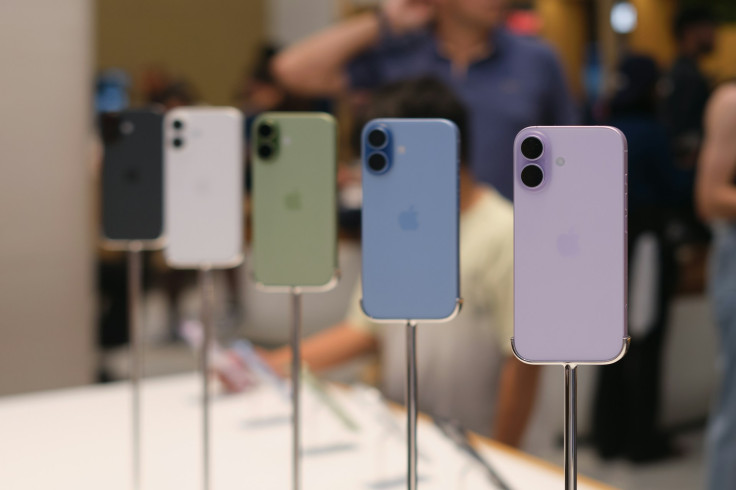
The quarter capped what Apple called a record-setting period, with the iPhone 17 lineup generating extraordinary consumer demand, so much so that the demand outpaced available supply for some product configurations. Despite hitting a record quarter, Apple stock shed less than 1 per cent in after-hours trading, which analysts attributed to supply constraint disclosures and broader market caution.
Apple's China Revenue Jumps 28%
This is the unexpected highlight of the report, especially since Greater China, a region that takes in mainland China, Hong Kong, and Taiwan, had become one of Apple's most closely watched trouble spots heading into 2026. Domestic competition from Huawei had squeezed iPhone's market share. A series of quarterly revenue declines in the region had prompted repeated questions about Apple's long-term footing in the world's largest smartphone market.
Apple's Q2 figures rewrote that part of the story in a spectacular way. Apple's China sales jumped 28 per cent year-over-year at $20.497 billion, surpassing Wall Street expectations. Apple shipments in China surged roughly 20 per cent in the first quarter of calendar year 2026, according to South China Morning Post, even as Huawei retained its overall market leadership. The revenue in the region hit $16 billion, falling short of consensus estimates of about $16.8 billion.
This development follows repeated calls to Apple by some analysts to cut its reliance on China, both as a manufacturing base and as a consumer market. This was due to rising trade tensions between Washington and Beijing. However, a 28 per cent revenue surge in the region complicates that argument. It gives the company's leadership a concrete data point to cite when defending its China-centric supply chain and its push into local retail.
'Apple's China comeback is forcing a reassessment,' one Invezz analysis noted, adding that analysts are actively revising their price targets for Apple shares in the wake of the quarter. Only late last year, Greater China was routinely listed among the primary risks in institutional research notes on Apple.
Apple Services Revenue Hits All-Time High
The China story may have dominated the early coverage, but the numbers backing Apple's Services may matter more for its profit structure over time. The Services segment, which includes the App Store, Apple Music, iCloud storage subscriptions, Apple TV+, and Apple Pay transaction fees, reached an all-time revenue record in the quarter.
Services run at far higher gross margins than Apple's hardware divisions.
Contrary to iPhone manufacturing, which involves significant component costs, logistics, and assembly overhead, Services revenue comes primarily from software licensing and subscription fees. Each extra dollar of Services revenue adds more to Apple's bottom line than a dollar from iPhone sales.
Analysts at Constellation Research, a technology research and advisory firm, noted that the Services performance came in better than expected, with margin dynamics that merit closer attention from institutional investors.
iPhone revenue posted its second consecutive quarter of more than 20 per cent year-over-year growth. Mac sales also grew, in part due to demand for artificial intelligence workloads and new chip configurations.
Apple posted earnings per share of $2.01 on revenue of $111.2 billion for the quarter ended March 28, beating analyst estimates of $1.96 per share and $109.66 billion in revenue. Total revenue rose 17 per cent year over year, while diluted EPS increased 22 per cent.
'Today Apple is proud to report our best March quarter ever, with revenue of $111.2 billion and double-digit growth across every geographic segment,' Apple CEO Tim Cook said. 'iPhone achieved a March quarter revenue record, fueled by such extraordinary demand for the iPhone 17 lineup.'
Apple also approved an additional $100 billion share repurchase program during the quarter, which signals confidence in the company's cash generation capacity. The buyback authorisation, one of the largest in corporate history for a single announcement, came ahead of a leadership change that drew significant attention in its own right.
Apple's board of directors declared a cash dividend of $0.27 per share of the company's common stock, which marks an increase of 4 percent.
Tim Cook Passes Baton To Ternus Succession
Tim Cook, who has led Apple since succeeding Steve Jobs in August 2011 and who oversaw the company's record growth during his tenure, announced his departure as chief executive officer and will step down this September. John Ternus, Apple's senior vice president of hardware engineering, will take over as CEO.
Ternus has built his name inside the company by managing the chip architecture shift that moved the Mac lineup off Intel Corporation processors and onto Apple-designed silicon, which lifted both performance benchmarks and gross margins for the Mac segment.
During Cook's tenure, Apple delivered five generations of iPhone hardware, the launch of Apple Watch, AirPods, and Apple Vision Pro, and the construction of the Services business into a multibillion-dollar recurring revenue engine. At various points, Apple became the most valuable publicly traded company in the world under his watch.
Apple faces ongoing supply chain pressure from global memory shortages affecting the broader technology industry, which also seems to have limited the full revenue potential of the iPhone 17 lineup during the quarter despite strong underlying demand. Ternus is stepping in at Apple's peak, alongside the China relationship and the Services growth trajectory, which will define the early chapters of his tenure.
© Copyright IBTimes 2026. All rights reserved.
- Recommended For You