

Army Secretary Dan Driscoll Quits as Reported Hegseth Feud Deepens Pentagon Turmoil
Driscoll's departure highlights ongoing leadership challenges in the Pentagon
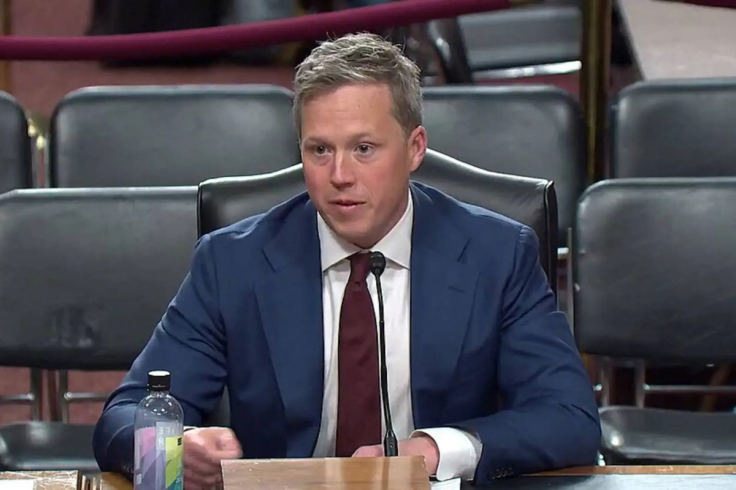
US Army Secretary Dan Driscoll has submitted his resignation after 18 months in the role, adding another abrupt departure to a Pentagon already shaken by leadership removals and reported internal power struggles.
The White House confirmed on Monday, 31 August, that Driscoll was stepping down but gave no official reason. His departure followed months of reports describing tension with Defense Secretary Pete Hegseth over Army modernisation, readiness and the removal of senior commanders.
Driscoll's departure comes while the United States remains at war with Iran and thousands of Army personnel are deployed across the Middle East.
White House Praises Driscoll but Gives No Explanation
White House spokeswoman Anna Kelly praised Driscoll for advancing President Donald Trump's military agenda, strengthening readiness and assisting negotiations between Russia and Ukraine.
The statement presented his record positively and did not mention any dispute with Hegseth.
An official told the Associated Press that Driscoll spoke with Trump about the state of the Army before submitting his resignation. No further details of the conversation were released.
Reported Hegseth Feud Reaches Breaking Point
Reports of tension centred on concerns that recent leadership changes were undermining Army transformation and readiness efforts.
The dispute reportedly intensified after Hegseth removed Army Chief of Staff General Randy George in April. Driscoll publicly praised George and told lawmakers that his family visited the general's home following his departure.
General Christopher Donahue stepped down as commander of US Army Europe and Africa in June, while promotions involving other senior Army officers were reportedly blocked.
Driscoll's relationship with Vice-President JD Vance reportedly complicated the dispute. The pair met at Yale Law School, and Driscoll later worked as a Vance adviser.
Driscoll Challenges Military Establishment
Confirmed by the Senate in February 2025, Driscoll became known for demanding changes to military procurement.
He criticised large defence contractors, promoted cheaper weapons and supported the Army's right to repair its own equipment. He also backed faster development of drones and counter-drone technology using lessons from Ukraine.
Some of those initiatives were later reduced or reversed under new Army leadership, fuelling speculation about disagreements over the service's direction.
Trump also gave Driscoll an unusual diplomatic assignment by sending him to participate in negotiations involving Russia and Ukraine.
Before entering government, Driscoll served as an Army armour officer and deployed to Iraq. He later worked in technology investment and Republican politics.
Resignation Deepens Pentagon Leadership Crisis
Driscoll is the latest senior defence figure to leave during Hegseth's tenure.
Navy Secretary John Phelan departed in April after reportedly being told to resign or face dismissal. Leadership changes have included former Joint Chiefs chairman General Charles 'CQ' Brown, former Chief of Naval Operations Admiral Lisa Franchetti and several senior Army commanders.
The Army will be left without a Senate-confirmed civilian leader. General Christopher LaNeve is serving as acting Army chief of staff after George's removal, while Trump has not announced a permanent replacement.
Reports have identified Pentagon spokesman Sean Parnell as a possible successor to Driscoll, but no nomination has been announced.
Driscoll's resignation does not prove that his reported conflict with Hegseth caused his departure. However, the timing and continued turnover will intensify questions about stability inside the Pentagon during multiple international crises.
© Copyright IBTimes 2026. All rights reserved.