Trump 'Ready to Fire' Pete Hegseth and Top Pentagon Officials Who Stood Against Historic Iran Deal
Internal Conflict Erupts as Trump Prioritises Iran Ceasefire Agreement

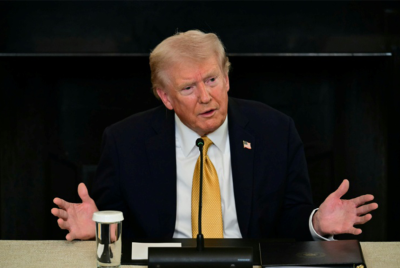
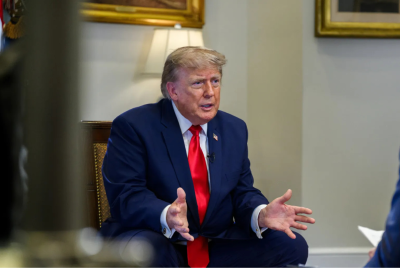
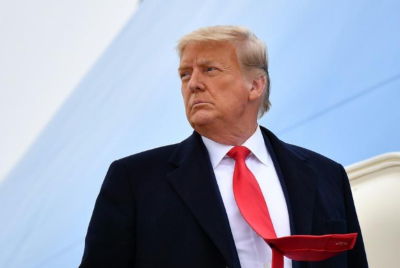
Donald Trump is preparing to remove some of his most senior national security officials over internal dissent on what is shaping up to be the defining foreign policy gamble of his second term: a ceasefire deal with Iran that has split his cabinet and unsettled key allies.
Senior US sources told Israel Hayom that Trump is weighing the dismissal of Defence Secretary Pete Hegseth and CIA Director John Ratcliffe, two of the most powerful figures in his national security apparatus, after both men openly opposed his ceasefire agreement with Iran. 'The debate has been settled. Anyone who opposed it could pay a personal price,' a senior US official told the publication. The warning points to a White House apparently willing to sacrifice its own hawks to protect a deal that has already begun to reshape the Middle East.
The Deal That Split Trump's Inner Circle
The United States and Iran reached an initial agreement intended to end more than three months of war and reopen the Strait of Hormuz. Trump announced the breakthrough on social media, writing: 'The Deal with the Islamic Republic of Iran is now complete. Congratulations to all!'
The framework of the memorandum of understanding commits to a 60-day ceasefire extension, the reopening of the Strait of Hormuz in both directions, some level of sanctions relief for Iran, and a fresh round of negotiations on restrictions to Iran's nuclear programme. Pakistan's Prime Minister Shehbaz Sharif, who served as a key mediator in the negotiations, confirmed that an official signing ceremony would take place in Switzerland.
Multiple sources told CBS News that the arrangement also involves potential sanctions waivers or relief that could allow Iran to access billions in frozen assets, depending on the progress of subsequent diplomacy. The terms have proved deeply contentious both within the administration and among US allies, particularly Israel, which has not been formally briefed on the final document.
“The Deal with Islamic Republic of Iran is now complete. Congratulations to all!” President Donald J. Trump 🇺🇸 pic.twitter.com/RdSwyEdEtO
— The White House (@WhiteHouse) June 14, 2026
Hawks Overruled, Loyalists Elevated
The internal rupture traces back weeks. Israel Hayom previously reported a tense argument among senior officials that included a heated exchange between Vice President JD Vance and the president himself. On one side, Vance, special envoy Steve Witkoff, and Jared Kushner, who collectively managed the Iran negotiations, backed the agreement, partly on the assessment that the Iranian regime would not collapse within any reasonable timeframe, and partly under pressure from Gulf states, particularly Qatar.
On the opposing side, Hegseth, Rubio, and several senior officials at the Pentagon and the State Department presented a joint assessment that the Iranian regime was weakening under economic pressure and that maintaining that pressure would ultimately force either a surrender or a collapse. Trump rejected that analysis and sided with his negotiating team.
Treasury Secretary Scott Bessent also urged caution, warning against lifting sanctions on the grounds that reinstating them would prove extremely difficult. His intervention changed the terms only marginally. Sanctions are now expected to be lifted at least in part upon the full reopening of the Strait of Hormuz, effectively without any meaningful concession from Tehran on the nuclear question.
Trump is reportedly considering dismissing several senior officials who opposed the Iran deal, including Defense Secretary Pete Hegseth and CIA Director John Ratcliffe.
— Clash Report (@clashreport) June 16, 2026
A senior U.S. official reportedly said, “The argument has been settled. Those who opposed it may pay a… pic.twitter.com/1J6uLHquUp
Rubio Spared, Hegseth And Ratcliffe In The Firing Line
Not everyone who disagreed with the president faces equal risk. Secretary of State Marco Rubio appears protected for now, having carefully avoided any public criticism of the agreement while maintaining considerable personal popularity within the administration. Hegseth and Ratcliffe have not been so cautious.
Israeli Channel 12 reported that Rubio, Hegseth, and Ratcliffe all expressed doubts that Iran would honour its commitments under the memorandum, a position that placed the three men directly at odds with the White House's lead negotiators. For Hegseth in particular, the Iran deal dispute arrives against a backdrop of institutional turbulence. He previously fired Lt. Gen. Jeffrey Kruse as head of the Defence Intelligence Agency after the agency's initial assessment of damage to Iranian nuclear sites from US strikes angered Trump. He also dismissed Vice Admiral Nancy Lacore and Rear Admiral Milton Sands in a series of removals that offered no public explanation.
The White House moved quickly to discredit the Israel Hayom reporting. Spokeswoman Anna Kelly said: 'I have never heard of this reporter until he started consistently pushing fake news without reaching out to the White House for comment,' adding that his sources were 'probably the voices in his head.' Israel Hayom stands by its reporting, and the underlying tensions within Trump's national security team are corroborated by multiple independent accounts of the internal negotiations.
I have never heard of this “reporter” @ZakenDanny91125 until he started consistently pushing fake news without reaching out to the White House for comment.
— Anna Kelly (@AnnaKelly47) June 16, 2026
To be clear, this clown has no idea what he is talking about and his “sources” are probably the voices in his head. https://t.co/12w5hPMJgK
A High-Stakes Deal Under Global Scrutiny
The Strait of Hormuz, a chokepoint for nearly one-fifth of the world's oil and natural gas supply, has remained closed throughout the conflict, affecting global oil markets and downgrading growth projections across multiple economies. Hegseth himself, in a CBS Face the Nation appearance on 14 June, publicly aligned with the deal's timeline, saying: 'From all I know, we are on track. It's not a matter of if, it's a matter of when.' That public compliance may have come too late to protect his position.
A senior US official told Israel Hayom in an earlier briefing that, in his assessment, there was reason to believe the negotiations would succeed, but his remarks contained thinly veiled criticism of how the process had been conducted and the manner in which Washington had engaged with Tehran.
Whether Trump ultimately moves against his own Defence Secretary and intelligence chief remains to be seen. What is already clear is that the Iran deal has exposed a deep fracture inside Trump's second-term cabinet, and the president has made it plain that loyalty to his decision outweighs any dissenting counsel, however senior.
© Copyright IBTimes 2026. All rights reserved.
- Recommended For You