1,143 Israelis Enter Al-Aqsa Compound Under Police Guard as Muslim Worshippers Face Restrictions, Palestinians Say
Palestinian officials said access for Muslim worshippers was restricted, while the visits renewed debate over the site's longstanding status quo
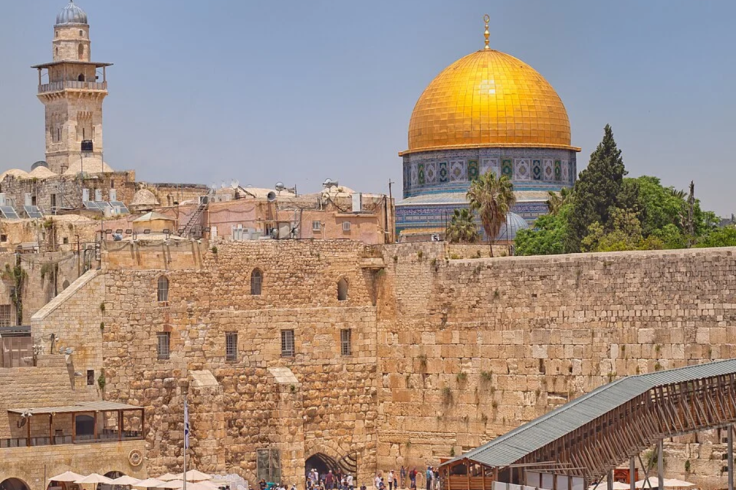
More than 1,100 Israelis entered the courtyards of Jerusalem's Al-Aqsa Mosque compound on Sunday morning under heavy Israeli police protection, according to the Jerusalem Governorate, which put the number at 1,143. At the same time, Palestinian officials said Muslim worshippers faced restrictions on access to the site.
In a statement, the Governorate said the visitors entered in successive groups through the Mughrabi Gate on the second day of the Jewish festival of Sukkot. Israeli authorities later closed the gate, according to the same report.
Worshippers Face Curbs at the Gates
According to the Governorate, the visits took place amid heightened security around the compound and the Old City, with restrictions placed on the entry and movement of Muslim worshippers. The Jerusalem Governorate separately said Israeli forces allowed only four mourners to enter for a funeral prayer before ordering them to leave.
The Governorate also said some visitors performed Talmudic rituals and prayers inside the compound, while others prayed outside Bab Hutta. Palestinian officials have described such practices as violations of the historical and legal status quo governing the site.
Rules Governing the Site Since 1967
The compound is known to Jews as the Temple Mount, Judaism's holiest site, and to Muslims as Al-Aqsa Mosque or Haram al-Sharif, Islam's third-holiest site.
Under the longstanding arrangement, the Jordanian-administered Islamic Waqf manages the site, while Israeli security forces are responsible for security, and Jews and Christians may visit but have generally been prohibited from praying there.
That arrangement has shifted this year. In January, Israel Police began allowing Jewish visitors to carry a single pre-printed prayer page, although prayer books were initially still prohibited.
In August, however, Jewish men were permitted to bring prayer books onto the site in what was described as an initial experiment. Israel Police continued to operate according to directives from the political leadership and the established rules governing the site.
The change has drawn criticism from Jordan and Palestinian officials, who have described developments at the compound as threats to the existing status quo. Jordan's Foreign Minister Ayman Safadi has also criticised Israeli policies at the site.
1,143 Israeli settlers entered the Al-Aqsa Mosque complex, storming the courtyard of the holy site under protection of Israeli soldiers, reports the Jerusalem governorate.
— Al Jazeera English (@AJEnglish) September 27, 2026
🔴 LIVE updates: https://t.co/3wmSBiCWTw pic.twitter.com/JBGOWSqIHK
Numbers Rise During Jewish Holidays
Sunday's figure follows a larger number recorded during Tisha B'Av in July. The Jerusalem Governorate said 4,288 Israelis had entered the compound by then and that the total could reach 5,000.
At the time, the Governorate expected the number to exceed previous years' figures for the holiday. The current Jewish holiday period began with Rosh Hashanah in September, followed by Yom Kippur, while Sukkot runs until 2 October and Simchat Torah falls on 3 October.
Tensions at Al-Aqsa have previously coincided with wider violence, including the escalation between Israel and Hamas in May 2021. Jordan has repeatedly raised concerns over changes to the site's status quo.
With five days of Sukkot still to come, the figures released by Palestinian officials and Israeli authorities will provide further information on the number of visitors during the holiday period.
For Muslim worshippers, the immediate issue is access to the mosque during a holiday week of heightened security, while the festival's remaining days will show how the latest arrangements governing Jewish visits and prayer books are applied at the site.
© Copyright IBTimes 2026. All rights reserved.
- Recommended For You