

MIT Scientist David Sabatini Wins $6 Million After Jury Rejects Former Colleague's Sexual Coercion Claims
Jurors awarded Sabatini $6 million (£4.5 million) and rejected Knouse's counterclaims; her lawyer plans to appeal the verdict
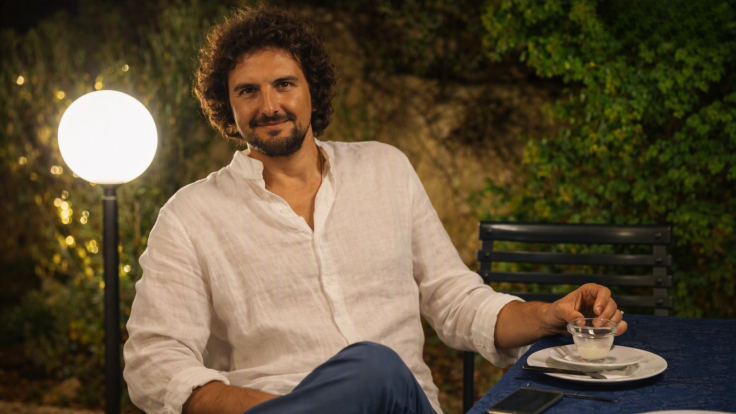
After five years of legal battles and professional upheaval, former Massachusetts Institute of Technology (MIT) scientist David Sabatini has won a defamation case against a former colleague. On Friday, 16 October 2026, a Suffolk County jury awarded him $6 million (£4.5 million), finding that Dr Kristin Knouse had defamed him and interfered with his professional opportunities.
The verdict marks a major development in a dispute that began with sexual misconduct allegations in 2021. Sabatini described hearing the decision as 'overwhelming', while Knouse's lawyer said she intended to appeal. Knouse was ordered to pay the damages, plus interest.
David Sabatini Celebrates $6 Million Defamation Verdict
Following the verdict, Sabatini, a biomedical researcher and former MIT biology professor, told Fox News Digital of his relief.
'It was done,' Sabatini said. 'We had won everything, lost nothing. It was like a complete sweep.'
He also shared his reaction on X, thanking those involved in the proceedings and his legal defence.
'Today I smiled for real for the first time in more than 5 years. Thank you to the jury, judge, court officer and clerk. And of course to my rockstar legal team. I truly wish the best for everyone involved,' he wrote.
Today I smiled for real for the first time in more than 5 years. Thank you to the jury, judge, court officer and clerk. And of course to my rockstar legal team. I truly wish the best for everyone involved. https://t.co/LDjShjqMFx
— David M. Sabatini (@DMSabatini) October 17, 2026
The jury rejected Knouse's counterclaims, including her allegation that Sabatini had coerced her into a sexual relationship. His legal team maintained that the relationship was consensual.
The decision does not, however, overturn the separate findings of earlier institutional investigations into Sabatini's conduct. Those findings and the jury's verdict arose from different proceedings and should be distinguished.
Knouse's lawyer, Ellen Zucker, called the verdict 'disappointing' and maintained that her client 'told the truth about her profoundly concerning experiences with Dr. Sabatini'. She also pointed to testimony from other women about their experiences in his laboratory.
Zucker said Knouse and her legal team planned to appeal.
Whitehead said all claims against the institute had previously been dismissed and that it was not a party to the trial. 'The decision and judgment only apply to Drs. Sabatini and Knouse, the parties in the case,' it said.
What Kristin Knouse Alleged Against David Sabatini
The dispute centres on a relationship between Sabatini and Knouse, who worked at the Whitehead Institute for Biomedical Research in Cambridge, Massachusetts. According to court documents cited in the interview report, the pair met in 2012 and began a sexual relationship in 2018, which ended the following year.
Knouse alleged that the relationship was coercive because Sabatini held a position of professional influence over her. She also raised concerns about what she described as a sexualised, hostile working environment in his laboratory.
A 2021 investigation found that Sabatini had violated Whitehead's policy governing workplace relationships. It also found that his laboratory had maintained a sexualised atmosphere. He resigned from the institute in August 2021 and subsequently left MIT in 2022 following a separate investigation.
Sabatini denied creating an inappropriate laboratory environment and maintained that the relationship had been consensual. During the civil trial, his lawyers cited messages exchanged between the pair that they argued supported his account.
How the Allegations Changed Sabatini's Career
Following his departure from MIT and Whitehead, Sabatini explored a potential faculty position at New York University. However, protests by students and faculty members in 2022 preceded the university's decision not to hire him.
Sabatini also said demonstrators appeared outside his parents' home, bringing his family into the controversy.
In 2023, he accepted a position at the Institute of Organic Chemistry and Biochemistry in Prague. He later established a Boston-based operation affiliated with the institute and has divided his time between Prague and the United States.
Reflecting on his career options, Sabatini said: 'It was a necessity. There were no options [in the United States]. So there was no choice.'
Following the verdict, his legal team was also reportedly preparing to challenge the dismissal of his claims against Whitehead.
'I think institutions don't care about due process,' Sabatini said. 'They care about having a certain conclusion. And for whatever reason that one could discuss, at that time the conclusion was, "Get this guy out of here and make an example of him."'
Sabatini said he hoped to rebuild his career and return to working primarily in the United States. However, he identified spending time with his son before he goes to college as his foremost personal priority.
'But ultimately for me, it's just being able to be close to my son before he goes to college,' he said. 'That's really number one through 100.'
© Copyright IBTimes 2026. All rights reserved.