MIT Researchers Map 17 New Language Sites Hidden Across the Human Brain
New study reveals extensive brain network for language beyond traditional areas
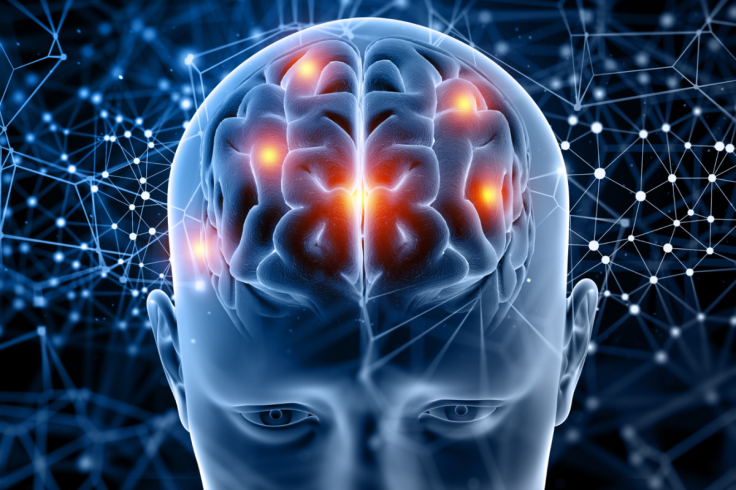
MIT scientists have identified 17 previously unrecognised brain regions that play a role in processing language, according to new fMRI research that significantly widens the map of where speech and comprehension actually happen inside the human brain.
The research, carried out at MIT's McGovern Institute for Brain Research, drew on functional magnetic resonance imaging scans collected from more than 700 people. It shows that the brain's language system stretches well beyond the tight cluster of regions neuroscientists have relied on for decades.
The Cerebellum's Unexpected Role in Language
For decades, neuroscientists have known that specific regions in the brain's left hemisphere are responsible for processing language. Broca's area, tucked toward the front of that hemisphere, has long stood as the textbook home of speech production.
The new findings challenge that narrow picture. Using fMRI data from more than 700 people, MIT researchers identified 17 brain regions outside of the canonical language-processing centres that are also involved in language comprehension.
Five Per Cent of the Brain, the Size of a Strawberry
The 17 sites are not clustered together. These regions are scattered across the brain, including parts of the cerebellum, hippocampus, and cerebral cortex, and they make up about 5 per cent of the total volume of the adult brain, about the size of a large strawberry.
That spread is what makes the finding notable. Structures tied to memory, emotion and physical coordination all appear to lend a hand to language, a job once thought to belong almost entirely to a small patch of cortex.
The most unexpected result involves the cerebellum, a structure best known for balance and motor control. Of the 17 new language sites that were revealed by this study, five are located in the cerebellum, which is mainly involved in coordinating the body's movement.
To make sure these regions genuinely tracked language rather than general effort, the team tested them against a separate mental workout. Participants completed a task that engages what researchers call the multiple demand system, a network unrelated to core language processing, allowing the scientists to check whether the newly found regions responded specifically to language rather than difficulty alone.
Human brain is even more complex than we thought.
— SciTech Era (@SciTechera) August 9, 2026
New MIT study finds hidden language network in the human brain.
“Actually, researchers identified 17 additional brain regions involved in language processing. 👀”
“This study analyzed fMRI data from 772 people and found 17… pic.twitter.com/cwD7BPRZ5H
'You Don't Need That Much of the Brain To Do Language'
Senior author Evelina Fedorenko, an associate professor of brain and cognitive sciences at MIT, said the network's reach does not mean the brain needs vast amounts of tissue to handle language.
'Even though there are all these distant components, it's pretty restricted in terms of volume. You don't need that much of the brain to do language,' Fedorenko said.
The study built on earlier work from the same lab. In a separate paper published in the journal Neuron, researchers led by Colton Casto in Fedorenko's lab had already flagged cerebellar involvement in language, a finding this newer, larger study reinforces and expands.
The full results appear in the Journal of Neuroscience, giving other researchers a peer-reviewed dataset to build on.
What These 17 Regions Actually Do
Exactly how each of the 17 regions contributes to language processing is still to be discovered, though the researchers have made some early progress on the cerebellar regions specifically. The team now plans to study more closely how the newly identified areas contribute to language.
Fedorenko has suggested some of these regions may serve an integrating function. 'Those areas that respond to both language and some other tasks could be really interesting and important because they may be doing something like integrating information from different cortical systems,' she said.
The discovery hands neuroscientists a concrete new set of regions to investigate, rather than a finished explanation. It also revisits ground the field had largely dismissed. Early in her career, Fedorenko's scans often showed activity outside the recognised language centres, but she says she was discouraged from including those findings in her papers.
'When we initially started looking at language, in the first couple of papers, I tried to be comprehensive and include anything that seemed consistent across participants, and there was a huge amount of resistance,' Fedorenko said. This study formally brings that overlooked activity back into the picture, and lays out where researchers should look next as they work out what these regions actually do.
© Copyright IBTimes 2026. All rights reserved.
- Recommended For You