

'It's Becoming a Fortress': Trump Backs Secret Service Plan for More Permanent Fences Around White House
Civil liberties groups raise concerns that permanent gates could facilitate restrictions on protests and public gatherings

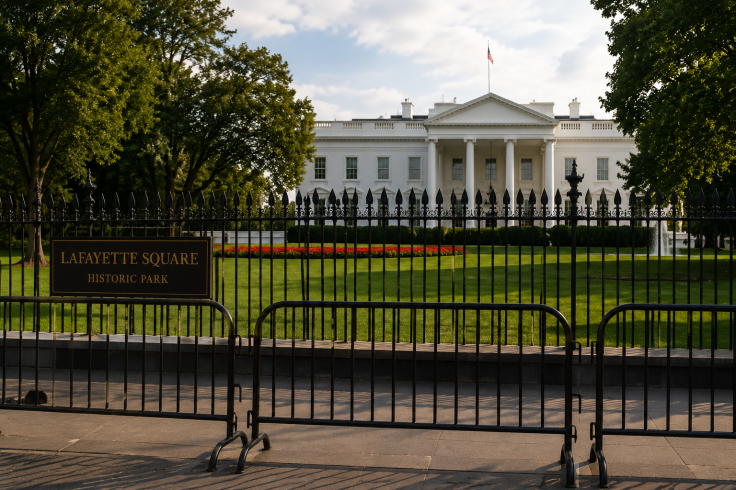
For months, Lafayette Square has remained behind temporary fencing and subject to restrictions. Now, the prospect of permanent fencing around the park opposite the White House is bringing a long-running debate over security and public access into sharper focus.
President Donald Trump has backed the Secret Service's plan to permanently fence Lafayette Square. Officials presented the latest proposal on 3 September 2026, alongside revised plans for a permanent White House visitor screening facility.
The National Capital Planning Commission moved the fencing proposal closer to a final decision. The projects did not receive final approval at the meeting. The proposals would mark a major change to one of Washington's most recognisable public spaces, long used by visitors, protesters and demonstrators.
Security Plans Move Forward
The Secret Service has sought stronger permanent security measures around the White House for years. Officials argue that temporary fencing, bollards, and other barriers are not an adequate long-term solution.
The latest proposal would place permanent fencing around Lafayette Square, with larger gates at the northern and southern entrances. Officials say the design would strengthen security while allowing public access when conditions permit.
The administration is also considering additional permanent security measures along Pennsylvania Avenue and around the White House campus. Those plans are separate from the Lafayette Square proposal.
A permanent visitor screening facility is also being proposed. Officials say it would replace temporary screening arrangements and improve security and the visitor experience. The design has been revised following consultations with federal agencies.
Concerns Over Public Access
Lafayette Square has traditionally been an important location for protests and other First Amendment activities because it sits directly opposite the White House. The National Trust for Historic Preservation, the Cultural Landscape Foundation, and other civic groups criticised the fencing proposal during the 3 September meeting.
Pam Fessler, a longtime Washington resident and retired White House journalist, told the commission that the park should remain a place where Americans can gather and express their views. Laura Follansbee, a lawyer for the American Civil Liberties Union of D.C., warned that permanent gates could make it easier for the administration or future administrations to close the park for extended periods.
That is a concern raised by a civil liberties advocate, not a legal finding that the fence itself would be unconstitutional. Any First Amendment challenge would depend on how restrictions were implemented and whether they met constitutional standards. White House historian Ed Lengel also criticised the wider security expansion, arguing that Washington was becoming more like a fortress and that the public was losing access to areas around the White House.
Why Trump Supports the Changes
The administration says the proposals are necessary because of genuine security threats. Officials have pointed to the protests that followed the May 2020 death of George Floyd. Demonstrators gathered around Lafayette Square and clashed with law enforcement, while Trump was briefly moved to a secure location inside the White House.
Richard H. Macauley, chief of the Secret Service's uniformed division, said in July that the events highlighted the need for new fencing. Trump has also adopted additional security precautions following multiple assassination attempts. He has credited the Secret Service with protecting him and has appeared behind bulletproof glass at some public events.
A Debate That Predates Trump
The conflict between presidential security and public access is not new. In 1995, President Bill Clinton closed Pennsylvania Avenue in front of the White House to vehicle traffic as part of heightened security measures.
The current proposal is different because it would create a permanent physical barrier around a public park historically associated with demonstrations and civic gatherings. Supporters regard the fencing as a practical response to modern security threats. Critics fear permanent gates could make restrictions on public gatherings easier to impose.
More Changes Could Follow
The Secret Service has not received everything it sought. Officials had considered replacing the red brick pavement in Lafayette Square because of concerns that protesters could remove the bricks and use them as projectiles. The administration ultimately decided to keep the historic bricks but reset them to make them more secure. The paving dates from the era of first lady Jacqueline Kennedy.
Final Approval Still Pending
The 3 September proceedings did not give final approval to the proposed Lafayette Square fence or visitor screening facility. Further review and public comment are expected before the projects can move forward. The debate now centres on a difficult question: how can the White House be protected without making the public spaces around it feel permanently closed?
For supporters, permanent fencing is a necessary response to modern threats. For critics, it risks changing the character of Lafayette Square and making it easier to restrict access to a historic gathering place. The security debate, like the park itself, is unlikely to disappear behind a fence.
© Copyright IBTimes 2026. All rights reserved.