Trump Demands White House Helipad Rebuild To Level Horizon as Crews Rip Out New Granite Presidential Seal
Defense contractor Sikorsky is paying as crews rush the redo before Xi Jinping's state visit
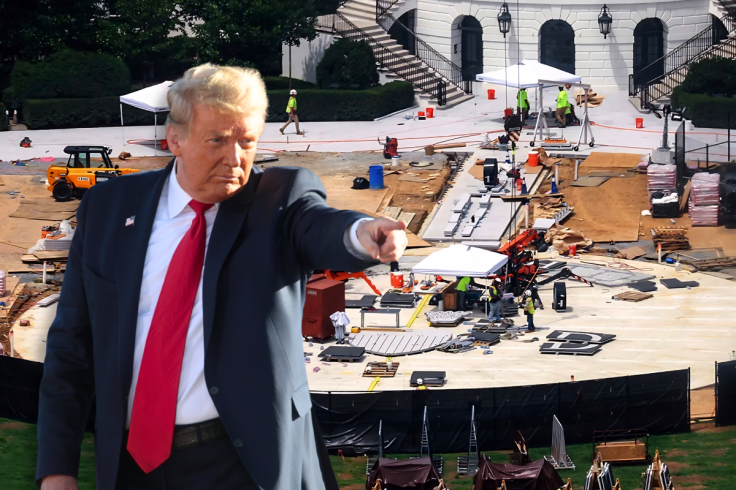
Construction crews are ripping out a 100-foot-wide granite presidential seal from President Donald Trump's new White House helipad after he objected to its appearance and the South Lawn's downward slope, forcing a costly redo of weeks of work.
The reversal undoes a project Trump had ordered finished at speed. Photographs taken this week showed workers prying away the granite lettering that spelled out the seal of the president, only just fixed to the circular landing pad. By Tuesday it had been fully removed.
Why the Seal Is Coming Out
Trump wants the helipad to sit level with the horizon, according to the Washington Post, which cited two people familiar with his private comments. The South Lawn slants downward, and contractors are now weighing whether to reshape the ground itself before rebuilding.
The slope is not a new problem. The National Park Service has called the incline gradual, and Marine One helicopters have landed on the lawn for decades without major trouble. Federal aviation rules do not demand a perfectly level pad, since a slight tilt helps rainwater drain.
A $6 Million Redo Before XI's Visit
The landing pad is estimated to cost up to $6 million (£4.45 million), and the rework threatens to push that figure higher. Construction started in June, and the White House later added about $875,000 (£650,000) to accelerate the job before a state visit, according to documents reported by the Washington Post.
That visit is Chinese President Xi Jinping's, expected in late September. Clark Construction, the firm also building Trump's new ballroom, is handling the work. It remains unclear how much time or money the fresh changes will add. Trump, a former property developer, has taken a personal hand in the design and pressed for granite over painted concrete.
Who Is Actually Paying
Trump has said the project is privately funded. He told reporters in the Oval Office that Sikorsky, the Lockheed Martin subsidiary that builds the Marine One fleet, agreed to cover the full cost because the company 'felt a little bit guilty' that its newer, more powerful VH-92A Patriot helicopters had torn up the grass. Lockheed Martin confirmed the payment, saying the contribution went to the National Park Service.
The setup has drawn scrutiny. Sikorsky holds billions of dollars in federal contracts, and Georgetown law and economics professor David Super has warned that taxpayers could still foot the bill indirectly if a contractor of that size later wins inflated government work.
Part of a Wider Building Push
The helipad is one of several projects reshaping the White House and the capital. Crews demolished the East Wing last year to clear space for a roughly $250 million (£186 million) ballroom, and Trump has floated a triumphal arch near the bridge linking Washington to Arlington.
Democratic Senator Kirsten Gillibrand of New York has called the helipad a 'joke.' She said Trump is charging taxpayers the extra $875,000 to rush a private vanity project, and argued that he refused to sign a bipartisan housing bill meant to lower costs for working Americans while fixating on the landing pad.
For now, the granite seal meant to crown the finished pad lies in pieces, a rushed showpiece pulled apart almost as fast as it went up.
© Copyright IBTimes 2026. All rights reserved.
- Recommended For You