

Doctors Issue Urgent Alert on Donald Trump's Weight: 'Premature Disability and Death' Feared
Doctors are warning that Trump's recent weight gain is pushing the 80-year-old president towards serious health risks, raising fresh questions over his fitness for office
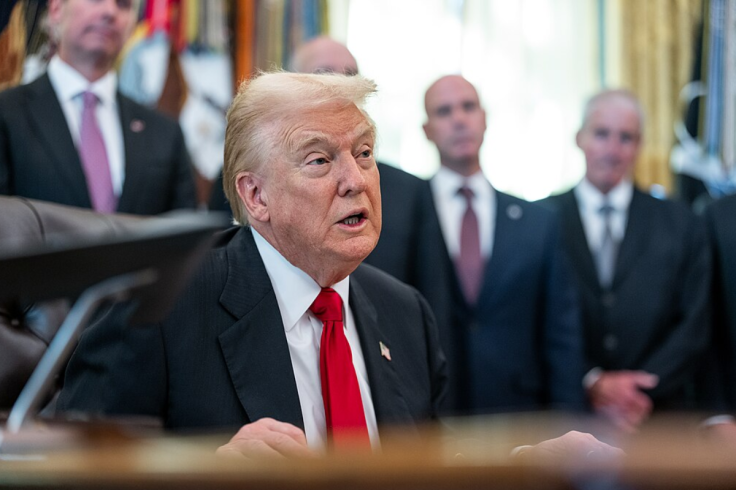
Donald Trump's expanding waistline has triggered a fresh wave of concern in Washington, as doctors warn that the 80-year-old US president's recent weight gain could put him at increased risk of 'premature disability and death,' according to physicians assessing his medical data.
The anxiety over Trump's health flared after a White House medical report in May quietly confirmed that he had gained 14 pounds since his previous examination.
The six-foot-three president was recorded at 238 pounds, placing his body mass index just 0.3 points shy of the standard threshold for obesity, based on figures released by the administration. While BMI is not a perfect diagnostic tool, it is widely used in clinical practice and public health.
Health experts are now saying out loud what many observers have wondered for years as they watched Trump juggle his duties with a diet heavy on fast food and an avowed dislike of exercise.
Their core message is simple enough. An overweight octogenarian running the most demanding job on the planet is not just a personal matter.
Doctors Draw Stark Parallels on Trump's Weight
The warning that has cut through the usual noise came from Dr Scott Kahan, a physician and director of the National Centre for Weight and Wellness, who told The Washington Post that managing obesity at the top of government should be treated as a security issue in its own right.
'Addressing obesity to protect the president's health should be a priority similar to ensuring Secret Service protections for his life,' Kahan said, arguing that the risks are not abstract. He went further, stressing that 'we know that obesity is a strong risk factor for numerous health issues, as well as premature disability and death.'

The numbers cited in the White House report are not unprecedented for Trump. During the latter half of his first term, he was already classed as clinically obese, with a BMI of 30.5 and a weight of 244 pounds, according to earlier official assessments.
In 2024, he appeared noticeably slimmer in public, sparking chatter in Washington about whether he had finally reined in his habits. Now, the latest figures suggest that whatever progress he made then has been slowly reversing through his second term.
David Kessler, the former head of the Food and Drug Administration, spoke to the Post about the broader health dangers facing Americans who are overweight, without referring to Trump by name. He singled out the type of fat that tends to build around the midsection, the look that has become something of a Trump trademark.
'That fat around the midsection, that visceral adiposity, is fat around our liver, pancreas, our heart where it doesn't belong,' Kessler explained, describing it as a particular driver of cardiovascular disease and metabolic problems.
The subtext is not subtle. For a man in his eighties with round-the-clock responsibilities, that kind of strain on the heart, liver and pancreas is a serious roll of the dice.
Donald Trump's McDonald's Habit and Public Health Image
Trump has long cultivated a sort of everyman persona built in part on a very public love affair with McDonald's. He has boasted of his fondness for burgers and fries and often treats questions about exercise with open scepticism, once suggesting that the human body was like a battery that could be 'used up' by overworking it.
The stories from people who have travelled with him are not exactly subtle either. In October, Joe Gruters, a Florida state lawmaker and former chairman of the Republican National Committee, recalled Trump's road diet with a mix of awe and disbelief.
'He had hot fries waiting for him from McDonald's. Then he had a Filet-O-Fish, a Quarter Pounder, and a Big Mac, and I think he combined two of them,' Gruters told a local government podcast.
He then admitted what millions of viewers have quietly wondered while watching Trump at rallies and events. 'I'm thinking to myself, how does the guy that's as senior as him get away with eating all this McDonald's consistently?'
The short answer from doctors is that he probably does not get away with it forever. Age, they point out, has a way of collecting its debts.
Trump himself occasionally appears to recognise the issue, at least as a talking point. Just last month, while discussing former president William Howard Taft, still remembered as America's heaviest leader, Trump seemed to draw an unprompted comparison with his own frame.
'He was a large man, very large,' Trump said of Taft. 'He loved baseball. He'd go to baseball games and loved the hot dogs there. He was our heaviest president. And I have to be careful because I don't want to supersede his record. And a thing like that would be possible if I allowed it to happen.'
The quip landed as a joke, but it also hinted at a rare flash of self-awareness. The question is whether that awareness extends beyond the punchline.
White House Stays Vague as Visible Signs Mount
Trump's health has been the subject of recurring speculation throughout his time in office, fed by images of purplish bruises on his hands, visibly swollen ankles and occasional public moments where he appears to nod off during events.
None of these proves anything in isolation, but together they have fuelled persistent rumours that the president is not as robust as his team insists.
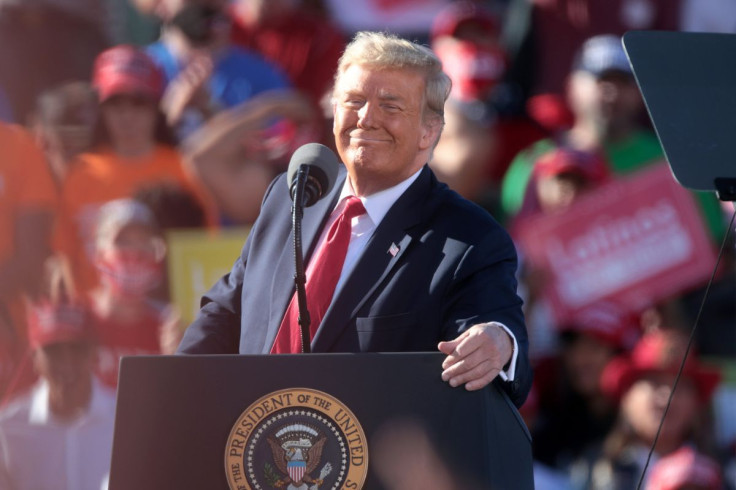
On Sunday, a spokesperson for the White House did not immediately respond to a request for comment on the latest concerns surrounding Trump's weight and long-term health risks.
In previous statements to The Daily Beast, communications officials have pushed back against speculation, insisting that Trump, the oldest person ever inaugurated as president, is the 'sharpest, most accessible and energetic' leader the United States has had.
For Kahan and other physicians, the debate boils down to something uncomfortably simple. The US president, they argue, is edging towards a risk profile that, for any ordinary 80-year-old patient, would trigger firm advice on diet, activity and long-term planning.
Whether that counsel is being followed in the White House clinic, and whether Trump is willing to change lifelong habits built on fast food and a distaste for the gym, remains another question entirely.
© Copyright IBTimes 2026. All rights reserved.