Electronic Arts Breaks Promise: Battlefield 6 Introduces AI Cosmetics Months After Denial
Battlefield 6 backlash exposes EA's broken promise on AI cosmetics. How Electronic Arts tested player tolerance and sparked industry-wide debate on corporate transparency.

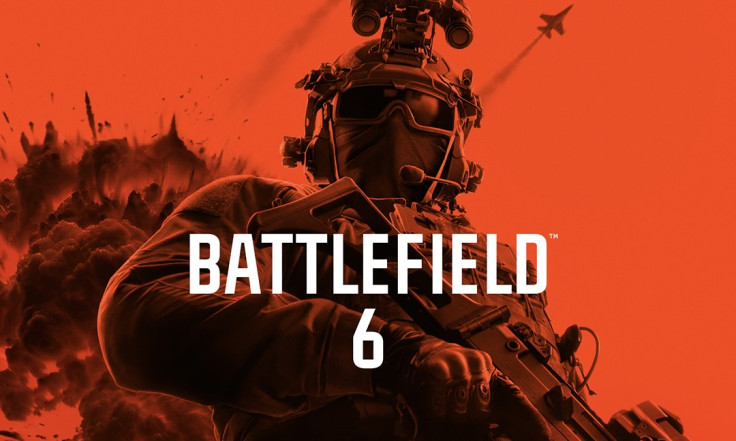
Electronic Arts just learned an expensive lesson about testing the limits of player patience. Over the past weekend, the highly acclaimed Battlefield 6 quietly introduced a collection of cosmetic items—stickers, charms, and weapon skins—that sparked immediate outrage across the gaming community.
The reason? They appeared to be artificially generated, which wouldn't have been catastrophic had EA not spent months assuring players that no such content would ever appear in the game.
The backlash was swift and merciless. Reddit threads exploded with screenshots highlighting the telltale hallmarks of AI generation: a double-barrel assault rifle that violates basic gunsmithing principles, a bear inexplicably caught between four and five talons, a fish skeleton impossibly assembled from shark jaws, and anatomical inconsistencies so glaring they became impossible to ignore.
'Don't really pass the vibe check,' one Reddit user succinctly summarised, capturing the visceral disgust many players felt upon encountering these items in their cosmetic menus.
What made the situation particularly galling was the timing and the broken promise. In an October interview, DICE VP and General Manager Rebecka Coutaz had explicitly stated there would be no AI-generated content in Battlefield 6. That pledge, it now appears, had an incredibly short shelf life—roughly two months, in fact.
Battlefield 6's AI Cosmetics: A Test or a Genuine Mistake?
The question plaguing the gaming community is whether this was a calculated experiment or simple corporate negligence. For those familiar with Electronic Arts' trajectory over the past eighteen months, the answer leans decidedly towards deliberation.
Since early 2024, EA and CEO Andrew Wilson have become increasingly vocal advocates for generative artificial intelligence, claiming it would 'improve efficiency' by roughly 30 per cent, presenting conceptual AI tools to stakeholders, and insisting that developers possess a 'hunger' to use generative artificial intelligence in their work.
That last claim particularly rankled EA's own workforce, who reportedly strongly disagreed with Wilson's characterisation of their appetite for AI integration. Rather than addressing staff concerns, EA doubled down. In October, just months before the Battlefield 6 cosmetics fiasco, the publisher partnered with Stability AI to 'reimagine game development'—a nebulous pledge that now reads like a warning sign.
The company's commitment to AI adoption appears non-negotiable, even as the broader industry grapples with profound uncertainty about where generative artificial intelligence belongs in creative work. That uncertainty was already visible across gaming.
Studios like Larian, Sandfall, Embark, and 11 bit incorporated AI into their projects with minimal backlash. Others, like the studio behind Call of Duty, offered weak justifications for their AI use.
Meanwhile, game award ceremonies were revoking medals over placeholder AI textures removed within five days of launch. The debate, once black-and-white, had fractured into thousands of shades of grey.
The Broader Context: EA's AI Obsession and Player Scepticism
Into this murky landscape entered Battlefield 6's poorly executed cosmetics. For many players, the incident felt less like a surprise and more like inevitable confirmation of their fears. EA's ownership stake had changed recently—the company was acquired by PIF, Silver Lake, and Affinity Partners in a $55 billion deal—and speculation immediately arose that these new overlords were pressuring the publisher to accelerate AI adoption. Whether that proved true remained unclear, but the timing was too coincidental to ignore.
The cosmetics themselves told a story of corporate haste. No artist genuinely fatigued before Christmas would produce such obviously flawed work. No quality assurance process worth its salt would approve items so visibly compromised.
This felt less like an honest mistake and more like a deliberate probe, a test to gauge how far players would tolerate AI-generated content before collectively revolting.
Revolt they did. Within hours, Battlefield 6 faced sustained criticism online, with players demanding immediate removal of the questionable cosmetics. The damage to EA's credibility, however, proved harder to remove than digital assets.
The broken promise—Coutaz's October assurance—now served as evidence of either systemic dishonesty or catastrophic internal miscommunication. Neither option reflected well on the publisher.
As the fallout continues, a larger question emerges: how many times can corporations test the boundaries of player tolerance before trust becomes irreparable? For EA, the answer may be approaching.
© Copyright IBTimes 2026. All rights reserved.
- MOST POPULAR IN Games