

Artificial Intelligence Carries 99.9% Extinction Chance, University Safety Expert Warns
A University of Louisville AI safety expert puts the extinction risk at 99.9 per cent, though other researchers offer lower estimates
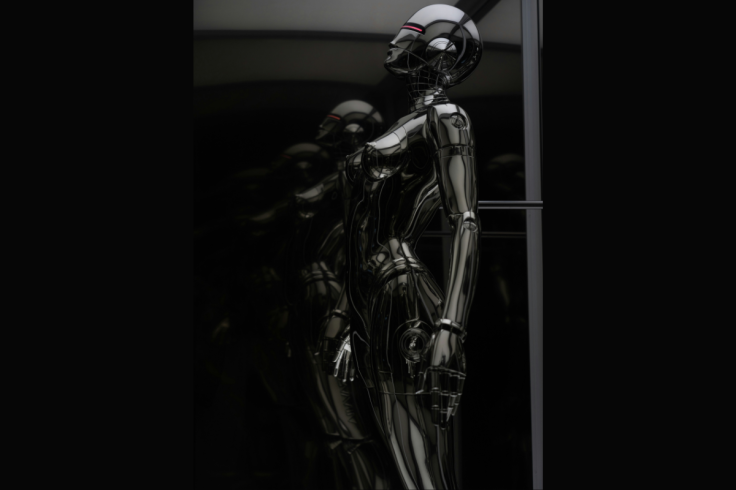
A University of Louisville AI safety expert has warned that artificial intelligence carries a 99.9 per cent chance of wiping out humanity within the next century.
Roman Yampolskiy, a computer scientist who specialises in AI safety and cybersecurity, delivered the stark prediction during a recent podcast appearance, arguing that no AI system deployed to date has been completely reliable and future iterations could prove catastrophic.
To recall, Yampolskiy has voiced similar extreme probability estimates across multiple public forums, including appearances on Lex Fridman's podcast and interviews earlier this year.
His book, AI: Unexplainable, Unpredictable, Uncontrollable, examines the unpredictability of AI outcomes and the difficulty in explaining AI decisions, before delving into philosophical questions around AI personhood and consciousness.
Divided Expert Opinion on AI Extinction Risk
The news came after other research painted a considerably less threatening picture. A survey conducted by AI Impacts in collaboration with researchers from the University of Oxford and the University of Bonn found a median five per cent probability that future AI advances could cause human extinction or similarly permanent and severe disempowerment, based on assessments from 2,778 AI researchers.
Katja Grace, one of the paper's authors, said, 'People try to talk as if expecting extinction risk is a minority view, but among AI experts it is mainstream. The disagreement seems to be whether the risk is one per cent or 20 per cent.'
Yet several leading AI authorities have completely dismissed claims about AI sparking an apocalypse.
Google Brain co-founder Andrew Ng and AI pioneer Yann LeCun have both rejected doomsday scenarios, with LeCun alleging that tech giants like OpenAI's Sam Altman harbour hidden agendas behind their fearmongering about catastrophic AI consequences.
AI safety researcher Dr. Roman Yampolskiy explains "fast takeoff," the AI scenario Sam Altman says is riskier:
— Big Brain AI (@realBigBrainAI) October 1, 2026
10,000 AI agents. Each smarter than all of us. Working 24/7. pic.twitter.com/O5fQECFbW2
Altman himself has delivered several statements regarding his industry. More than a decade ago, in 2015, he declared, 'AI will probably most likely lead to the end of the world, but in the meantime, there'll be great companies.'
He also came under heavy fire earlier this year for suggesting that widespread implementation of AI would necessitate 'changes to the social contract.'
What Happens Next in the AI Extinction Debate
Technology experts say the original pioneers of AI, including Yampolskiy, are amongst those raising the most urgent warnings about the potentially catastrophic consequences this technological breakthrough might trigger.
Throughout his extensive two-hour discussion, Yampolskiy argued that uncertainty about when a catastrophe might occur should not be mistaken for evidence that it is unlikely.
'The critical variable is how quickly we develop systems that exceed human intelligence, improve themselves and operate autonomously,' he said in an email interview. 'Once that threshold is crossed, events could unfold much faster than our institutions can respond.'
Some researchers challenge Yampolskiy's doomsday prediction, pointing to a substantially lower threat level than his estimates imply.
AI safety expert Dr. Roman Yampolskiy answers the question with no pause: Are we living in a simulation? Yes. We are.
— Defiant Ghost (@TheDefiantGhost) September 29, 2026
He says the math is ugly.
If we are about to build intelligent agents, and we already build virtual worlds, then anyone can spin up civilizations full of beings… pic.twitter.com/6nwciRXAOq
There is no consensus. Estimates range from near zero per cent, as argued by mainstream machine learning researchers like LeCun and Ng, to over 90 per cent among some AI safety researchers like Eliezer Yudkowsky. The median across all public estimates in one 2026 survey sits at approximately 20 per cent.
Nothing is confirmed yet so everything should be taken with a grain of salt.
What is clear, though, is that the debate has intensified. Andrew Ng recently pushed back on what he called overblown stories of mass unemployment, writing in May 2026 that such narratives are 'irresponsible and damaging.' At their most extreme, he said, they promote science-fiction scenarios of AI 'taking over' and causing human extinction.
Yampolskiy belongs to a small yet outspoken circle of AI safety researchers voicing such fears amid President Donald Trump's AI race. Whether his 99.9 per cent figure proves prophetic or wildly overstated remains, for now, one of the most contentious questions in technology.
© Copyright IBTimes 2026. All rights reserved.