

Ex-UAP Chief Claims He Saw 'Non-Human Craft With My Own Eyes' Aboard a US Nuclear Submarine
Jay Stratton says a Navy P-3 collected sensor data during the alleged encounter, but the incident has not been independently verified
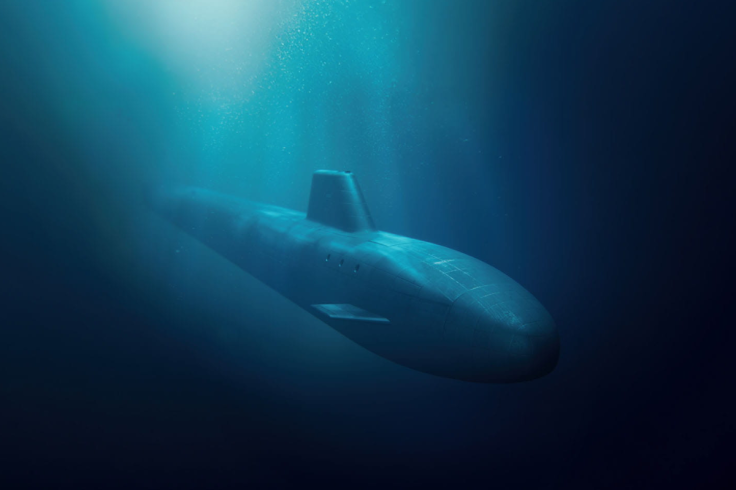
Jay Stratton, a former senior US defence intelligence official who spent more than 16 years investigating unidentified anomalous phenomena (UAPs), claims he personally saw an unexplained object during an operation involving a US nuclear submarine off the East Coast.
In an interview with Fox News anchor Bret Baier, Stratton said the object appeared during what he described as the operation's first mission. He said a Navy P-3 aircraft collected sensor data during the encounter.
Stratton said he helped organise the collection of data on the object during an operation involving a submarine and a Navy P-3 aircraft. He did not, in the material reviewed for this article, establish that he personally directed or authorised the deployment of the submarine.
Stratton also claimed that the US government possesses craft of non-human origin. The interview did not independently establish that assertion.
Stratton's memoir, 'Out of the Shadows: Revealing the Truth About Non-Human Intelligent Life', was published by HarperCollins imprint William Morrow on 13 October 2026.
In the book and interview, Stratton alleges that a long-running system of secrecy has concealed information about UAPs from presidents, military officers and the US public for about 80 years.
The Submarine Claim
According to Stratton, the encounter involved a submarine operating off the East Coast and a Navy P-3 aircraft used to collect data on the object. In the interview, he said the submarine was positioned offshore while the P-3 was used to try to capture information on the UAP.
The interview material reviewed for this article does not establish the encounter's date, precise location or mission designation.
Stratton also discussed what he described as a secretive international race involving UAP-related technology. The remarks cited here do not establish which countries, if any, he was referring to.
Stratton frames his account as both a challenge to institutional secrecy and an argument for greater disclosure. Whether his claims are supported by the available evidence remains an open question.
Alleged Pentagon Warning
Separately, Stratton described an alleged encounter involving three senior military officers and a subsequent dispute over whether the incident should be formally reported.
Stratton said the officers saw an object appear, hover above a training compound and then disappear instantly. He characterised the two admirals and commander involved as highly experienced officers.
According to Stratton, he arranged for the officers to travel to the Pentagon for a formal debriefing so the encounter could be entered into the official intelligence record. Stratton alleged that an unnamed senior Pentagon figure warned the officers that filing a report could damage their reputations.
In his memoir, Stratton refers to this alleged intervention as a 'hidden hand'. The claim is serious, but it remains his account.
Presidents and Secrecy
Stratton alleged that the US president was being kept from information about UAPs. He argued that the president should receive more extensive briefings on the subject.
He described the prospect of a president publicly confirming that humanity is not alone as a significant moment. The remark was part of his interview with Baier, rather than a statement from any government agency.
Stratton also alleged that those he believes control the secrecy have assumed the US public could not cope with the truth. 'The people who have had this 80-year monopoly on the topic believe that the secret is so intense that the American people cannot handle it,' he claimed.
Why It Matters
Stratton's published biography describes more than 32 years of military and intelligence experience, including more than 16 years investigating UAPs. He served as a senior federal intelligence executive and was the first director of the Pentagon's Unidentified Aerial Phenomena Task Force.
That background does not prove his central claims. It does, however, explain why his account will attract attention from disclosure advocates, and why sceptics will want documents, sensor records, witness testimony and official confirmation before treating the submarine episode as more than an allegation.
The material reviewed for this article contains no independent confirmation from the Pentagon that the alleged warning was issued. Without independent corroboration of the submarine encounter, its details remain unverified.
© Copyright IBTimes 2026. All rights reserved.