Hot Mic Captures Trump's Fury As He Complains He Can't Get His Picks Confirmed
A hot-mic outburst and two court rulings crystallise a constitutional fight over interim appointments and the Senate's role in confirmations.
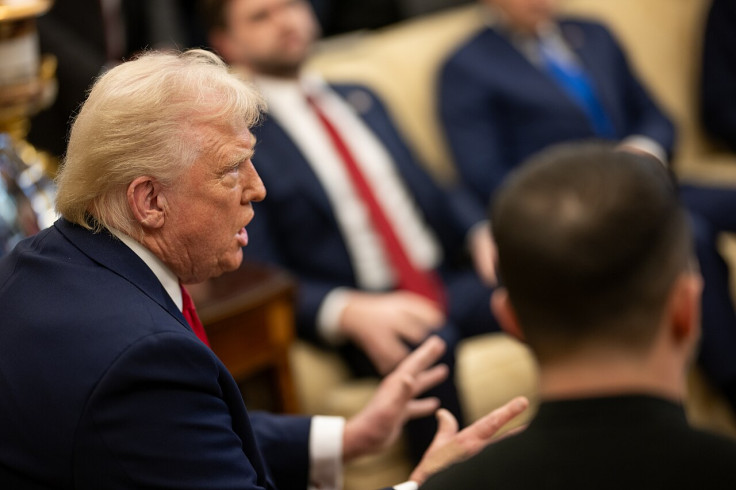
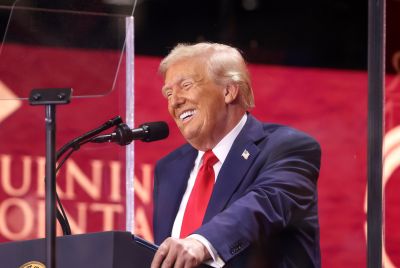
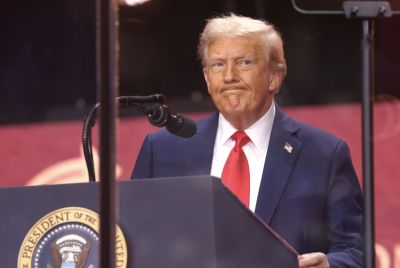
Caught on a hot mic, US President Donald Trump exploded: 'I can't appoint anybody;' a moment that crystallises a growing fight over the Senate's century-old 'blue slip' practice and the legal rebuke that forced his chosen New Jersey prosecutor to quit.
The comment came as Trump departed a Rose Garden event after the Third Circuit upheld a district court finding that Alina Habba, a former personal lawyer to Trump, had been unlawfully serving as the acting United States Attorney for the District of New Jersey.
The judicial rulings have intensified a standoff between the White House and the Senate over whether home-state senators can effectively block nominees by withholding so-called blue slips.
Court Ruling That Tipped The Scales
A three-judge panel of the United States Court of Appeals for the Third Circuit affirmed a district court order that Habba's appointment violated the Federal Vacancies Reform Act and disqualified her from overseeing prosecutions in New Jersey.
The opinion, posted by the court, rejects the administration's novel manoeuvres to extend her tenure beyond the statutory interim period.
The district court memorandum, issued by Chief Judge Matthew W. Brann, set out the chronology and legal reasoning that underpinned the decision, concluding Habba's authority lapsed and that subsequent actions to reinstall her were invalid. That order triggered multiple legal challenges from defendants who argued prosecutions under her watch were tainted.
The appeals court's decision effectively left the White House with two unpalatable options: pursue further appeals and prolong uncertainty in New Jersey criminal matters, or remove Habba to preserve the stability of prosecutions. Habba announced her resignation on 8 December 2025.
The Blue Slip At The Centre Of The Row
The hot-mic outburst mentioned 'blue slips,' a longstanding Senate Judiciary Committee tradition under which home-state senators are sent a coloured form to register approval or objection to judicial and, at times, U.S. attorney nominations. Although not a statutory rule, the practice has often had the practical effect of giving individual senators a veto over home-state nominees.
Senate Judiciary Committee materials and statements from Chairman Chuck Grassley show the institution treats blue slips as a tool of senatorial courtesy and local consultation, and some Republican senators have defended the tradition as a check on executive unilateralism.
However, the White House argues the custom is being weaponised to block qualified nominees and has urged Republicans to 'look at that blue slip thing'.
That clash explains the political heat in the hot-mic leak. With several Trump nominees stalled, the president has publicly pressed GOP senators to curtail the practice, while committee Republicans, mindful of the next Democratic administration, have resisted wholesale abolition. The result: a tug-of-war between preserving Senate prerogatives and enabling faster confirmations.
Political Clash

The Habba incident is not isolated. Federal judges in multiple districts have scrutinised the administration's use of interim appointments, producing a body of litigation that calls into question the durability of similar placements elsewhere. Legal commentators warn that routinising these controversial appointment tactics risks further judicial intervention and disruption to prosecutions.
The practical consequence is immediate and political for Trump. The hot-mic moment captured raw frustration: a president who believes he has the electoral mandate to staff the executive branch, yet who faces institutional brakes that can thwart that desire.
For senators such as Cory Booker and Andy Kim, New Jersey's two Democrats who had withheld blue slips on Habba, the disqualification and resignation are vindication of their insistence on Senate involvement. Their joint statement welcomed the Third Circuit's ruling as an affirmation of constitutional appointment processes.
The Federal Vacancies Reform Act seeks to balance the executive's need for continuity with the Senate's advice-and-consent; when administrations test statutory boundaries to keep partisan allies in office without confirmation, courts may be forced to police the line. The Habba rulings suggest the judiciary is willing to do so.
A hot-mic aside becomes a headline; the legal rulings that followed make it a constitutional test.
© Copyright IBTimes 2025. All rights reserved.
- Recommended For You