Trump Accused of Being a 'Scam' After Campaign Clips Promise of 'Affordability' Which He Now 'Opposes'
US President Called 'Affordability' a 'Scam' Weeks After Promising to 'Make America Affordable Again'
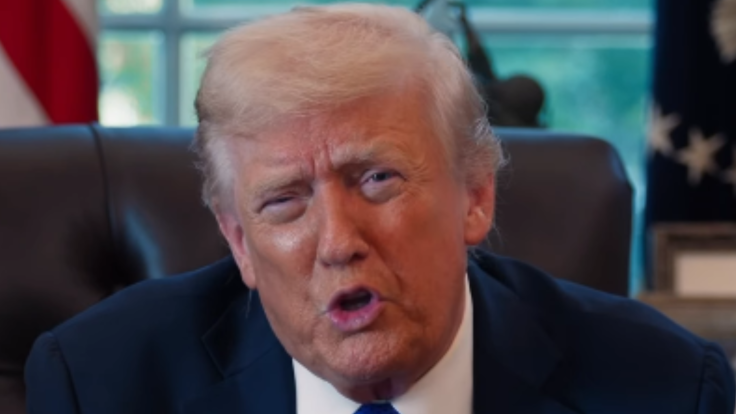
Trump's own words, captured on official White House video, have set off fresh anger after he called 'affordability' a 'Democrat scam' just weeks after campaigning on a pledge to 'make America affordable again'.
The comment, made during a Cabinet meeting, has put him at odds with campaign footage in which he repeatedly promised rapid relief on everyday costs. Critics say the contradiction helps explain growing voter scepticism about who is responsible for the cost-of-living squeeze. Supporters argue he is reframing political rhetoric; opponents call it a betrayal of a central campaign promise.
Cabinet Remarks Spark Outrage
Trump told aides and reporters at the opening of the Cabinet meeting, held on Dec. 2, 2025: 'The word "affordability" is a Democrat scam. They just say the word; it doesn't mean anything to anybody'.
The timing was striking. The same White House has been publishing clips and fact sheets outlining administration actions aimed, it says, at lowering household costs — including executive steps on food-supply competition and fuel-economy rules, described as measures to reduce prices for families. Those official materials stress affordability as an administration objective, even as the president dismissed the term in the Cabinet room.
Democratic lawmakers and policy analysts were quick to seize on the inconsistency. 'Campaign promises are not marketing slogans,' one senior Democratic House aide told this reporter. 'When a president promotes affordability on the stump and then calls the word a "scam" in the Cabinet, ordinary households are left wondering which message to trust'.
Campaign Claims Versus Recent Rhetoric
During the 2024 campaign and in early 2025 messaging, Trump repeatedly used the phrase 'Make America Affordable Again' and, at rallies, vowed to bring prices down 'starting on Day 1'. Campaign videos and ads — including official clips posted to campaign channels and mirrored across mainstream platforms — show him promising swift action on groceries, energy, and medicines.
That promise has collided with administration policy choices that economists say could have mixed short-term effects. Tariff decisions and regulatory rollbacks intended to spur domestic production have, at times, raised input costs; the White House counters that longer-term supply-side changes will reduce prices.
The administration has also rolled out targeted measures such as deals with pharmaceutical companies and an executive order focused on anti-competitive behaviour in the food-supply chain, which it frames as concrete steps towards lowering household bills.
A Divergence on Data and Public Perception
The empirical backdrop matters. Official inflation data show headline consumer prices were up 3.0 per cent year on year in September 2025 — still above the Federal Reserve's 2 per cent target and a figure households feel in daily purchases from fuel to food. That statistic is central to the political problem: people experiencing rising costs expect leaders to treat affordability as a substantive policy goal, not a partisan talking point.
Polling this autumn signalled growing frustration. Several surveys found a substantial proportion of voters blaming the president for persistent cost pressures; other polls showed many still remember the campaign pledge to prioritise affordability.
Americans continue to say affordability is out of control, and many have begun to blame Trump, a new Politico Poll found.
— POLITICO (@politico) December 4, 2025
Almost half — 46% — say the U.S. cost of living is the worst they can remember it being, a view held by 37% of 2024 Trump voters.
➡️https://t.co/yCc6DGASxB pic.twitter.com/PoHZbPJiFl
Taken together, the data and the president's public statements create a parity of political risk — an expectation gap that Democrats and independent voters are primed to exploit.
White House spokespeople have defended the administration's record, pointing to falling prices in certain categories and recent executive actions designed to curb price-fixing and expand patient access to lower-cost medicines.
However, critics argue that isolated policy wins do not erase the plainly contradictory rhetorical stance captured on official video.
Republican strategists contend the president is attempting to shift the debate back onto what they portray as Democratic mismanagement of markets. But the optics — campaign clips of promise juxtaposed with Cabinet footage calling the same word a 'scam' — have given opponents a potent line of attack and left many voters uncertain which narrative to accept.
© Copyright IBTimes 2026. All rights reserved.
- MOST POPULAR IN Trending