

Trump Is Allegedly Designing The Oval Office 'Almost Identically' to Epstein's House to 'Make It Feel More Like 'Home'
People claims that the Oval Office's gilding mirrors Jeffrey Epstein's home

Trump has remade the Oval Office in a lavish, gold-heavy style that critics say echoes Jeffrey Epstein's notorious Upper East Side townhouse. This comparison has spread from social media to tabloids and now into mainstream commentary.
Since returning to the White House, Trump has overseen a rapid redecorating project that has transformed the Oval Office's restrained, neoclassical palette into a maximalist, gilded interior.
Visitors and journalists report ornate gold appliqués, cherubic ornaments brought from Mar-a-Lago, and newly gilded mantels and moldings; changes the White House and the president have publicly celebrated as personal touches.
The 'Golden' Makeover
Administration officials and multiple reporting outlets say Trump relied on a personal craftsman, described in coverage as his 'gold guy', to carry the look from his Palm Beach residence into the West Wing.
The Wall Street Journal first reported that cabinetmaker John Icart, who had worked at Mar-a-Lago, travelled to Washington with the president on Air Force One to help install gilded trims and fireplace carvings. The White House press office publicly embraced the aesthetic, with a spokesperson calling it 'the Golden Office for the Golden Age'.
Critics say the changes go beyond decoration. Interior photographs and on-the-record tours offered by the president and his allies show medallions, frames, and mouldings piled into the formerly spare room; a visual departure that, to some, signals personalisation of the most symbolic workroom in American government.
The president himself has posted video footage claiming 'some of the highest quality 24 karat gold used in the Oval Office and Cabinet Room', framing the remodelling as a point of national pride.
The Epstein Comparison: What Is Being Alleged
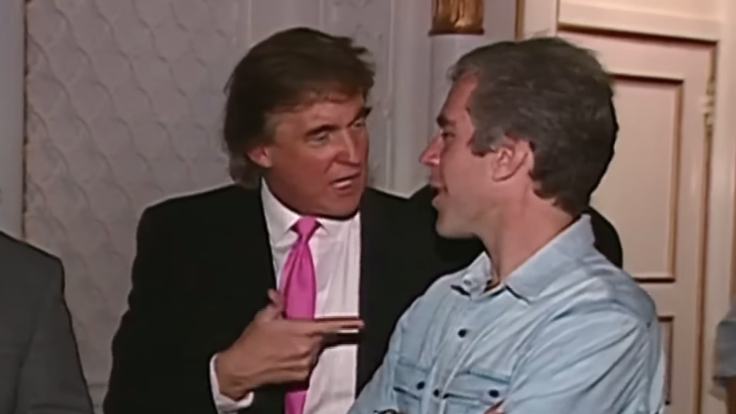
Images and federal exhibits from the FBI and prosecutors' files, publicly released during litigation and reporting on Jeffrey Epstein, show a six- or seven-storey Manhattan townhouse with heavy neoclassical ornamentation, large mirrors, pale upholstery, and gilded motifs that commentators have said resemble the new Oval Office trimmings.
Those government images, entered as exhibits in court proceedings and circulating in news coverage, form the factual basis for many of the comparisons now trending online.
Online posts and tabloid pieces have gone further, asserting that the Oval Office is being designed 'almost identically' to Epstein's home to make the president feel 'more like home'. Those claims, however, are characterisations from commentators and social media users rather than statements of fact supported by documentary evidence that the White House explicitly modelled the space on Epstein's property.
The federal images, and the president's own decision to bring elements from Mar-a-Lago into the White House, are verifiable; the claim of deliberate replication of Epstein's house is an allegation circulating in the public sphere.
Why the Comparison Matters Politically and Symbolically
The Oval Office is not merely a room, but a global symbol of U.S. executive authority. When its appearance changes so visibly, it invites political interpretation. For opponents, the influx of ostentation is evidence of a president recasting public space in his private image. For allies, the change is personal branding and a morale statement.
Meanwhile, survivors and advocates who followed Epstein's cases see the resemblance as distressing and politically loaded: a reminder of the proximity of wealthy spaces where abuse allegations later emerged. Those human stakes explain why images of gilding and marble elicit strong reactions beyond mere taste debate.
A separate, related controversy has been the scale of broader White House changes: the administration announced a new East Wing ballroom project with a price tag often reported in public media as £149,925,000 ($200,000,000). That figure has sharpened criticism from preservationists and fiscal watchdogs who ask whether such extravagant undertakings are appropriate.
© Copyright IBTimes 2026. All rights reserved.