

'I Had No Choice': Woman Says Catholic Priest and Parents Pressured Her Into Adoption in 1983
Julia Macklin reveals she was forced to surrender her baby in 1983, exposing Catholic Church adoption practices that continued years after official reforms.
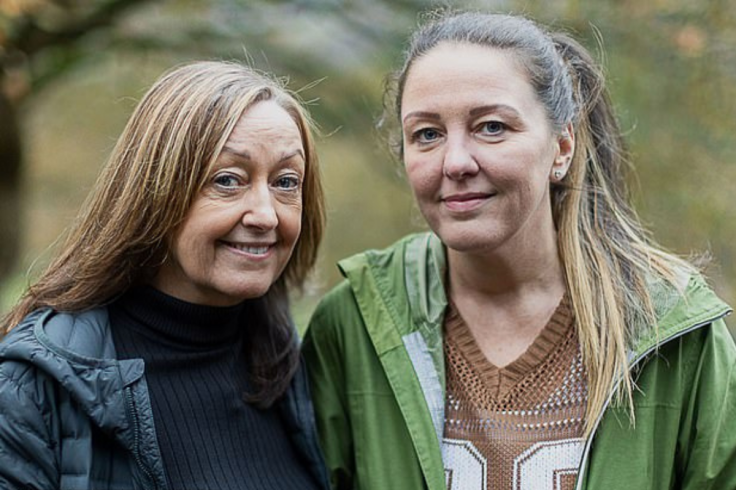
Julia Macklin, a 60-year old from Great Manchester, she was pressured by her parents and a Catholic priest into consenting to the adoption in 1983, years after legislation was supposed to end the practice. She is believed to be the first mother to speak publicly about a forced adoption occurring in the 1980s, challenging the long-standing focus on 1949–1976 as the principal period associated with historical forced adoption.
The Adoption That Should Never Have Happened
Historical forced adoption practices are commonly associated with the period before 1976, when unmarried mothers were routinely pressured to relinquish their babies. However, a 2026 parliamentary inquiry found evidence that coercive practices continued after the Adoption Act 1976 and into the early 1980s.
Julia's case suggests the practice persisted well beyond that cutoff. She became pregnant at 15 in the summer of 1982 after meeting a local boy at a fairground when she was 14. Her devout Catholic parents and their parish priest allegedly pressured her into giving up the child through a Catholic charity, according to her statement.
Julia says the priest told her father that he would never receive a promotion if it became known that his daughter was an unmarried mother. That threat, combined with family shame, left Julia feeling trapped. She was taken to a Catholic-run mother and baby home in Manchester where she witnessed other young women being pushed toward adoption.
After months of pressure, she agreed. Julia gave birth to Siobhan in March 1983 at St Mary's Hospital in Manchester. Two weeks later, the baby was adopted through a married Catholic couple through the Catholic Children's Rescue Society in Salford.
'I Had No Choice'
Julia was not allowed to see her boyfriend again, despite having known him for almost two years. She tried repeatedly to track down her daughter but was denied contact by the charity. The mother and daughter were reunited in 2001, when Siobhan was 18 and legally entitled to obtain information enabling her to access her original birth records.
'The Catholic priest came to my parents' house in 1982 and between him and my mum and dad they told me what was going to happen,' Julia said. 'I didn't want to give up my baby for adoption because my baby brother was just two and a half at the time and I knew how painful that was going to be. But I had no choice.'
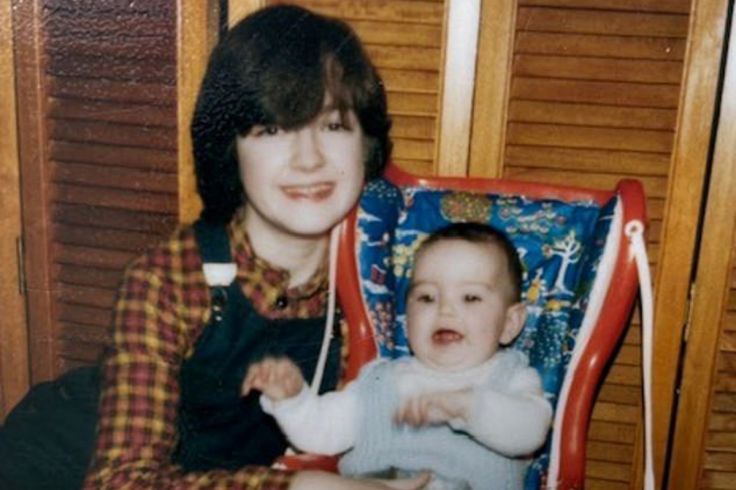
She added: 'My mum and dad were devout Catholics but even though they were not shallow people, they were burdened by the shame and there was a fear my father had that it would affect his career. The priest took me to a mother and baby home to show me how things would be and I saw many other young girls just like me.'
Julia said she was stonewalled by the Catholic Children's Rescue Society (Diocese of Salford) when she tried to find her daughter. 'It was all totally wrong and the more I think about it, the more outraged I feel that they did this to us and got away with it. She belonged with me, and I will never, ever recover from the loss as long as I live.'
Government Apology Falls Short
In July, then-Prime Minister Sir Keir Starmer formally apologised in Parliament for the historical forced-adoption practices that affected an estimated 250,000 women in England between 1940 and 1980. However, the apology and accompanying historical framework have focused heavily on the main period under examination, leaving questions about people who experienced coercive adoption practices after 1976, including Julia.
'It was a forced adoption made possible by the Catholic Church and I deserve an apology from the church and from the government because Keir Starmer's apology didn't really include women like me whose children were taken away in the 1980s,' Julia said. 'I still live with the stigma that I gave my baby up when I know I didn't - she was taken.'
Julia's daughter Siobhan, now a health and care manager in Manchester, said: 'There is no way my mum would have given me up out of choice and I have come to understand that over the years and what she was up against.
My adoptive parents are amazing but I have learned a lot about what my mum went through as well and I believe we are both owed an explanation as to why forced adoptions were still happening in the 1980s long after they are supposed to have ended.'
Caritas Diocese of Salford subsequently provided adoption support for people whose adoptions had been arranged by Caritas or the Catholic Children's Rescue Society. Its adoption support service closed in September 2022, after which the relevant records were transferred to Salford City Council. Julia is trying to obtain those records, which she believes will prove she was coerced.
A spokesperson for Caritas Diocese of Salford said: 'We are deeply sorry to hear about Julia's experience and recognise the lasting pain that historic adoption practices may have caused for many people and their families.
Caritas Salford was not established at the time and we are not able to comment on individual circumstances or decisions made in relation to historic adoptions.'
The Catholic Church issued an apology for historical adoption practices in 2016, stating it apologised 'especially for the hurt caused by agencies acting in the name of the Catholic Church'.
A spokesperson said that apology 'still stands' and that Catholic organisations providing post-adoption support 'continue to reflect on how we respond in sensitive and meaningful ways to those mothers and children affected'.
Julia and Siobhan have shared their story in a BBC documentary called Stolen Babies, which airs on BBC Scotland on Tuesday 1 September and on BBC Two across the UK on Wednesday 2 September. The programme is available on iPlayer from Monday 31 August.
'I haven't been able to tell my story until now because I didn't want to hurt my parents,' Julia said. 'But because they are no longer with us, I am able to speak out and draw attention to the fact it was still happening in the 1980s.'
The allegations described in this article are based on Julia Macklin's account and statements from those involved. IBTimes UK has not independently verified every detail of her account. The article does not suggest that the allegations have been established as fact
© Copyright IBTimes 2026. All rights reserved.