ICE Agents Injured After Accidentally Shooting Themselves During Routine Firearms Training
Accidental discharges during training exercises spotlight safety issues as ICE expands rapidly.
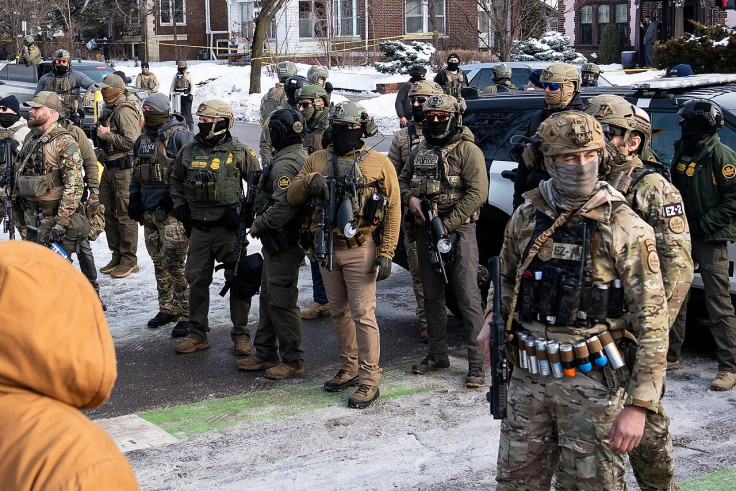
In the space of just two days last year, three federal immigration agents accidentally shot themselves during routine training exercises. These incidents highlight safety concerns as ICE's workforce balloons with new hires and billions in funding.
Self-Inflicted gunshot wounds during routine training
Between March 17 and 18, 2025, separate incidents involving ICE agents occurred during standard firearms training sessions. Three agents accidentally discharged their weapons while holstering or inspecting their firearms. One taser also discharged unexpectedly inside an ICE office. No lives were lost, but the injuries serve as stark reminders of the risks that come with high-pressure training.
In California, an HSI agent was injured when he accidentally shot himself in the thigh during a quarterly firearms exercise at the Contra Costa County Sheriff's Office range. The agent was reported to be stable after being treated at hospital.
The incident happened while he was holstering his service weapon. His supervisor was present, and no impairment or alcohol was involved. The range officer reported the mishap to authorities, but no police report was filed.
On the same day, another HSI officer in San Francisco experienced a similar mishap. While holstering his firearm, he discharged it, hitting his upper thigh. He was treated on-site and later transported to hospital. He was described as being in good spirits, conscious, and breathing.
A day earlier, in Baltimore, an Enforcement and Removal Operations (ERO) officer grazed his thigh during firearms qualification. The wound was about four inches long. First aid was administered immediately, and he was later released from hospital.
Adding to the list, an ICE deportation officer in North Carolina accidentally triggered a taser during an inspection at the office. The probe hit the carpet, and no one was injured.
Not just rookie mistakes
Former senior officials from ICE say such incidents are not uncommon.
Darius Reeves, a retired ICE field office director, told Newsweek, 'Accidental incidents do/will occur, unfortunately. Overall, I believe the training and safety mechanisms in place are standard and robust.' He pointed out that most unintentional discharges happen during routine tasks, not in high-stakes situations.
Scott Mechkowski, who retired as ICE's deputy field office director, put it bluntly. 'Accidental discharges happen. Eighty percent of the time, it's operator error,' he said. He explained that fatigue, stress, and human error often play a role. 'It's not an easy qualification whatsoever,' he added, referencing the rigorous training federal agents undergo.
ICE's growing workforce raises questions
ICE has expanded rapidly. Last January, the Department of Homeland Security announced it had hired over 12,000 new agents. Billions in extra funding followed the passage of the so-called One Big Beautiful Bill Act in July. Critics warn that such fast growth could compromise safety and oversight.
The agency's expansion is partly driven by political promises. The Trump administration, under pressure from opponents, continues to push for stronger immigration enforcement. Critics argue that the rush to hire more agents might be risking safety in the field. Allegations of excessive force, racial profiling, and due process violations have dogged ICE and Border Patrol for years. The recent shootings of civilians in Minneapolis sparked international outrage.
Heidi S. Bonner, a criminal justice professor, pointed out that even in controlled training, human performance under stress deteriorates. 'Attention narrows, and situational awareness is reduced,' she said. Rapid workforce growth can heighten these risks unless leadership emphasises decision-making under pressure.
'Decisions made in split seconds matter,' she added. 'Even in training, attention to fundamentals like muzzle discipline and threat assessment is vital.'
ICE has yet to comment publicly on these incidents. The agency faces mounting scrutiny as it balances rapid hiring with the safety of its personnel and the public.
© Copyright IBTimes 2026. All rights reserved.
- MOST POPULAR IN Politics