ICE Agents Are Now Checking IDs at US Airports — What Travellers Need to Know Before Flying This Spring
TSA confirmed ICE agents received standard training and are now verifying traveller documents using official screening equipment
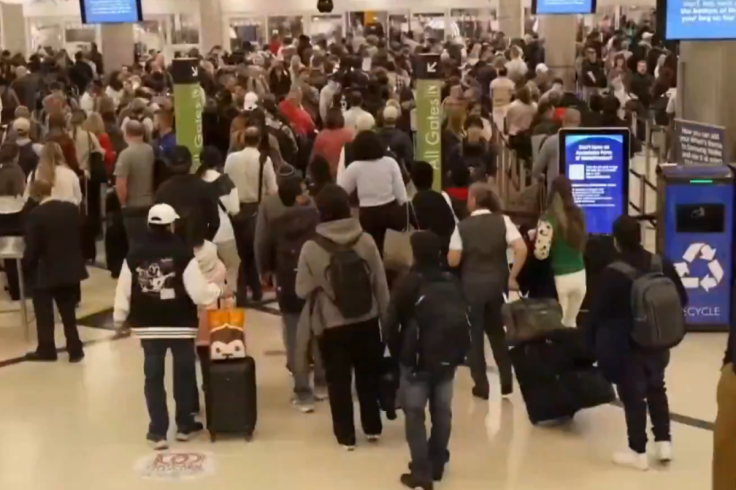
Immigration and Customs Enforcement (ICE) agents deployed to US airports are no longer just directing crowds or handing out water bottles. They're now checking travellers' identification documents at security checkpoints, a sharp escalation that has drawn protests, legal challenges, and fresh questions about the line between airport security and immigration enforcement.
From Crowd Control to ID Checks
President Donald Trump ordered ICE agents to airports on 24 March as the Department of Homeland Security (DHS) shutdown, now in its sixth week, pushed the Transportation Security Administration (TSA) to its worst staffing crisis in history. White House border czar Tom Homan said agents would handle 'non-specialised security functions' such as guarding exits and managing queues.
That changed within days. Acting TSA Administrator Ha Nguyen McNeill told a House committee on 25 March that ICE agents are now operating credential authentication machines at travel document checkpoints after receiving 'standard TSA training'.
At John F. Kennedy International Airport in New York, a TSA officer confirmed to reporters that agents were being trained on ID verification. In Phoenix, armed ICE agents in ballistic vests checked travellers' documents and helped manage baggage on conveyor belts.
A Workforce in Freefall
The deployment follows weeks of mounting chaos at US airports. McNeill told Congress that more than 480 TSA officers have quit since the shutdown began on 14 February, and national callout rates have jumped from 4% to more than 11%.
Several airports recorded callout rates above 40%, with Houston's Hobby Airport hitting 55% on a single day.
TSA workers haven't been paid for over six weeks, with nearly $1 billion (£749 million) in payroll still outstanding. Wait times at George Bush Intercontinental Airport in Houston stretched past four hours this week.
Civil Liberties Groups Sound the Alarm
The American Civil Liberties Union (ACLU) has challenged the legality of ICE's expanded role, arguing it creates conditions for racial profiling and discriminatory targeting of travellers.
Naureen Shah, the ACLU's director of policy and government affairs for immigration, said the deployment marks the first time a president has sent 'armed agents to the airport to inspire fear among families.'
A viral incident on 22 March gave those fears a face. ICE agents in plain clothes detained Angelina Lopez-Jimenez, 41, and her nine-year-old daughter at San Francisco International Airport. The New York Times reported that TSA had flagged the pair to ICE two days earlier after their names appeared on a domestic flight manifest. The family had a 2019 removal order and were deported to Guatemala within 48 hours.
What Travellers Should Know
The presence of armed immigration agents at domestic security checkpoints marks a departure from decades of protocol. ICE agents have been confirmed at no fewer than 15 airports, including hubs in Atlanta, New York, Houston, Chicago, Philadelphia, Cleveland, New Orleans, Phoenix, and San Juan.
Protesters gathered outside Cleveland Hopkins International Airport and JFK this week. Philadelphia District Attorney Larry Krasner warned ICE agents not to overstep their authority. Chicago Mayor Brandon Johnson said the agents were 'not welcome' in the city's airports.
For travellers flying within the US this spring, the reality is straightforward. You may be asked for identification by someone who isn't a TSA officer. And the person checking your documents may be trained in immigration enforcement, not aviation security.
© Copyright IBTimes 2026. All rights reserved.
- MOST POPULAR IN World