India Mandates State-Owned Cyber Safety App — Users Can't Delete It, Privacy Fears Rise
The move has drawn fierce criticism from privacy advocates and tech giants like Apple

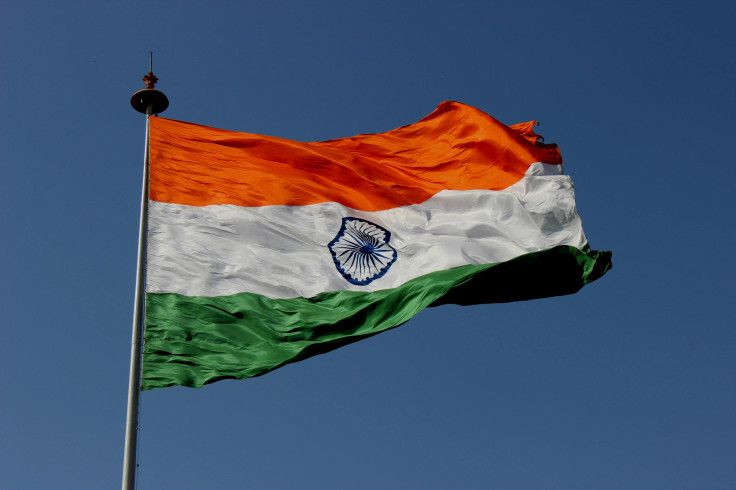
India is pushing its citizens to use a new, government-owned cybersecurity app, but this mandatory push is sparking serious alarm among privacy advocates.
Unlike standard apps, this security tool cannot be removed by users, raising mounting concerns about personal data and digital surveillance in the country.
A Pre-Installed Tool Users Cannot Remove
A government directive has revealed that India's telecommunications department has confidentially instructed mobile phone manufacturers to factory-install a mandatory, state-run digital security application on all upcoming devices.
This application cannot be removed by the owner, a step that is expected to provoke resistance from tech giant Apple and raise deep concern among campaigners for digital privacy.
The Telecom Ministry has reportedly (and secretly) asked all smartphone companies to preload the Sanchar Saathi app on all their new phones.
— Mukul Sharma (@stufflistings) December 1, 2025
90 days given to comply. Users won't be able to disable the app.
Thoughts? pic.twitter.com/53fas2pqAl
To combat a recent escalation in digital crime and breaches, India is aligning with global regulatory bodies, including those in Russia, to develop policies that prevent the misuse of lost or stolen handsets for criminal deception and encourage the adoption of official, government-sponsored public service applications.
Apple, a company that has historically clashed with the nation's telecoms watchdog regarding an official anti-spam application, is subject to this new directive. Other major phone manufacturers that must adhere to the rule include Samsung, Vivo, Oppo, and Xiaomi.
Tech Giants Ordered to Comply
The directive, dated 28th November and reviewed by Reuters, grants leading handset makers three months to ensure the Sanchar Saathi application is preloaded onto all new devices before sale. A key stipulation of this requirement is that mobile owners will be unable to deactivate the government software.
Regarding handsets currently moving through the distribution network, the department stated that producers must deploy the software to these units via over-the-air system updates. This mandate was not released publicly but was instead issued confidentially to a limited number of firms.
However, a legal expert specialising in technology policy expressed serious reservations about the development. Mishi Choudhary, who is active in internet rights campaigning, commented that this action means 'the government effectively removes user consent as a meaningful choice.'
Digital rights campaigners voiced objections to a comparable policy implemented by Russia in August, which compelled the installation of a state-sponsored communication program known as MAX onto mobile devices. However, in India, which boasts one of the globe's biggest mobile telephony markets with over 1.2 billion users, the authorities point to a positive impact.
Official data indicates the software, which began operating in January, has facilitated the return of over 700,000 missing handsets, with 50,000 of those retrieved in October alone.
IMEI Tracking vs. Individual Liberty
The administration contends that the application is indispensable for tackling the 'serious endangerment' posed to communications network security by copied or manipulated International Mobile Equipment Identity (IMEI) numbers, which are used to facilitate fraudulent schemes and improper network activity.
Despite its relatively small market share—Apple's iOS operating system ran an estimated 4.5% of India's 735 million mobile phones by mid-2025, according to Counterpoint Research, with the vast majority using Android—the company is a pivotal player in the debate.
While Apple does load its own dedicated programs onto its devices, a person familiar with the situation confirmed that the company's official rules forbid the pre-sale embedding of any government-supplied or external application on a mobile telephone.
Tarun Pathak, a research head at Counterpoint, noted that 'Apple has historically refused such requests from governments.' According to Pathak, 'It's likely to seek a middle ground: instead of a mandatory pre-install, they might negotiate and ask for an option to nudge users towards installing the app.'
JUST IN: Apple is challenging India's new antitrust penalty law under which the US company could potentially face a fine of up to $38 billion, a court filing at the Delhi High Court, seen by Reuters, shows https://t.co/1k567twfpA pic.twitter.com/v8glur5FEy
— Reuters (@Reuters) November 26, 2025
The IMEI, or International Mobile Equipment Identity, is a distinct 14- to 17-digit code assigned to every mobile unit. Its primary function is to terminate network service for any device that has been declared stolen.
The software's core function is to assist citizens in blocking and tracing missing or stolen handsets across all telephony providers' systems by leveraging a unified database. Furthermore, it enables owners to pinpoint and then terminate any illegitimate mobile accounts registered in their name.
The Government's Defence: Security First
Having accumulated over five million downloads since its debut, the digital tool has been instrumental in turning off over 3.7 million missing or pilfered handsets and, simultaneously, shutting down more than 30 million illegitimate connections.
The administration argues that the measure protects against digital security risks and helps locate and turn off missing or stolen mobile devices. This functionality supports law enforcement in tracking units while simultaneously ensuring unauthorised, fake devices are kept out of the illicit market.
© Copyright IBTimes 2026. All rights reserved.
- MOST POPULAR IN Technology