

Tehran Art Display Puts Trump Behind Bars and Tells Passers-by 'It Is a Crime Not To See This Scene'
The state-backed installation in Tajrish Square links the US president to Iranian accusations over civilian deaths in the war
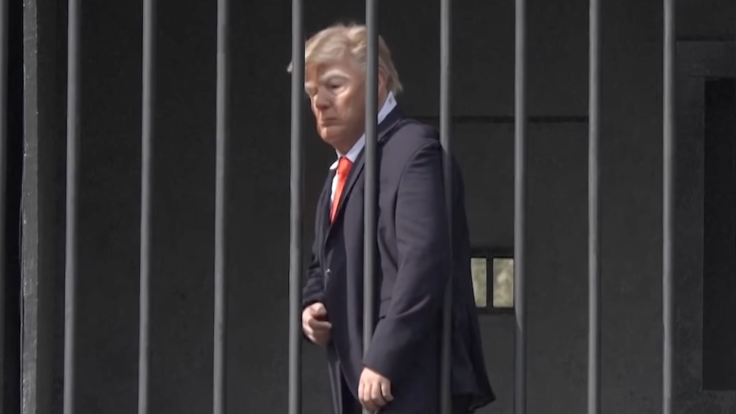
Tehran has hung a life-size jail cell several storeys above the busy Tajrish Square, with an actor in a Donald Trump mask pacing inside.
The installation, in the north of the Iranian capital, carries the slogan 'It is a crime not to see this scene'. City authorities say it is meant to remind residents of Iran's demands for justice over the war between Iran and the United States and Israel.
Passers-by have stopped to take selfies, shout insults and, in one case, offer to pay the actor's bail.
A Cell Above Tajrish Square
An Iranian performer impersonating the US president appeared behind bars in Tajrish Square in an art installation featuring the slogan 'It is a crime not to see this scene', Al Jazeera reported on Wednesday, 21 October 2026.
The cell hangs several storeys up over the square, in an upscale neighbourhood of north Tehran. Inside, an actor in a dark suit and red tie, wearing a prosthetic Trump mask, paces the floor or grips the bars, AFP reported, in a report carried by The Times of Israel.
A screen beside the cell shows messages denouncing what Iran calls US 'war crimes'. Media close to the Iranian authorities said the display would run day and night, seven days a week.
The opposition-oriented Persian-language broadcaster Iran International, which is based in London, said the live actor first appeared on Tuesday night as part of a state-backed campaign depicting the US president on trial.
According to a New York Times report, the actor rattles the bars, naps and at times mimics Trump's YMCA dance. The paper said Tehran's Beautification Organisation, which is affiliated with the city municipality, unveiled the display as part of a 15-day campaign. Screens on the billboard show images of a deadly US attack on an Iranian wedding last month, alongside a scrolling message the paper translated as 'Failure to see this scene is a crime'.
Selfies, Insults and a Bail Offer
The display has drawn crowds. Locals have stopped to take selfies and hurl abuse at the figure. One passer-by joked: 'Don't worry, we'll pay your bail and get you out!'
Others were less playful. A teenager shouted: 'Trump, this time we're going to kill you!' Drivers have honked and pedestrians have filmed the cell, which has stayed lit late into the night, according to the New York Times.
Tehran's municipal authorities, who are behind the campaign, say its purpose is to remind residents of Iran's demands for justice, according to AFP.
Several pieces of state propaganda art have gone viral since the war began. Earlier this summer, a billboard in Tehran's Enghelab Square showed Trump in a graffitied coffin, the New York Times reported.
Omid Memarian, a senior Iran analyst at the Washington-based group DAWN, told the paper that the war had changed how Iran's anti-American messaging lands. 'The propaganda apparatus has gained renewed momentum,' he said, arguing that the message was that Iran is not intimidated by American military superiority.
The War Behind the Display
The campaign is tied to a deadly strike on a family wedding at a home in Kuhestak, in Sirik County in southern Iran, at the start of September. Initial Iranian reports said at least four people were killed, including two children, and more than 50 were wounded, among them women and children, Al Jazeera reported. Iran's Foreign Ministry spokesman, Esmaeil Baghaei, called the attack 'brutal' and a 'war crime', while Parliament Speaker Mohammad Bagher Ghalibaf condemned the US on X.
Later tallies put the death toll at five, with Iran reporting 63 injured and the Iranian Red Crescent 67, according to a compilation of reporting on the strike.
Weapons experts who examined the debris said it was likely a US munition, and a New York Times visual analysis concluded that the bomb was released by American forces. That evidence concerns the weapon, not the intended target or the circumstances of the strike. US Central Command said it was aware of Iranian reports of the strike and that it does not target civilians.
Asked about the strike in early September, Vice President JD Vance expressed scepticism about Iran's account, saying the US does not target civilians but that 'sometimes things happen'. The Iranian Red Crescent said the attack could amount to a war crime and called on the International Criminal Court to investigate.
The war began on 28 February 2026, when the United States and Israel launched strikes on Iran that killed Supreme Leader Ali Khamenei. A ceasefire agreed in April and a memorandum of understanding signed in June both failed to end the conflict, and fighting resumed in July.
Tehran accuses Trump of deliberately targeting civilian sites, including a school and the wedding, and has portrayed him as a war criminal while calling for revenge, AFP reported. Those allegations have not been established by any court. Iranians remain deeply divided over their own government, particularly after a crackdown on protests in January, but many are angry at Trump over the war, according to the New York Times.
The White House did not immediately respond to the New York Times's request for comment on the installation.
For now, the masked actor remains in his cell above Tajrish Square, watched by the crowds below.
© Copyright IBTimes 2026. All rights reserved.