Iran Warns US It Is Ready to 'Inflict Crushing Blows' After Trump Threatens to 'Annihilate' Regime
Tehran condemns the US president's UN remarks as diplomatic contacts continue, while tensions over shipping, sanctions and energy supplies unsettle regional markets

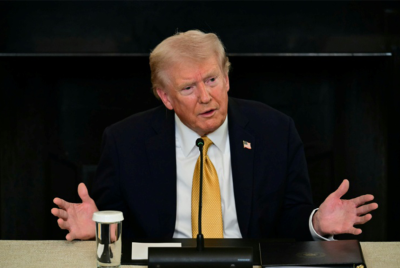
Iran has warned of a severe response after President Donald Trump said during his 22 September address to the UN General Assembly that he faced a choice between reaching a deal with Tehran and 'annihilat[ing] the Islamic Republic.'
The exchange, unfolding within hours of Trump's address in New York, came as the conflict continued to disrupt energy markets and fuel fighting involving regional actors.
The latest escalation came after months of US and Israeli military action against Iran, amid fighting involving Iranian-aligned groups in the region and severe restrictions on shipping through the Strait of Hormuz.
Oil prices have repeatedly traded above $100 (£75.36) a barrel during the conflict, although prices fell below that level this week amid renewed US-Iran talks and signs that Saudi Arabia could resume exports through its East-West Pipeline.
Tehran's Military Warning After Trump's UN Threat
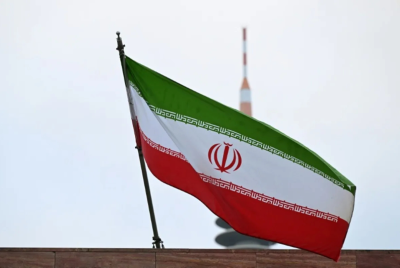
In a joint statement, Iran's General Staff of the Armed Forces and the Khatam al-Anbiya Central Headquarters said the country would deliver 'even harsher, crushing, and unpredictable blows to the aggressors,' In the statement, the two bodies described Trump's UN remarks as 'baseless allegations and threats' and said they should not be interpreted as a sign of US strength.
'The rhetoric of the US president will not alter the balance of power calculations and will never compensate for this country's diminished position in the emerging global order or America's humiliating defeats in the war against Iran and the [regional] Resistance Front,' the statement added.
BREAKING: TRUMP HINTS AT NUKING IRAN AT UNGA
— Sulaiman Ahmed (@ShaykhSulaiman) September 22, 2026
“I have a big decision to make. Will a deal be made with Iran that lets them rebuild and create a far greater country than it ever was before, maybe one of the greatest in the Middle East or even the world?
Or do I annihilate the… pic.twitter.com/NomGMcQaob
Earlier, Trump framed his choice during his 22 September address, 'I have a big decision to make. Will a deal be made with Iran that lets them rebuild and create a far greater country than it ever was before... Or do I annihilate the Islamic Republic and do it quickly, never giving them a chance to kill and destroy people and countries again?'
Trump also alleged, without providing supporting evidence in his speech, that Iran's government had killed more than 72,000 of its citizens this year and that 10,000 protesters had recently been killed.
Diplomatic Contacts, Falling Oil Prices and Fresh Sanctions
Trump said US envoy Steve Witkoff and Jared Kushner had held a 'very good' meeting with Iranian officials and that another session was scheduled soon. 'It's to their advantage to make a deal,' he added, without detailing what was discussed.
Oil prices fell on Wednesday amid news of the US-Iran talks and signs that Saudi Arabia could resume exports through its East-West Pipeline. Brent crude and West Texas Intermediate fell to $98.91 and $89.93 (£74.54 and £67.78) a barrel, respectively, in early Asian trade, according to market data cited in a report, moving below the $100 level.
Nearly seven months after the conflict began in February, the impasse continues. Iran continues to restrict shipping through the Strait of Hormuz, while the United States maintains a maritime blockade affecting Iranian shipping. Meanwhile, fighting in Yemen between Saudi-backed government forces and the Iran-aligned Houthis has further disrupted energy flows through the Red Sea and the Bab el-Mandeb Strait.
Saudi Arabia has begun testing the East-West Pipeline and indicated that it aims to resume exports through the Red Sea port of Yanbu after the route was damaged in drone attacks that Saudi authorities said were launched from Iraq. According to reports Riyadh aimed to resume exports later this week, citing a person familiar with the matter.
However, allocation signals remain mixed, Aramco reportedly told Asian refiners they could soon lift crude from Yanbu, while telling at least two European refiners they would receive no crude under long-term agreements in October, according to reports.
On the diplomatic sidelines, Iranian Foreign Minister Abbas Araghchi met Witkoff and Kushner. Iranian state media reported that Araghchi conveyed three conditions for reopening the Strait, the immediate lifting of the US naval blockade, the prompt release of frozen Iranian assets, and an end to the war on all 'resistance' fronts.
As the UN gathering continued, Iranian President Masoud Pezeshkian also arrived in New York for the UN General Assembly. Meanwhile, new US restrictions affecting Iran's aviation sector took effect on Wednesday, after the Treasury Department warned that companies servicing Iranian airlines could face secondary sanctions.
Treasury Secretary Scott Bessent has described the administration's campaign against Iran's aviation sector as part of a broader effort to cut off financial support for Tehran. Iranian media reported late Tuesday that flights from Iran to Baghdad and Muscat would be cancelled from midnight Wednesday, while other international services, including flights to Istanbul, were expected to continue.
The situation remains fluid, and the terms and outcome of any prospective agreement have not been confirmed. Claims attributed to the parties involved should be treated accordingly pending independent verification.
© Copyright IBTimes 2026. All rights reserved.
- Recommended For You