

Over 200 Media Worker Deaths Reported in Gaza Conflict Yet Accountability Remains Elusive, CPJ Says
The Israel-Gaza conflict has claimed the lives of over 200 journalists, with no prosecutions, raising concerns about press freedom and accountability
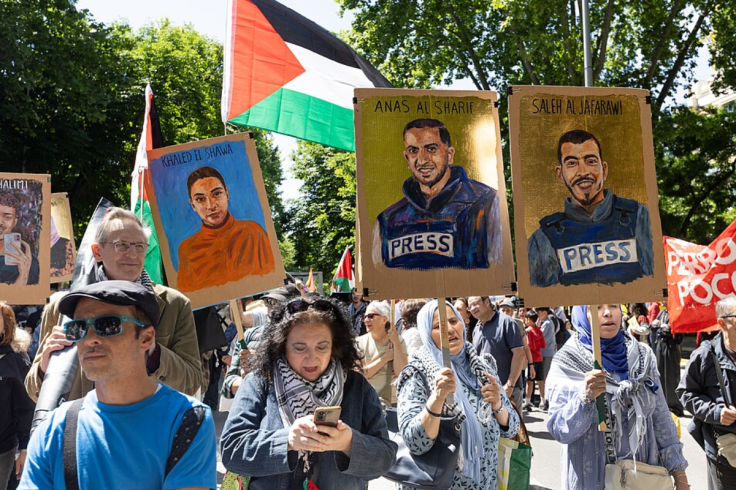
More than 200 journalists and media workers have been killed since the Israel-Gaza war began, according to the Committee to Protect Journalists, and rights groups say Israel rarely holds troops accountable for killing Palestinians, pointing to lengthy investigations that seldom lead to prosecution.
The figure has become a grim marker of the conflict's toll on the press, and it sits alongside a separate, ongoing case that has come to symbolise the lack of accountability: the killing of 22 people, including two journalists, in a double strike on Nasser Hospital in Khan Younis on 25 August 2025.
No Answers a Year Later
Reuters cameraman Hussam al-Masri and Associated Press visual journalist Mariam Dagga died in that strike. Both news organisations say Israel has still not explained what happened.
Israeli officials initially said the target was a suspected Hamas camera on the hospital roof. The Associated Press quoted an Israeli soldier, speaking on condition of anonymity, who said the military later found no evidence tying the camera, which belonged to al-Masri, to Hamas.
The soldier said none of the six people the army publicly linked to Hamas after the strike had actually been the intended target. AP said the military did not address these specific allegations when asked, saying only that the incident remains under review before any decision on a criminal investigation.
Gaza is remembering five of its brave journalists who were directly and deliberately targeted by the Israeli occupation while being on duty covering the Israeli massacres at Nasser Medical Complex in Khan Younis city a year ago. pic.twitter.com/QsO3mVzMsV
— Gaza Behind Scenes (@gazabehindscens) August 25, 2026
A Pattern the CPJ Has Long Flagged
The Nasser Hospital strike is one case among hundreds that make up CPJ's tally. As of the organisation's most recent review, it has documented 209 journalists and media workers killed by Israel in Gaza and in Israeli detention since October 2023, a number it says it verifies through at least two independent sources before adding anyone to its database.
CPJ's Middle East and North Africa regional director, Sara Qudah, said Israel has a responsibility to conduct a prompt, transparent investigation. She said that when journalists can be killed without credible accountability, 'it becomes harder and more dangerous for the press to document conflicts and for the public to know what is happening.'
Breaking the Silence, an Israeli veterans' group that collects soldier testimony, has previously described what it calls a 'retroactive incrimination process', in which Palestinians killed in strikes are automatically labelled as combatants.
Its executive director, Nadav Weiman, has said the process functions as a 'near automatic justification for every bullet, shell or missile fired, and as a tool used to avoid carrying out real investigations.'
Growing doubts about lists of journalists killed in Gaza: how the difficult data situation becomes a weapon in information warfare
— UN Watch (@UNWatch) August 24, 2026
In the conflict between Israel and Hamas, many of the casualty statistics disseminated by NGOs have proven to be flawed. Organizations like UNESCO… pic.twitter.com/ZwWqifEAI8
Why the Number Keeps Rising
CPJ has called the Gaza war the deadliest conflict for journalists it has ever documented, and its running total has climbed steadily through 2025 and into 2026 as strikes have continued. Israel has also barred foreign journalists from entering Gaza throughout the war, leaving Palestinian reporters to carry the bulk of the coverage, often at direct risk to their own lives.
Families of those killed say the absence of accountability compounds their grief.
Ezz al-Din al-Masri, whose brother Hussam was killed at Nasser Hospital, said 'we found that the blood of journalists in Gaza is cheap ... as if the rules protecting journalists do not apply.'
The scale of journalist deaths in Gaza, now numbering more than 200 by CPJ's count, raises questions that extend beyond any single strike.
Without a completed investigation into incidents such as the Nasser Hospital attack, press freedom groups argue there is little deterrent against future strikes on media workers.
For newsrooms still operating in Gaza, and for the international outlets that depend on their footage, the outcome of these investigations will shape how safely journalism can continue to be practised in the territory.
© Copyright IBTimes 2026. All rights reserved.