

Nepal on High Alert as Fresh Flood Hits Gorkha Weeks After Disaster Left More Than 1,400 Dead
Authorities warned downstream communities to move to safety after floodwaters damaged homes, bridges and a hydropower construction site
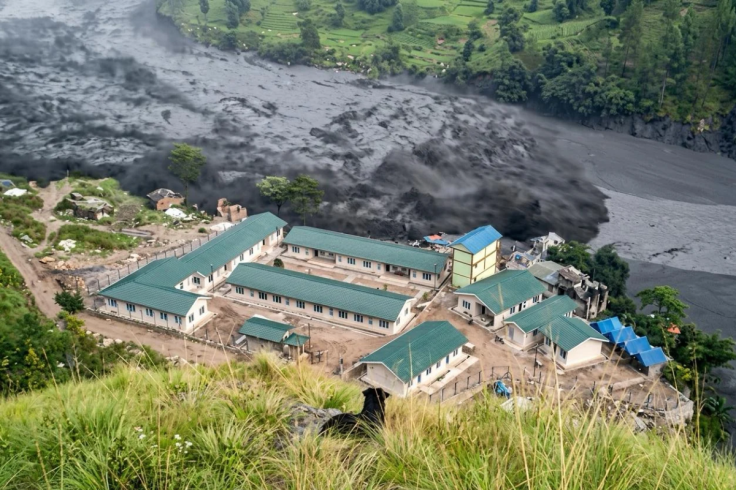
Floodwaters surged down the Budhi Gandaki River in central Nepal on Sunday, 11 October, sweeping away homes and bridges as communities prepared to celebrate Dashain. Five people were reported missing, while around 50 had been rescued, according to reports citing authorities and the Nepal Army.
No deaths had been confirmed in reports available on Sunday. The disaster struck about six weeks after catastrophic flooding near the Nepal–China border killed more than 1,400 people and left thousands missing.
River Surge Damages Homes and Infrastructure
Authorities linked the flooding to a landslide-related blockage in the upper river system in Gorkha district. However, the precise sequence remained uncertain, with accounts differing over whether the initial blockage affected the Budhi Gandaki itself or a tributary.
Reuters reported that a landslide in Chumnubri had blocked the river, sending water downstream. District official Dharmendra Kumar Mishra urged people living along the banks to evacuate.
The National Disaster Risk Reduction and Management Authority issued warnings to downstream communities, including those in Gorkha, Tanahun, Chitwan and the two Nawalparasi districts.
A situation report compiled by Bagmati Welfare Society Nepal recorded a water level of 8.43 metres at Arughat at 09:45 local time, citing disaster authorities. That was well above the reported danger level of five metres.
Monitoring was also disrupted. Government meteorologist Binod Parajuli told the BBC that a hydrological station had been swept away, preventing officials from receiving further data from that location.
Local representatives reported that at least 35 houses had been washed away in Paiyu and Bagar, according to the welfare organisation's early assessment. Suspension and road bridges were also damaged or destroyed, cutting access between settlements.
Radio Nepal reported that the main construction camp of the 341-megawatt Budhi Gandaki hydropower project at Salleri and some equipment had been swept away. Disaster authorities also reported damage to telephone towers and electricity poles.
Rescue teams used helicopters to move stranded people to safer ground. Radio Nepal cited an official figure of 47 helicopter evacuations, while the BBC reported that around 50 people had been rescued along the river.
Basin Already Hit by Earlier Flooding
The latest disaster followed another flood in the area on 6 September, when the Therang River swept away four houses and a suspension bridge in Chumnubri Rural Municipality, according to an ANI report.
Police said residents escaped after learning that the water was rising. Assistant Chief District Officer Netra Prasad Sharma said mud and debris had temporarily blocked the river's outlet, and communities along the Budhi Gandaki were warned to remain vigilant.
The Budhi Gandaki joins the Trishuli, linking the affected valley to a wider downstream river system. Another tributary was involved in the catastrophic August flood, which followed a collapse of glacial ice and rock.
Reuters reported that the August disaster killed 1,457 people, with thousands still missing. The latest Gorkha surge should not be assumed to have the same cause: officials have identified a landslide-related blockage as a likely trigger, while the full sequence remains under assessment.
A short while ago: A devastating flash flood has swept away Salleri Bazaar (Market) and caused severe destruction in Jagat Bazaar along the Budhi Gandaki River, Gorkha District, Nepal.
— Weather Monitor (@WeatherMonitors) October 11, 2026
(Video provided by Umesh.) pic.twitter.com/aK74PD0S5t
Children Face Renewed Disruption
Sunday's flood arrived as families prepared for the first day of Dashain, a major festival in Nepal. Some fled their homes with uncertainty over shelter, essential supplies and access to neighbouring communities.
Save the Children said it was mobilising an emergency team to respond.
'Children's lives have been ripped apart in an instant yet again,' said Tara Chettry, the organisation's country director in Nepal.
She warned that the full scale of the damage was not yet known and that children might have lost homes, schools and community support. Her comments described possible impacts while assessments continued, rather than a confirmed count of affected children.
The August disaster had already created substantial child-protection needs. An assessment using data from 4 September found 1,233 children living in holding centres, including 102 without a parent or relative and 439 separated from their parents but staying with relatives.
Those figures concern the earlier disaster, not newly confirmed cases from Gorkha. They illustrate the pressure already facing relief and family-reunification services as another emergency unfolds.
With bridges and communications damaged, reaching affected settlements remained difficult. Authorities continued search and rescue operations and urged residents in vulnerable downstream areas to follow current evacuation instructions as river conditions were monitored.
© Copyright IBTimes 2026. All rights reserved.