

Engineer Sues ICE After Agents Allegedly Smashed His Car Window and Dragged Him Out in Maine
A Colombian civil engineer sues ICE after allegedly being unlawfully detained in Maine, highlighting potential new legal avenues for holding federal officers accountable under state civil rights laws
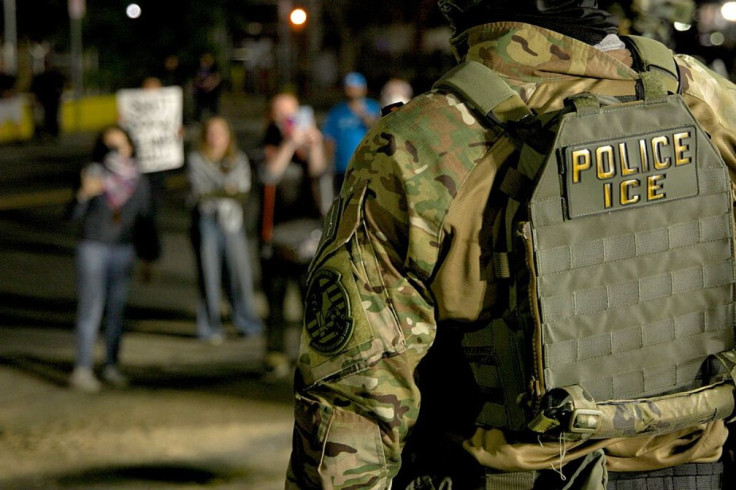
A Colombian civil engineer is suing federal immigration agents after allegedly being pulled from his car during a January enforcement operation in Portland, Maine.
Juan Sebastián Carvajal-Muñoz, who works in the US on a valid H-1B visa, alleged that the masked agents smashed his driver's-side window with a crowbar, pointed a Taser at him, handcuffed him and drove him across state lines before releasing him hours later, after an agent allegedly confirmed that he held valid H-1B status.
Filed in the US District Court for the District of Maine with backing from the American Civil Liberties Union, the legal action challenges aggressive enforcement methods and aims to test whether state civil rights laws can hold federal agents accountable.
With the federal Bivens doctrine facing severe judicial restrictions, legal scholars suggest this case could establish a vital legal blueprint for protecting constitutional rights when traditional federal remedies fail.
The Arrest That Sparked a Federal Lawsuit
The incident unfolded on 22 January 2026 as part of the Trump administration's immigration enforcement surge in Maine.
Carvajal-Muñoz was driving to work when ICE agents boxed in his car in downtown Portland, according to the federal lawsuit filed 14 April 2026 in the US District Court for the District of Maine.
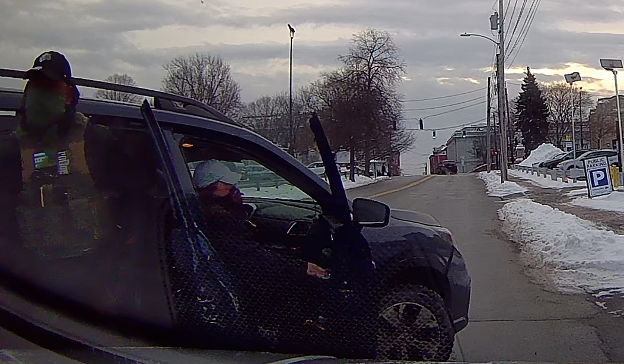
The complaint alleges agents smashed his driver's-side window, dragged him out with a Taser pointed at him, handcuffed him and left his car running in the middle of the street.
The original lawsuit named ICE agent Jack Cory Ravencamp, of Lenexa, Kansas, along with four unidentified agents. An amended complaint filed in July identified the previously unnamed agents as Daisy Angulo, James Peters, John Stalnik and Javaka Thompson.
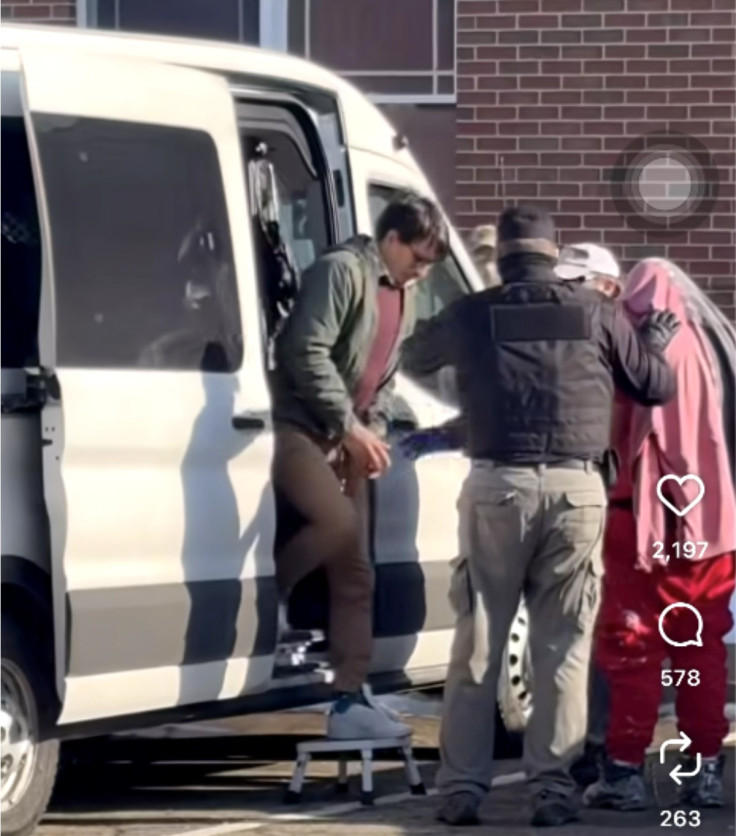
According to the lawsuit, agents told Carvajal-Muñoz that his visa would be revoked, placed him in shackles and transported him to an ICE facility in Burlington, Massachusetts, despite an agent allegedly confirming that he held a valid H-1B visa.
According to the complaint, he was released after 9pm that night and left to make his way home. The defendants are due to respond to the amended complaint by 25 September. An attorney for the defendants declined to comment.
Bivens Claims and the Shrinking Path to Accountability
Carvajal-Muñoz's lawsuit invokes Bivens v. Six Unknown Federal Narcotics Agents, the 1971 Supreme Court decision that created a narrow path for civilians to sue federal officers for constitutional violations.
The Supreme Court has recognised Bivens remedies in only three contexts: the Fourth Amendment search-and-arrest claim in Bivens itself, a Fifth Amendment sex-discrimination claim in Davis v. Passman, and an Eighth Amendment medical-care claim in Carlson v. Green.
But in recent years, the Supreme Court has sharply restricted Bivens, with one federal judge in 2024 noting that circumstances where courts might extend it are 'as rare as the ivory-billed woodpecker.'
The legal landscape has grown even more hostile. In 2022, the Court ruled against a bed-and-breakfast owner who tried to sue a Border Patrol agent in Egbert v. Boule. The ruling further restricted courts' ability to recognise Bivens remedies in new contexts.
This fall, the Supreme Court is also set to consider Nielsen v. Watanabe, a Bivens case involving a federal prisoner who says he was denied treatment for a broken tailbone, in what attorneys warn could whittle the doctrine down to a 'dead letter.'
'There has to be a way to hold federal officers accountable when they are plainly violating the U.S. Constitution,' said Carol Garvan, legal director for the ACLU of Maine. She noted Carvajal-Muñoz was arrested even after he showed agents his REAL ID and offered documentation of his lawful immigration status.
'That is something that lingers for him and people all over Maine and all over the country. You start to think, what could protect you if there is this kind of violation?'
State Laws as a Potential Blueprint
Given the limited federal avenues, attorneys are increasingly turning to state civil rights statutes. Carvajal-Muñoz's suit also alleges violations under the Maine Civil Rights Act, an untested theory that state laws could hold federal officers accountable.
Similar state-law avenues exist in Illinois, New Jersey, New York, California and Massachusetts, although the laws differ in scope and have not all been tested in court.
The Trump administration is also challenging an Illinois law that allows people to sue over certain constitutional violations committed during federal immigration enforcement. Sen. Sheldon Whitehouse and Rep. Hank Johnson also reintroduced the Bivens Act in 2025, legislation that would create a statutory damages remedy for constitutional violations by federal officials.
Garvan hopes Carvajal-Muñoz's case could become a blueprint. 'If we are not able to bring a claim under Bivens and we are not able to bring a claim under our state's Civil Rights Act, then people are left without a remedy at all,' she said. 'We're really hopeful that this could be a tool.'
The stakes feel particularly high after July, when ICE shot and killed Johan Sebastián Durán Guerrero, another Colombian immigrant who reportedly had work authorisation and was stopped in his car during an enforcement operation.
'For someone who has already been taken off the streets by ICE agents, seeing something like that makes it all the more scary,' Garvan said.
A Department of Homeland Security spokesperson said in an email that officers who violate policy are 'held accountable' and that 'DHS law enforcement methods abide by the US Constitution including the Fourth Amendment.' The spokesperson did not respond to questions about civil suits.
The allegations in Carvajal-Muñoz's lawsuit have not been adjudicated, and the defendants are due to respond to the amended complaint by 25 September. If the case survives the early stages of litigation, it could become an important test of whether state civil-rights laws can provide a remedy when federal immigration officers are accused of violating constitutional rights.
It could also help clarify how far the increasingly narrow Bivens doctrine extends as courts confront new disputes over federal immigration enforcement.
The outcome could reshape how courts handle federal accountability nationwide. Legal experts will monitor proceedings closely as the boundaries of constitutional protection continue to contract.
© Copyright IBTimes 2026. All rights reserved.