

Nancy Guthrie Kidnapping Case: Sheriff Chris Nanos Shares DNA Analysis Details and Updates
The Pima County Sheriff's Department confirmed that complex DNA mixtures from the crime scene remain under analysis by multiple laboratories including the FBI
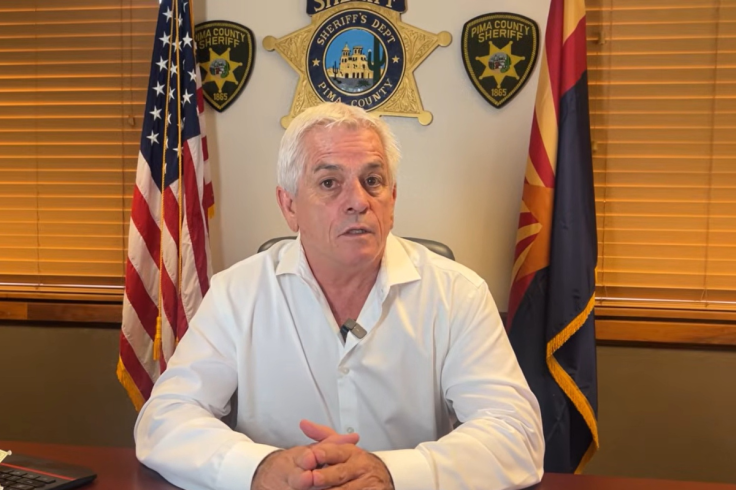
Efforts to use genetic genealogy in the Nancy Guthrie kidnapping case are giving investigators additional avenues to explore, according to Sheriff Chris Nanos in Arizona.
The Pima County Sheriff's Department in Tucson is reviewing DNA evidence from Guthrie's home and other locations as it weighs advanced testing options, including work with the FBI and private laboratories.
Guthrie, the mother of NBC anchor Savannah Guthrie, vanished from her Tucson property, and her abductor has never been identified. Detectives now hope that sophisticated DNA techniques, including genetic genealogy, might finally point to a suspect, depending on the quality of the samples.
Officials say the main challenge is that the DNA recovered so far is a complex mix from several people, which has slowed the investigation.
DNA Analysis Complications in Nancy Guthrie Kidnapping Case
Genetic genealogy is the same broad approach that helped unmask the Golden State Killer and has since been used in cold cases across the United States, according to NPR.
The method requires investigators to obtain a viable DNA profile from a crime scene, then upload that profile to open-source databases or conduct CODIS searches that can identify relatives rather than exact matches.
From there, specialists build sprawling family trees, sometimes based on very distant cousins, then narrow down potential suspects by age, location and other supporting details before seeking direct DNA from those individuals.
In the Nancy Guthrie kidnapping case, Pima County officials have said the evidence does not yet offer that neat, single profile. The sheriff's department has acknowledged that the DNA from Guthrie's house contains material from more than one person and that the mixture is making traditional analysis difficult.
In an interview, genetic genealogy specialist CeCe Moore described the sample as a 'complex mixture' and said it involved 'more than two people', which significantly complicates the work.
She added that learning it might involve DNA from 'four or more people' is 'disappointing', because each extra contributor can muddy the statistical waters.
The department has already tried a more conventional route and found its limits. According to the Pima County Sheriff's Department, DNA from a set of gloves discovered about two miles from Guthrie's home was submitted to CODIS but produced no link to the scene.
The gloves' DNA did not match samples recovered at the property, and investigators later determined it did not belong to anyone involved in the case.
Sheriff Chris Nanos on DNA Setbacks and New Leads
In late July, Sheriff Nanos told Fox News that investigators had recovered a hair and initially pinned hopes on it, planning to run DNA analysis before any other forensic tests. The optimism evaporated when the lab reported that the hair did not contain usable DNA.
Nanos explained that the strand is still being preserved, since it could be compared with a specific suspect's hair in future.
The sheriff has been careful not to spell out exactly how many DNA samples are in play. He has said, however, that the hair is only one part of 'broader DNA work' under way on the Nancy Guthrie kidnapping case.
In April, reports indicated that the FBI received a DNA sample from Guthrie's home, and analysis is ongoing. The sheriff's office has confirmed that its long-running partnership with the FBI remains central to the investigation.
The Pima County Sheriff's Department has also leaned on specialist private laboratories, particularly one in Florida that has been studying samples linked to the Guthrie kidnapping.
In an April statement, the department said that the private lab continues to share information with the FBI laboratory and other partner facilities.
An FBI official said there was 'no new DNA evidence' in the case but confirmed that material requested months earlier had now been transferred from the Florida lab to the FBI Laboratory for testing. The bureau insisted it remains 'fully committed' to the investigation.
Mixed DNA and Slow Timelines
Nanos has warned that the tangle of genetic material from Guthrie's home will not be sorted overnight. He has suggested it could take around six more months to separate the strands and isolate what investigators need from the mixed DNA.
Reports indicate that five other laboratories are also examining the evidence, with each adding specialist expertise but also contributing to delays as results are cross-checked and shared between facilities.
Detectives have door-cam images of an armed, masked male suspect arriving at Guthrie's property on the night she vanished.
The Pima County Sheriff's Department has said it is still pursuing every viable lead and that DNA analysis remains 'ongoing'.
Investigators have already confirmed that some of the DNA tied to the Nancy Guthrie kidnapping case did not match any profile in CODIS, the national database that stores samples from people arrested or convicted of crimes.
The Pima County Sheriff's Department has said that those early searches came back empty, prompting them to look at more advanced tools. In February, the department confirmed that investigative genetic genealogy was 'on the table' and that analysts were examining ways to extract more information from the limited and mixed DNA collected.
What is clear at present is that authorities hold multiple DNA samples, including material recovered from inside the house. What they do not yet have is a single, clean match that links the masked figure to an identifiable individual.
© Copyright IBTimes 2026. All rights reserved.