

Lindsay Clancy's 11-1 Jury Split Fuels Double Jeopardy Fight as Judge Rejects Fresh Juror Hearing
Her motion to dismiss the murder charges will be heard in November
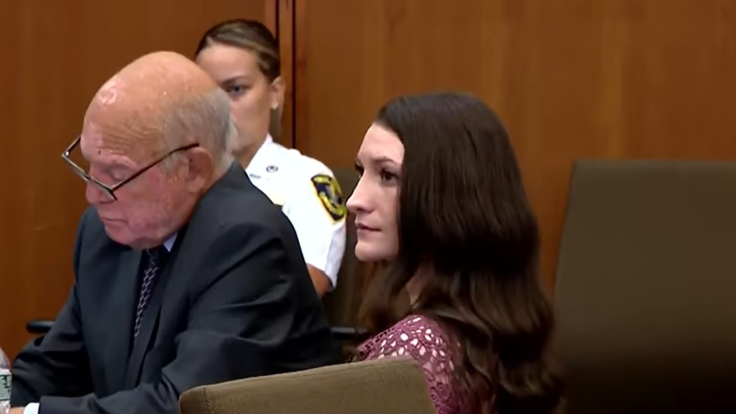
A Massachusetts judge has rejected Lindsay Clancy's request for an evidentiary hearing into the holdout juror in her murder trial. Judge William Sullivan issued the ruling on Wednesday following an 11-1 jury deadlock in Plymouth.
Eleven jurors reportedly favoured finding Clancy not guilty by reason of insanity, while one supported conviction. Her lawyers argue the judge should have investigated whether there were grounds to remove the holdout before declaring a mistrial.
A separate bid to dismiss her three murder charges on double-jeopardy grounds remains unresolved.
Sullivan ruled that allegations emerging after the mistrial could not establish whether ending the trial had been necessary at the time. He also refused to examine the juror's private reasoning during deliberations. The dismissal motion is due for a hearing on 2 November.
The proceedings concern the deaths of Clancy's children, Cora, five, Dawson, three, and Callan, eight months, in Duxbury, Massachusetts, in January 2023. All three were strangled at home. Callan died in hospital days after his siblings.
Clancy pleaded not guilty to three counts of first-degree murder.
Why Lindsay Clancy's 11-1 Jury Split Matters
At trial, Clancy's lawyers did not dispute that she caused the children's deaths but argued that she was not criminally responsible. They argued she was experiencing postpartum psychosis.
Prosecutors disputed the insanity defence, alleging that she planned the killings while her husband was out collecting takeaway food.
After seven days of deliberations, the jury remained divided. Sullivan declared a mistrial on 4 September without a unanimous verdict. The defence says Sullivan should have investigated concerns about the holdout before ending the trial.
Defence lawyer Kevin Reddington argues that the mistrial was not justified by 'manifest necessity', the legal standard central to the double-jeopardy challenge. He argues the court should have examined whether the holdout was following instructions.
Clancy's legal team also pursued a separate request for a finding of not guilty, arguing that prosecutors had failed to establish sufficient evidence. The argument marked a change from the defence's approach at trial.
Sullivan rejected the request on 1 October, finding that prosecutors had presented sufficient evidence for a rational jury to consider a guilty verdict. That ruling did not determine Clancy's guilt.
Why the Judge Rejected a Lindsay Clancy Juror Hearing
Reddington sought an evidentiary hearing into whether the lone holdout was truthful about previous involvement with the criminal justice system.
The defence also questioned whether he had improperly used a mobile phone during deliberations and complied with the judge's instructions. It sought the juror questionnaire and court officer logs.
In his written order, Sullivan said the questions about the juror's background had emerged only after the mistrial. He said the information appeared to have originated in 'posttrial media reports'. He concluded that later allegations could not be used to challenge his 4 September mistrial decision.
Sullivan separately rejected an attempt to question the juror about his decision-making, despite notes from the jury foreperson that the defence said raised concerns. The court could not examine jurors' private reasoning or disagreements, he said.
The ruling did not establish that the holdout had lied, broken jury rules or ignored the law.
Michael Desronvil, who publicly identified himself as the holdout juror, denied dishonesty in a Fox News interview. 'I answered everything truthfully,' he said. He also said jurors used their phones during breaks, not during deliberations.
What Happens Next in Lindsay Clancy's Double-Jeopardy Fight
The 2 November hearing is expected to address Clancy's pending motion to dismiss the murder charges on double-jeopardy grounds. Other outstanding requests concern the preservation and production of juror records and a proposed limited inquiry.
The judge's refusal to permit an evidentiary hearing does not dispose of the separate dismissal motion.
Sullivan has instructed both sides to be prepared to discuss a possible retrial date.
As of the time of publication, Plymouth County District Attorney Timothy Cruz had not publicly announced whether prosecutors would seek another first-degree murder trial, pursue different charges or end the case. No new trial date has been set.
Clancy remains in state custody at Tewksbury Hospital, and the three murder charges are still pending. The 11-1 division produced no verdict, and the question of another trial remains open.
© Copyright IBTimes 2026. All rights reserved.