

Former Prosecutor Says Lindsay Clancy Benefits Because 'A Mother? Killing Her Own Children?'
Elliot Felig says the horrific crime creates philosophical divides that could complicate any retrial
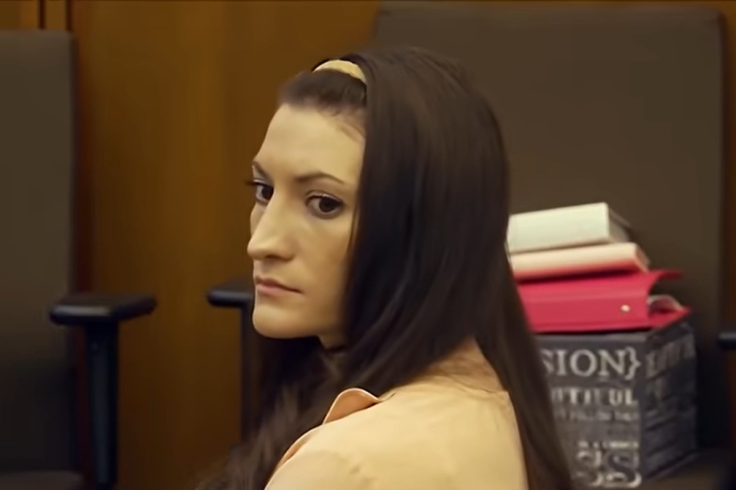
Lindsay Clancy's mistrial has exposed a brutal fault line in how Americans view mothers who kill, according to former Manhattan prosecutor and district attorney Elliot Felig.
Speaking on Fox News' Sunday Night in America, Felig argued that the sheer horror of the Lindsay Clancy case is, paradoxically, helping her in court. He said some jurors appear unable to square the image of a mother with the reality of three children allegedly strangled in their own home.
The result, he suggested, is a kind of moral paralysis that makes conviction harder, even when the facts are not seriously contested.
Former Prosecutor Says Lindsay Clancy 'Benefits' From Horror of Crime
Felig told host Trey Gowdy that there is a 'weird thing' about the Lindsay Clancy case that he finds hard to ignore.
'In a way, the defendant benefits from just how horrific the crime is,' he said. He described how people, including potential jurors, instinctively react by saying, 'A mother? Killing her own children? She can't possibly be in her right mind to do that.'
Felig stressed that this is not his personal conclusion, but he acknowledged it is a powerful emotional lens through which many view the case.
Gowdy, himself a former federal prosecutor, agreed, saying he hears the same sentiment repeatedly during the interview. According to the host, people often insist that 'normal people don't do that', and then jump from that feeling straight to a conclusion that the defendant must be legally insane.
Gowdy added that his and Felig's experience taught them there is a hard distinction between what 'normal people' would never do and what the law defines as 'criminally irresponsible'.
Felig nodded along as Gowdy spoke, and later said that the jury's deadlock suggests something deeper than confusion over evidence. He described a 'moral and philosophical' divide that he believes reflects a wider national split over how much weight to give mental illness in violent crime.
That divide, he said, was 'clearly present in that jury room' and shows no sign of going away. 'There's no reason to think they won't be present in a subsequent trial,' he warned.
Gowdy then pressed him on whether the deadlock amounted to jury nullification, what legal experts describe as the unofficial practice where jurors effectively ignore the law because they cannot stomach the outcome.
'It's hard to see three children strangled and also know the accused killer may spend next to no time incarcerated,' Gowdy said.
Felig resisted that framing, saying that mistrials are part of the system, even when they feel unbearable. 'Mistrials are, as you alluded to earlier, it's part of the process,' he said, noting that the law anticipates that some panels simply will not agree.
How the Lindsay Clancy Retrial Could Change Strategy
Felig argued that the Lindsay Clancy mistrial leaves prosecutors facing an unusually tricky decision about how to approach any retrial.
In many mistrials, he said, the state can review the case, strip out weaker evidence and adjust its narrative. 'But in this case, the facts aren't really in dispute at all,' he noted.
Instead, he said, the split lies in 'this broad philosophical' disagreement over what mental illness should mean in a courtroom.
Gowdy suggested that retrials often favour prosecutors, because they get a preview of the defence strategy. They now know exactly what is coming. When asked if that applied to Lindsay Clancy, Felig said there had already been a notable 'shift in tone' from the prosecution as the first trial unfolded.
At the outset, he said, Felig said prosecutors initially portrayed Clancy as 'the personification of evil'. As the defence rolled out evidence of her psychological history, he said, the state began to 'acknowledge real mental health issues'.
He pointed out that trial testimony and records highlighted serious psychological problems, along with repeated contact with doctors. That evidence, he said, made Clancy 'different than maybe the typical cold-blooded killer that jurors envision from movies and TV shows'.
Felig believes that any retrial in the Lindsay Clancy case should confront that complexity from the first day of opening statements. In his view, prosecutors might be better off openly acknowledging that Clancy had 'serious issues' and that her dealings with doctors were not some last-minute, made-up defence.
He suggested they could accept that 'she's not exactly like you and me' while firmly insisting that psychological problems alone do not explain, or excuse, the killing of three children.
'There are a lot of people in our society dealing with psychological issues and the majority of them don't subsequently kill their children,' he said.
Lindsay Clancy, a Massachusetts mother, is accused of killing her three young children, a crime that has gripped and divided the United States. The recent trial ended in a mistrial, after jurors failed to reach a unanimous verdict on whether she was criminally responsible.
Clancy's defence has centred on her mental health, including defence claims of serious psychological struggles under medical care before the alleged killings.
Prosecutors, however, have argued that mental illness does not automatically erase legal responsibility, and that many people with similar diagnoses never harm anyone, let alone their own children.
As of publishing, prosecutors have not yet announced whether they will seek a retrial, and no new court dates have been scheduled.
© Copyright IBTimes 2026. All rights reserved.