

'Unsafe, Decrepit Structure': DOJ Claims Kennedy Center Could Be Demolished Over Trump Legal Battle
The Kennedy Center Trump legal battle has taken a dramatic turn as the DOJ warns the venue could face demolition if renovations stall
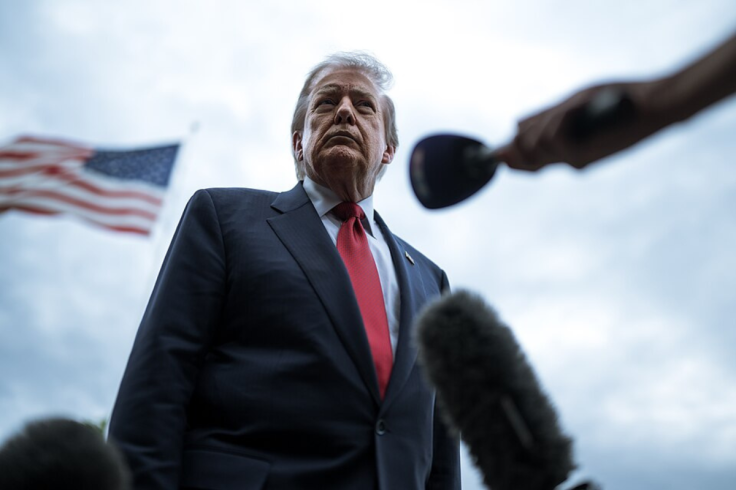
The US Department of Justice has told a federal court that the Kennedy Center in Washington could become an 'unsafe, decrepit structure' requiring demolition if renovation work stalls during the Trump naming dispute.
The warning was made in a new filing opposing an emergency injunction, placing the Kennedy Center Trump legal battle at the center of a wider argument over funding, repairs, and presidential recognition.
The news came after President Donald Trump-appointed board members approved a resolution to credit him for helping secure renovation funding. The proposal would not formally rename the performing arts complex, but would place the words 'Renovated and restored by President Donald J. Trump' on its facade.
That is where a relatively narrow naming dispute became something much larger. The Justice Department's position is that the legal fight could jeopardize the building's future. Opponents say the board is testing the limits of its authority over a memorial created by Congress for President John F. Kennedy.
How the Kennedy Center Trump Legal Battle Reached Court
Representative Joyce Beatty, an Ohio Democrat and ex officio Kennedy Center board member, sought an emergency injunction to stop Trump's name from being added to the building. Her request followed an earlier ruling that prevented the center itself from being renamed after the president.
The Justice Department argued that the injunction should not be granted. Its filing said delay would leave the venue vulnerable to further deterioration. 'The Center will deteriorate further into an unsafe, decrepit structure that will be required to be taken down,' the department wrote.
It is an unusually blunt claim in a dispute largely centered on plaques, signs, and statutory authority. The filing does not say demolition is imminent. Rather, it presents demolition as the eventual consequence of a failure to complete structural rehabilitation.
The board's resolution would see Trump recognized in several places around the complex. According to the court dispute details, his name could appear twice on the entryway sign and at another location on the grounds.
Beatty's legal team has described the renewed effort as 'deja vu all over again,' referring to the earlier court decision. Their central argument is straightforward: Congress, not the Kennedy Center board, has the power to change the name of a national memorial.
That distinction matters. The Kennedy Center is not merely another Washington venue, however grand its stages or famous its honorees. It was established as a living memorial to Kennedy, which makes any attempt to attach another president's name especially fraught.
Beatty has called the board's move a 'breathtaking act of defiance.' In her statement, she said she would continue opposing what she described as unlawful conduct.
'I will continue to stand up against all unlawful acts, enough is enough,' Beatty said. 'The Kennedy Center is a sacred space that belongs to the American people.'
She also accused Trump's handpicked board of flouting court orders and attempting to work around judicial rulings. Those accusations remain part of the active political and legal dispute, rather than findings made by a court.
Kennedy Center Trump Legal Battle Raises Funding Questions
The Justice Department has tied its position to the center's finances. It said donors could withdraw support if Trump and his administration were not prominently recognized for their role in funding the project.
'Without the prominent recognition of the Trump Administration, and President Trump's efforts, the donors will not contribute, and the Center will continue to be in a financial and structural death spiral,' the department wrote.
The department pointed to Trump's role in securing congressional funding through the One Big Beautiful Bill Act, alongside privately funded endowment efforts. It argued that an injunction could stop financial contributions and halt rehabilitation work.
The filings do not identify the donors cited by the Justice Department, disclose what commitments they made, or provide a timetable for the renovations. They also do not establish whether recognition of Trump is a formal condition of any contribution. Those details could prove important as the case develops.
The renovation debate has already produced separate concerns about the work itself. An anonymous whistleblower alleged several weeks ago that parts of the project had been rushed and poorly executed, potentially creating further costs.
Senator Sheldon Whitehouse wrote to Matt Floca, the Kennedy Center's acting executive director appointed by Trump, about those allegations. Whitehouse said the center had pursued work driven by the president's preferences rather than the building's needs.
'Instead of pursuing renovations tailored to the building's actual needs, the Center rushed a series of renovations driven by the President's aesthetic whims and his desire to star in a series of televised events in December,' Whitehouse wrote.
The whistleblower's claims have not been independently verified. Still, they give the naming dispute an awkward extra dimension. The fight is no longer only about whose name appears on a sign. It is also about who decides what gets repaired, who pays for it, and whether the work will hold up.
© Copyright IBTimes 2026. All rights reserved.