

Trump Floats Secret 17-Page Order Claiming China Rigged 2020 – Critics Warn Of Election Power Grab
A draft executive order alleging foreign interference in US elections circulates, raising legal and constitutional concerns.
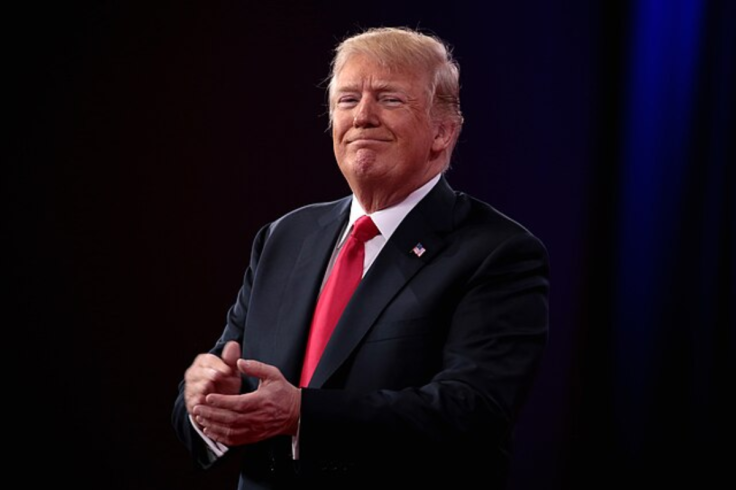
A secretive 17-page draft executive order alleging foreign interference and proposing extraordinary presidential authority over US elections is circulating in political circles, sparking alarm among legal experts and reigniting debate over the limits of executive power in American democracy.
President Donald Trump's second term has already been marked by an expansion of executive actions that reshape federal power, but the latest leaked document, described by its proponents as an executive order draft, goes far beyond routine policy changes. It asserts that a foreign power interfered in a past election and uses that allegation as the basis to declare a national emergency to control key aspects of US voting procedures.
Draft's Shadowy Origins And Rapid Circulation
The draft 17-page order originated not from the White House official channels but from pro-Trump activists and advisers who say they are in close contact with senior figures in the Republican establishment. These individuals have been campaigning to convince the President to adopt the document's provisions as a formal executive order.
Florida lawyer Peter Ticktin, a former classmate of the President and participant in Trump's legal challenges after the 2020 election defeat, has publicly advocated for the draft. He told media outlets the draft reflects an 'awareness' of foreign interference in US elections that proponents claim justifies a national emergency. The Washington Post, which obtained the draft descriptions, quoted Ticktin as saying that the draft would give the President 'the ability to deal' with what it calls foreign influences undermining election integrity.
While precise details of the full 17 pages have not been publicly released, summaries indicate the proposal would assert that alleged interference by the People's Republic of China in the 2020 presidential contest constitutes a national security threat. On that basis it would unlock presidential authority under emergency powers to restructure how elections are administered, restrict mail-in ballots, impose voter identification requirements, and exert oversight over voting machines in future elections.
If this proves accurate and this 17-page document exists, it's a game changer.
— AwakenedOutlaw⚒️ (@AwakenedOutlaw) February 26, 2026
Trump could quickly invoke his Executive Order #13848 that he first signed back in 2018. You know, the same one that Biden oddly renewed every year to keep in place.
Yeah, that one. 😎
It's… https://t.co/igKQhcjd6a pic.twitter.com/QtwKQoWkSV
Legal And Constitutional Challenges
Experts warn that the draft, if acted upon, would be squared against clear constitutional limitations. Under the US Constitution, the conduct and administration of elections fall primarily under the jurisdiction of state legislatures; the President has no inherent authority to unilaterally prescribe voting rules. Legal scholars quoted in the reporting emphasise that federal emergency powers do not extend to overriding state control of election systems.
'Under the Constitution, it's the legislatures and states that really control how a state conducts its elections, and the president doesn't have any power to do that,' Ticktin himself acknowledges when discussing the draft.
If implemented, such an order would face almost immediate judicial scrutiny. Past federal court rulings have consistently reaffirmed that presidential emergency powers, such as those found in the International Emergency Economic Powers Act and related statutes, cannot be used to displace state sovereignty unless Congress has given clear authorisation, which it has not in the realm of election law. Legal analysis of these emergency powers shows that courts do not permit 'catch-all' national security claims to override explicit constitutional structures.
In addition, scholars note that declaring a national emergency on the basis of foreign interference in a past election, rather than a present, demonstrable threat, has no clear precedent in US law and would almost certainly be struck down. Constitutional law experts emphasise that emergency powers have traditionally been invoked to address immediate crises, wars, natural disasters and economic collapse, not to retroactively address electoral outcomes.
Breaking WaPo:
— Kyle Griffin (@kylegriffin1) February 26, 2026
Pro-Trump activists who say they are in coordination with the White House are circulating a 17-page draft executive order that claims China interfered in the 2020 election as a basis to declare a national emergency that would unlock extraordinary presidential…
Political Stakes, Backlash And Support
Trump and his allies have spent years asserting, without evidence upheld in court, that the 2020 presidential election was stolen from him. These assertions fuel the political logic behind the 17-page draft; its proponents argue that identifying foreign interference as a 'national security emergency' legitimises extraordinary action. But critics see a direct line from those long-debunked claims to a strategy that would empower the executive branch to manipulate the mechanics of elections.
Opposition voices, including civil rights groups and national security scholars, warn that such a move would erode public trust in democratic processes and establish a dangerous precedent where accusations, rather than evidence, justify the suspension of constitutional norms. The Brennan Centre for Justice, a non-partisan research group, has documented patterns of efforts that target election officials and civic organisations, arguing these pressures can function as tools of intimidation rather than legitimate legal claims.
Other Republican figures have rejected the notion of presidential overreach into electoral administration. Historically, US courts have upheld that states set their own voter qualifications and processes, and Congress alone can set the 'times, places and manner' of federal elections under Article I of the Constitution. Any attempt by the executive to circumvent this dual structure would invite partisan conflict and constitutional challenge.
For American voters facing a midterm election cycle later this year, the prospect of an executive order that could reshape voting mechanisms strikes at the heart of democratic participation. Legal battles over the draft's legitimacy are almost certain if Trump pursues it, with courts becoming the arena where the fate of future elections may be decided.
The secretive circulation of this 17-page document thus reflects not just a policy proposal, but a broader struggle over the fundamental rules governing American democracy.
A draft executive order of this nature, positioning itself as a national emergency intervention in elections, would be among the most extraordinary assertions of presidential authority seen in US history.
© Copyright IBTimes 2026. All rights reserved.