

Thanks To Trump, America Is Reportedly Moving In The Direction Of 'Autocracy'
Institutional shifts, prosecutions and watchdog reports suggest measurable democratic erosion in the United States.
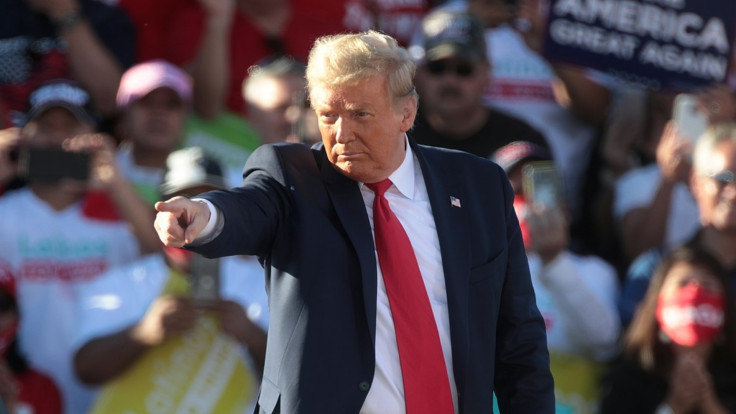
The arc of American politics has, critics warn, begun to bend towards autocracy rather than democracy, and recent institutional shifts and expert assessments suggest that shift is now measurable.
Over the past year, a combination of executive action, politicised prosecutions and a steady erosion of civic norms has prompted leading democracy monitors, former intelligence officials and legal scholars to flag the United States for 'autocratising' trends.
Those concerns rest on documentary evidence, including court filings and dockets, White House directives and public transcripts, and on quantitative indices that track democratic backsliding globally.
Experts Say Measurable Backsliding Is Underway
Independent democracy indices and civil-society monitors report deterioration in the US's democratic health. The Varieties of Democracy (V-Dem) 2025 report documents expanding patterns of 'autocratisation' worldwide and identifies behaviours, weakening judicial independence, curbing media space, and executive aggrandisement, that mirror recent moves in Washington.
@nytopinion While the United States is not yet close to a full-on autocracy, the @nytimes editorial board outlines some of the warning signs of democratic erosion already taking place, thanks to the efforts of President Trump. | 🎥 The editorial board and @stephanieshen18 #theeditorialboard #nytopinion
♬ original sound - New York Times Opinion - New York Times Opinion
Freedom House's 2025 country assessment similarly warns of mounting pressures on political rights and civil liberties, while CIVICUS last month downgraded the United States' civic-space rating from 'narrowed' to 'obstructed', citing federal interventions against protest movements and heightened legal pressure on journalists and activists.
Those findings are reinforced by polling: a Pew Research Centre study in December 2025 found public trust in government at a near-historic low, a symptom often accompanying democratic erosion.
Institutional Changes And Legal Controversies
The tempo of institutional change under Trump has been fast and tangible. The White House has issued executive actions reshaping education, federal grantmaking and the regulatory footprint of federal agencies ,moves that opponents say centralise power and restrict dissenting voices within public institutions. The White House's own published transcripts and presidential actions catalogue those directives, including broad education orders issued in January 2025.
At the same time, the Justice Department's behaviour has fuelled alarm. Multiple recent prosecutions of prominent critics, coupled with reporting of resignations among career prosecutors and journalists' accounts of pressure on DOJ offices, have prompted questions about the politicisation of the federal apparatus.

Reuters and the Financial Times have documented examples where US Attorneys aligned with the administration brought or pursued charges that critics describe as retaliatory; in one notable case the Department later failed twice to secure grand-jury support to re-indict a high-profile critic, raising fresh doubts about prosecutorial independence. Court dockets and public filings show the churn of high-profile cases and the Department's shifting posture since January 2025.
Committees And Testimony
The January 6th House Select Committee's transcripts and final report remain a touchstone for concerns about executive conduct and attacks on democratic process. The committee's archive, testimony and supporting materials document how presidential rhetoric and strategy in 2020 and 2021 intersected with violent mobilisation and efforts to subvert electoral certification.
Legal documents from multiple courts reflect the tug-of-war over the rule of law. Special Counsel Jack Smith's January 2025 report summarised investigations into presidential conduct, while subsequent post-election decisions by prosecutors and judges, and the winding down or dismissal of some cases after the 2024 election, have left unresolved questions about accountability and equal application of the law.
Quantitative data show a global turning point: according to V-Dem, autocracies outnumber democracies for the first time in decades, and many indicators used to identify 'autocratisation,' from concentrated executive power to reduced media pluralism, are rising. Yet the US still ranks as 'free' in some global indexes, and Freedom House's country score did not flip to 'not free'. The picture is therefore one of a democracy under strain, not yet fully transformed.
Outside the halls of power, ordinary Americans are already registering concern: low trust in institutions and high scepticism about the fairness of the system are signalling a fragile civic compact that could harden into something much more brittle if the documented patterns continue.
© Copyright IBTimes 2026. All rights reserved.