

Steve Bannon's Explosive Plan to Deploy ICE at Polling Stations Sparks Voter Intimidation Ahead of Midterms
Former Trump strategist's call for Immigration and Customs Enforcement at polling stations raises legal alarms and civil rights concerns ahead of the 2026 midterm elections.
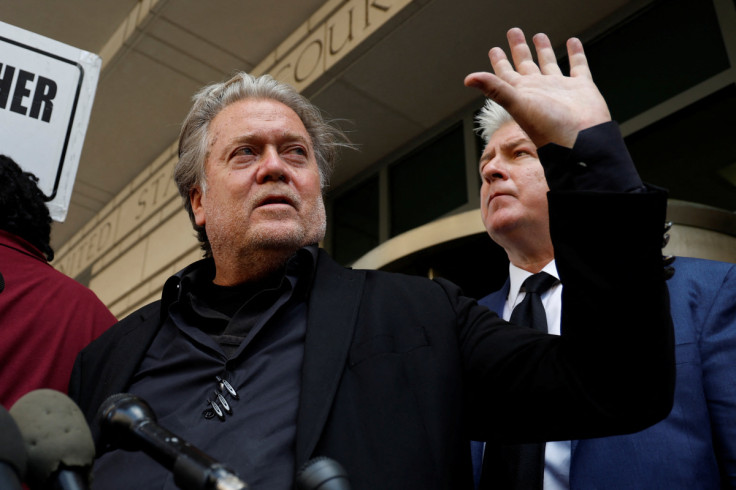
Steve Bannon, a former chief strategist to President Donald Trump and influential political commentator, publicly asserted that U.S. Immigration and Customs Enforcement (ICE) would 'surround the polls' during the November midterm elections. Bannon made the remarks on his own War Room podcast, a venue with a large online audience.
These comments have intensified already fraught national debates over election integrity and voter rights. Legal experts, election officials, and civil liberties organisations have swiftly criticised the proposal, arguing it could violate longstanding federal law and chill voter participation.
Legal Framework And Expert Warnings
Under United States law, the deployment of federal agents at polling locations carries strict limits. Federal and state statutes explicitly ban armed federal forces from acting in a way that could influence or interfere with elections. According to a detailed legal explainer by the Brennan Center for Justice, 'It is illegal to deploy federal troops or armed federal law enforcement to any polling place,' and doing so 'may be a federal crime.'
Federal criminal law also prohibits intimidation of voters. Title 18 U.S. Code §594 criminalises efforts to 'intimidate, threaten, coerce' any person for the purpose of interfering with their right to vote. A report from the U.S. Department of Justice further emphasises that protections against voter intimidation extend from voter registration through to ballot counting.
Civil rights groups and legal scholars highlight that even the appearance of armed federal agents near polls can deter eligible voters, particularly among historically marginalised communities. Official guidance to election administrators defines voter intimidation as actions 'reasonably calculated to instil fear,' which could include uniformed officials aggressively approaching voters.
These protections exist within a broader legal architecture designed to safeguard free and fair elections. The Voting Rights Act of 1965, for example, historically allowed federal oversight of discriminatory practices in jurisdictions with a history of voter suppression. Though portions of that statute have since been amended, its original mandates reflect the high legal priority placed on preventing electoral interference.
@nowthisimpact Trump's former White House chief strategist Steve Bannon — who exchanged thousands of texts and emails with Jeffrey Epstein btw — is calling for ICE agents to surround polling places ahead of the 2026 midterms, despite no evidence of widespread voter fraud. If the federal government can send officers to interfere in state elections, we're living under a dictatorship.
♬ original sound - NowThis Impact - NowThis Impact
Bannon's Public Comments And Political Context
On 4 February 2026, Bannon stated on his War Room podcast that ICE agents would be present at polling stations during the November midterm elections with the aim of preventing supposed election theft. Phrases attributed to him include 'You're damn right we're gonna have ICE surround the polls come November,' though he has provided no official policy details or authorisation from any agency.
Bannon's assertion aligns with repeated claims by former President Trump and his allies alleging widespread election fraud in past contests, claims that have been widely debunked by courts and election officials. Trump himself has advocated for increased federal involvement in election processes, including saying Republicans should "nationalise voting" in key states, a proposal that has raised constitutional concerns among legal experts.
Importantly, Bannon's position reflects his ongoing influence in conservative political strategy, particularly through media platforms rather than formal government authority. There is no evidence that the Department of Homeland Security or any federal agency has issued orders to station ICE officers at polling places, and Bannon's comment appears to be more a projection of intent than an enacted policy.
BREAKING: Steve Bannon calls for ICE to surround polling stations to prevent elections from being “stolen.” We need to call this out for what it is. They want to intimidate Black and brown AMERICAN CITIZENS and keep them from voting. pic.twitter.com/k1C1HcXPAL
— Trump Lie Tracker (Commentary Account) (@MAGALieTracker) February 4, 2026
Reactions From Civil Rights Advocates And Election Officials
Election officials across the United States have expressed grave concerns about the prospect of federal immigration agents near polling sites. Many state election administrators have begun contingency planning, anticipating legal challenges and public confusion should such deployments occur.
Civil rights advocates argue that the presence of federal agents like ICE around polling places could itself act as voter suppression, disproportionately discouraging turnout among immigrant communities and legally protected minority groups. These warnings are backed by historical precedent showing that law enforcement presence at election sites can depress participation due to fear of legal entanglement.
Democratic lawmakers and voting rights organisations have also denounced the idea as an unwarranted expansion of federal reach into an area traditionally administered by states under the U.S. Constitution. Opponents emphasise that existing voter intimidation laws make it unlawful for officials, whether federal or state, to engage in conduct that dissuades eligible citizens from exercising their franchise.
International And Civil Liberties Perspectives
Legal experts note that unfettered federal presence at polling places could set a dangerous precedent, undercutting the autonomy of state-run electoral processes that are central to U.S. federalism. The constitutional framework, reinforced over decades of case law and statutory development, assigns primary authority for conducting elections to state and local jurisdictions, with the federal role limited to oversight only when discrimination is shown.
Civil liberties organisations maintain that enforcing voter intimidation laws and protecting the right to vote freely and voluntarily are foundational to democratic legitimacy. The Freedom to Vote coalition and similar advocacy groups argue that any move perceived as coercive, such as deploying immigration enforcement near ballot boxes, would erode public trust and could itself become subject to legal challenge.
Steve Bannon's proposal has triggered urgent legal scrutiny and deep political debate, with experts warning that federal enforcement presence at polling places could violate established law and suppress voter participation ahead of the 3 November midterm elections.
© Copyright IBTimes 2026. All rights reserved.