

What Does Mistrial Mean? Lindsay Clancy's Ex-Husband Breaks His Silence Over 'Extraordinarily Painful' Retrial
After a jury could not agree, Lindsay Clancy's case remains unresolved, leaving a grieving family facing the deeply painful prospect of another trial

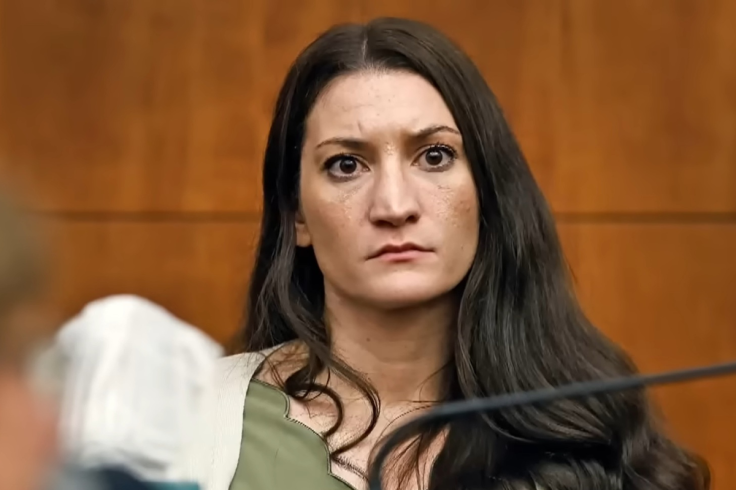
A mistrial was declared in Lindsay Clancy's murder case at Plymouth County Superior Court in Massachusetts on Friday, 4 September, after jurors failed to reach a unanimous verdict following seven days of deliberations. Her ex-husband, Patrick Clancy, later said through his attorney that the prospect of another trial over their three children's deaths would be 'extraordinarily painful.'
The ruling ended the trial without a verdict but did not end the criminal case. Clancy, 36, remains charged with murder and is expected to remain at a psychiatric hospital while the proceedings continue. Prosecutors have not yet announced whether they will seek a second trial.
What Does a Mistrial Mean in the Lindsay Clancy Case?
A mistrial occurs when a trial cannot be completed with a valid verdict. In this case, Judge William Sullivan declared one after jurors repeatedly reported that they could not unanimously agree on whether Clancy was criminally responsible for killing her children.
A mistrial following a deadlocked jury is neither a conviction nor an acquittal. The charges remain pending, and prosecutors may seek another trial. The defence also has a Rule 25 motion pending, which asks the judge for a required finding of not guilty on the ground that the evidence was legally insufficient to sustain a conviction.
Clancy does not dispute that she killed Cora, 5, Dawson, 3, and Callan, eight months old, at the family's Duxbury home on 24 January 2023. She pleaded not guilty, and her defence argued that postpartum psychosis left her not criminally responsible under Massachusetts law.
Under Massachusetts law, criminal responsibility is a legal question rather than simply a medical diagnosis. Once the issue is properly raised, prosecutors must prove beyond a reasonable doubt that the defendant was criminally responsible. A person is not criminally responsible if, because of a mental disease or defect, they lacked the substantial capacity to appreciate the criminality or wrongfulness of their conduct or to conform their conduct to the law.
Prosecutors argued that Clancy acted deliberately and remained able to understand and control her actions. The defence maintained that her mental illness deprived her of criminal responsibility.
Patrick Clancy Speaks After Mistrial
Hours after Sullivan declared the mistrial, attorney David Meier released a statement on Patrick Clancy's behalf thanking the court and jurors for their work.
The statement said the loss of Patrick's children was something from which he would never recover and that there would never be closure. It added that the prospect of reliving the tragedy through another trial was 'extraordinarily painful' for Patrick and his family.
The statement did not urge prosecutors either to retry the case or to abandon it. Patrick had previously spoken publicly about Lindsay, including asking people to forgive her after the children's deaths. He also testified as the prosecution's first witness during the trial.
During his testimony, Patrick described leaving the family home on 24 January 2023 to pick up medicine for one of the children and collect takeaway food. When he returned, he found Lindsay injured outside the house and later discovered the children in the basement.
Jury Deadlock and What Happens Next
The jury told the court three times that it could not reach a unanimous decision. During the final phase of deliberations, the foreperson reported concerns that one juror was not applying the court's reasonable-doubt instructions as other jurors believed they should be applied.
Defence attorney Kevin Reddington sought further questioning or removal of that juror. Sullivan declined to intervene further in the deliberations. The defence then sought emergency relief from the Massachusetts Supreme Judicial Court to delay the mistrial declaration and pursue further inquiry, but the request was denied.
Sullivan subsequently declared the mistrial, leaving the prosecution unresolved. Plymouth County District Attorney Timothy Cruz said there would not be an immediate decision on whether to retry Clancy.
Clancy is due back in court on 29 September for a status hearing, trial assignment and consideration of the Rule 25 motion. Sullivan has indicated that, if another trial is pursued, he would prefer it to take place 'sooner rather than later,' although no retrial date has been set.
© Copyright IBTimes 2026. All rights reserved.