

NASA HiRISE Photos of 3I/ATLAS Fuel Alien Frenzy as Conspiracy Theorists Insist the Agency Is Concealing the Truth
NASA reaffirms that 3I/ATLAS is a normal comet, albeit one that originated outside the solar system.

NASA's long-delayed release of new HiRISE photographs of the interstellar comet 3I/ATLAS has ignited a wave of online conspiracy theories, with critics claiming the agency is hiding crucial information.
Instead of the sharp, groundbreaking visuals many expected, the recently unveiled images were surprisingly blurry, a result that has only intensified speculation about what the comet truly is and whether NASA is being fully transparent.
The images, released after a government shutdown stalled the public update, were meant to showcase views captured by several of NASA's major missions. Instead, the event left viewers perplexed, disappointed, and suspicious.
A Highly Anticipated Reveal That Raised More Questions
Since its discovery on 1 July 2025 by the ATLAS observatory in Chile, 3I/ATLAS has drawn intense global interest. Its unusual trajectory, rare anti-tail, peculiar chemistry, and mysterious interstellar origin made many believe the agency's long-awaited images would be extraordinary. Some scientists, including Harvard astrophysicist Avi Loeb, openly suggested the comet could challenge traditional assumptions about interstellar visitors.
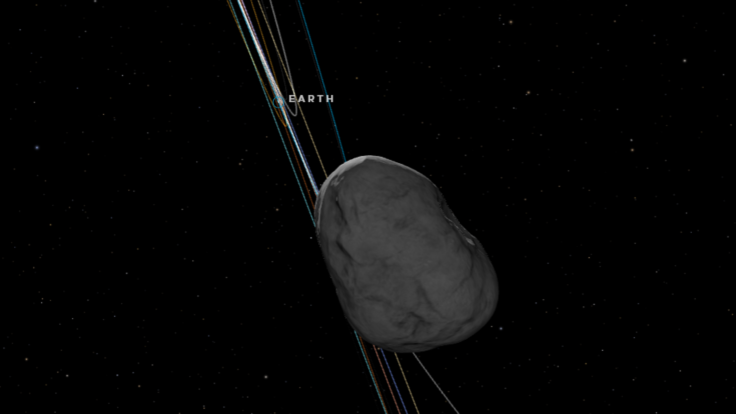
That anticipation was evident during NASA's livestream. As soon as the fuzzy photos appeared, reactions shifted dramatically. Confusion quickly turned into frustration.
'People were expecting something big,' one viewer wrote online. 'Instead, the update felt basic. Almost dismissive.'
NASA Defends the Blurry Images, Citing Technical Limits
NASA later explained that none of the spacecraft involved, including HiRISE aboard the Mars Reconnaissance Orbiter, MAVEN, STEREO, SOHO, Psyche, and Lucy, were designed to track a fast-moving, faint object passing through the solar system at enormous distances.
HiRISE, despite being the most powerful camera ever sent to another planet, was built to image the Martian surface, not an interstellar comet hurtling through space. NASA even published a comparison photo showing the stark difference between its usual razor-sharp Martian captures and the indistinct glow of 3I/ATLAS.

Leslie Tamppari of NASA's Jet Propulsion Laboratory reinforced this point, noting that the event was 'one of those rare occasions where we get to study a passing space object, as well.'
Still, for many viewers, the explanation felt incomplete, especially after months of waiting.
Avi Loeb Says the Real Issue Isn't Image Quality
Loeb, one of the most vocal figures studying 3I/ATLAS, dismissed NASA's presentation as 'fuzzy' and unhelpful in assessing what the object truly is. In a new Medium essay, he argued that the agency focused too heavily on optics and not enough on addressing the comet's unexplained characteristics.
He reiterated that NASA's insistence on calling 3I/ATLAS a 'normal comet' ignores anomalies he believes deserve deeper consideration, including its odd proportions, puzzling trajectory, and staggering speed of roughly 153,000 miles per hour.
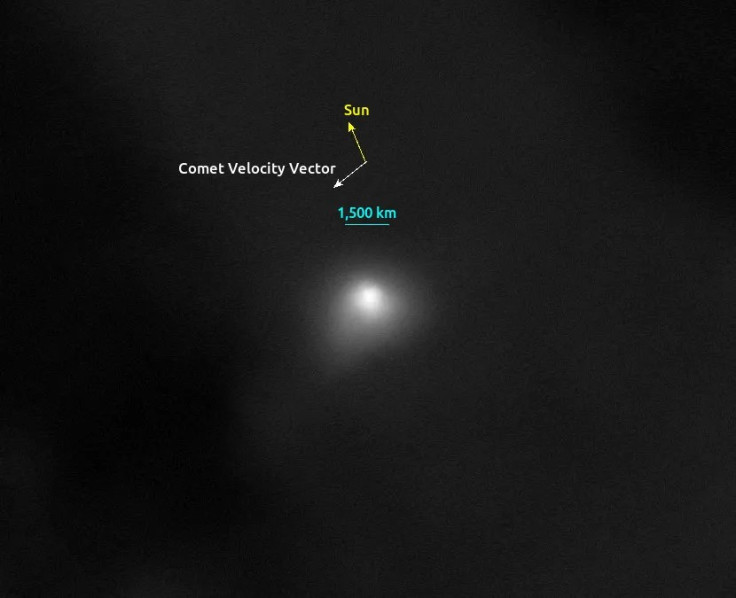
'The image taken by the HiRISE camera shows a fuzzy ball of light,' he wrote, explaining that spacecraft jitter caused the glow to smear across several pixels. He added that the blur makes it impossible to rule out unconventional possibilities.
Loeb told The Post he is now awaiting additional data to search for potential fragments, whether natural ice or 'mini probes for a technological object.'
He has also previously accused NASA of withholding images during the shutdown to avoid confronting 'inconvenient truths' about the comet's nature.
NASA Reaffirms: This Is a Comet — Nothing More
The unexpectedly blurry images, combined with NASA's limited explanations, have now revived long-running debates about secrecy within space agencies. Online forums erupted within hours of the release, with users questioning why such a significant interstellar object would be presented with so little clarity.
For many, the lack of detail has become fuel for renewed alien speculation, widening the trust gap between experts and the public. Amid growing speculation, NASA Associate Administrator Amit Kshatriya reiterated that all available evidence indicates that 3I/ATLAS is a normal comet, albeit one that originated outside the solar system.
'This object is a comet. It looks and behaves like a comet, and all evidence points to it being a comet,' he said during the agency's conference at Goddard Space Flight Centre.
Furthermore, as 3I/ATLAS moves toward its closest pass to Earth around 19 December, still at a safe distance, the debate around it is only intensifying. NASA maintains that scientific limitations, not secrecy, produced the blurry images.
Meanwhile, for conspiracy theorists, the blurry visuals are now being held up as proof that NASA is concealing something.
© Copyright IBTimes 2026. All rights reserved.