

'Your Leaders Are Lying to You' — Iran's Revolutionary Guard Sends Chilling Warning Directly to Israeli Phones
The IRGC's mass text messages to Israeli civilians mark a new front in the ongoing conflict, aiming to sow fear and distrust
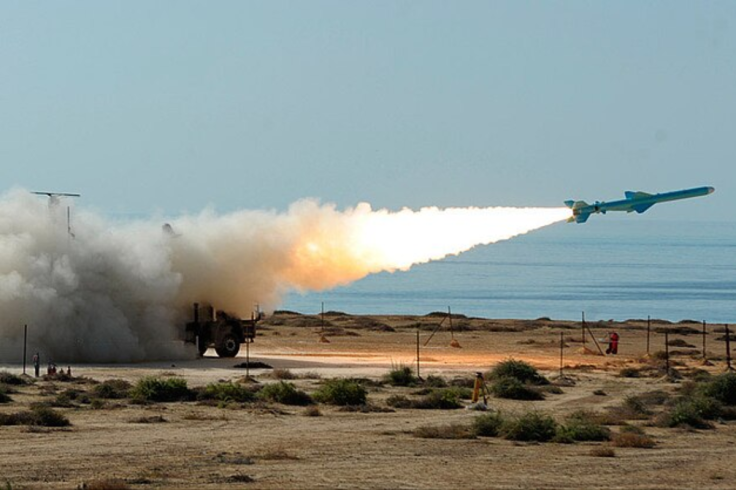
As Iran and Israel trade missiles and drones in an escalating regional conflict now entering its second week, Tehran has opened a new front one fought not with warheads, but with words sent directly to civilian mobile phones. The Islamic Revolutionary Guard Corps (IRGC) transmitted a mass text message to Israeli citizens, claiming that the last American radar system in the region had been destroyed, that their government leaders were lying to them, and that no shelter could keep them safe from incoming missiles. The message, which circulated widely on social media this week, was signed off by the IRGC itself.
The text told recipients to leave the country, warning that missiles were already on their way. The move marked a significant escalation in the information war running parallel to the kinetic conflict, as both sides have increasingly sought to speak directly to the other's civilian population to sow doubt, fear, and distrust in their respective governments.
A Claim Rooted in a Real Military Boast
The text message was not sent in isolation. The IRGC had already declared, via its website Sepah News, that 'US THAAD radars deployed in the United Arab Emirates and Jordan, as well as the US FPS-132 over-the-horizon radar ["Desert Eye"] stationed in Qatar, have been destroyed by the missile and drone units of the Islamic Revolutionary Guard Corps.' That claim formed the basis of the warning sent to Israeli phones—that without American radar coverage, Israeli civilians were now defenceless and unwarned.
Neither the United States nor Israel has confirmed the full destruction of those radar systems. The IDF has, however, acknowledged that Iran's attacks have targeted regional military infrastructure throughout the conflict. The IDF stated that 'throughout the war, the IDF has systematically targeted the aerial defence systems of the Iranian regime and its proxies across the Middle East,' reflecting how both sides have pursued each other's early warning and air defence networks as priority targets.
Both Sides Are Talking Past the Battlefield
The IRGC's direct outreach to Israeli civilians mirrors a broader pattern of psychological operations that has accompanied the fighting since it began on 28 February 2026, when the United States and Israel launched coordinated strikes against Iran. Both sides have used text messages, social media, and broadcast warnings to try to destabilise civilian confidence in their own governments.
Iranian authorities sent a text message to the 10 million residents of Tehran on the first day of the conflict, urging them to 'travel to other centres and cities where it is feasible' amid ongoing joint US and Israeli strikes targeting more than 20 of Iran's 32 provinces. On the other side, Israeli Prime Minister Benjamin Netanyahu and Reza Pahlavi — the son of Iran's deposed shah — released video messages urging Iranian citizens to be 'vigilant and prepared' for what Pahlavi described as 'the final effort' to return to the streets.
The IRGC responded to those overtures by warning that the United States 'will no longer be safe,' with the Guards' Quds Force stating in a broadcast on state television that 'their happy days are over and they will no longer be safe anywhere in the world, not even in their own homes.'
@nopropagandanews #greenscreen Mass text from Iran military #war #iran #israel #internationalnews
♬ original sound - nopropagandanews
The Wider Conflict Raging Behind the Message
The text message to Israeli phones arrived against a backdrop of an increasingly ferocious exchange of fire. The IRGC declared on 8 March that Iran is capable of sustaining 'at least a 6-month intense war at the current pace of operations,' claiming to have targeted 'more than 200 sites linked to US and Israeli bases and facilities across the region.'
US President Donald Trump has predicted the war could last 'four weeks,' while Gen Dan Caine, Chairman of the Joint Chiefs of Staff, warned at the Pentagon that this was 'not a single, overnight operation' and that more US losses should be expected. Meanwhile, Trump appeared to rule out talks with Iran absent its 'unconditional surrender,' a position Iranian President Masoud Pezeshkian rejected outright, saying Iran's enemies 'must take their wish for the unconditional surrender of the Iranian people to their graves.'
The IRGC's mass text to Israeli civilians represents more than a psychological operation. It signals that Iran is deliberately attempting to fracture the relationship between the Israeli public and its government at a moment of maximum pressure. Whether the claims in the message are accurate or not, the act of sending it—at scale, to civilian phones—reflects a calculated effort to undermine civilian confidence in the Israeli government.
© Copyright IBTimes 2026. All rights reserved.