TikTok Trap Backfires: Father Who Lured Daughter's Alleged Rapist to Home and Shot Him Twice Faces Prison Time
Malik Chandler's confrontation with alleged abuser raises legal questions
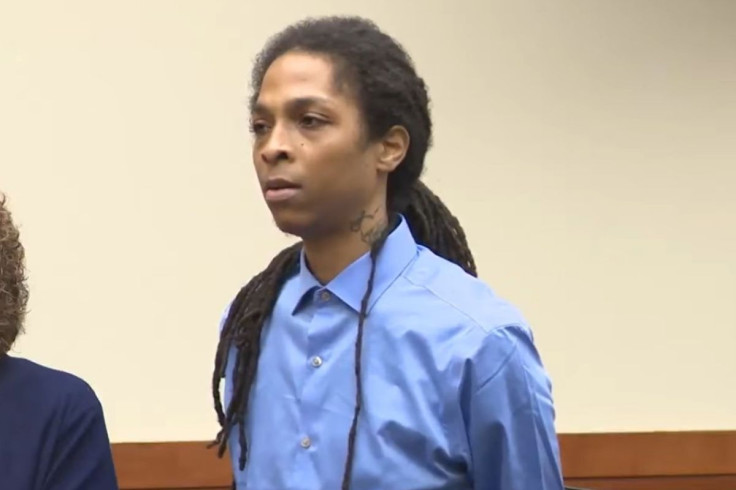
Malik Chandler, 31, is accused of shooting 20-year-old Diego Montoya Gonzalez twice during a confrontation at Chandler's Grove City home in July.
The case has drawn intense attention because Chandler says he did not initially intend to shoot Gonzalez. According to prosecutors, Chandler told investigators that he planned to beat Gonzalez, restrain him and call police. The encounter changed after Chandler said he believed Gonzalez was reaching for a gun. Chandler then retrieved his own firearm and opened fire. Gonzalez survived and was taken to hospital with two gunshot wounds.
The legal twist is what could turn the shooting into a far longer prison sentence. Court records show Chandler was already barred from possessing firearms because of a 2010 felony burglary conviction, when he was a juvenile.
The TikTok Trap Began After Alleged Abuse Was Discovered
The confrontation followed a deeply disturbing allegation involving Chandler's daughter. Prosecutors say the girl's mother discovered a video on the child's phone that allegedly showed Gonzalez sexually assaulting the 11-year-old at the family's home.
A Franklin County grand jury subsequently indicted Gonzalez on two counts of rape, five counts of pandering sexually oriented material and one count of obstruction of official business. Prosecutors have alleged that investigators also found additional material on Gonzalez's phone that forms part of the charges against him.
According to court documents, Chandler then used TikTok to communicate with Gonzalez while pretending to be his daughter. The objective, Chandler told investigators, was to bring Gonzalez back to the family home so he could be confronted and detained until police arrived.
🚨WHAT ON EARTH?!!!
— Matt Van Swol (@mattvanswol) August 4, 2026
An Ohio dad who HUNTED DOWN his 11-year-old daughter's r*pist...
...is sitting in jail on a HIGHER bond than the man who r*ped his 11-year-old daughter AND AN INFANT.
Yes, you read that right... the FATHER has a higher bond than the man who r*ped his… pic.twitter.com/7Cs98vXbUy
Chandler Shot Gonzalez Twice During the Encounter
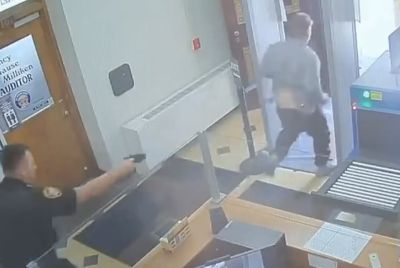
When Gonzalez arrived at the Grove City property, the planned confrontation quickly escalated.
Chandler told investigators that he believed Gonzalez reached towards his pocket as though he had a weapon. Chandler then picked up his own firearm, which was reportedly on a counter, and fired twice.
Officers responding to the shooting found Gonzalez sitting in a chair with two gunshot wounds. He was taken to Grant Medical Center in Columbus, where his injuries were reportedly not considered life-threatening. Police initially said Gonzalez had suffered multiple gunshot wounds before he was transported to hospital.
The central legal question will be whether Chandler's claimed fear of an imminent armed attack was sufficient to justify the shooting. Ohio law recognises self-defence, but a defendant's claim does not automatically end a prosecution.
The Original Felonious Assault Charge and Its 12-Year Ceiling
Prosecutors initially charged Chandler with felonious assault following the shooting. Ohio law defines felonious assault to include knowingly causing serious physical harm or attempting to cause physical harm with a deadly weapon. It is generally a second-degree felony.
Under Ohio's current sentencing framework, a second-degree felony can carry an indefinite prison term with a minimum selected from two to eight years and a maximum that can reach 12 years. Recent Ohio appellate decisions have confirmed that 12-year maximum for felonious assault.
That meant Chandler's original case already carried substantial prison exposure.
The Weapons Charge That Changed Everything
The major development came when prosecutors added a weapons-under-disability specification to the case.
The reason is Chandler's criminal history. Court records show his 2010 felony burglary conviction meant he was prohibited from possessing a firearm. Ohio law prohibits certain people convicted of qualifying felony offences from knowingly acquiring, possessing, carrying or using a firearm. A violation of that law is a third-degree felony.
The additional charge matters because prosecutors are not simply alleging that Chandler fired a gun during an assault. They are also alleging that he was legally prohibited from having the gun in the first place.
That distinction substantially increases his potential exposure. Chandler could face up to 18 years in prison if convicted, compared with up to 12 years on the original felonious-assault case alone.
How a 2010 Burglary Conviction Transformed Chandler's Legal Exposure
The potential sentence illustrates how a separate weapons offence can dramatically change the stakes in a violent-crime prosecution.
Ohio's weapons-under-disability statute makes possession or use of a firearm by a prohibited person a third-degree felony. The additional charge therefore exposes Chandler to punishment beyond the sentence attached to the shooting itself.
Chandler pleaded not guilty; the court released him on $10,000 bond, with electronic monitoring and conditions requiring him to stay away from Gonzalez and his family. Prosecutors also alleged that Chandler later threatened Gonzalez's brother outside court, a claim Chandler denied.
Meanwhile, Gonzalez faces his own serious criminal case over the allegations involving Chandler's daughter. His prosecution and Chandler's shooting case are separate proceedings, meaning the allegations against Gonzalez do not automatically provide Chandler with a legal defence. Both cases remain ongoing.
© Copyright IBTimes 2026. All rights reserved.
- Recommended For You