

'Vladimir Putin's Daughter Is on a Mission to 'Cheat God or Nature' as Russia Plans Anti-Ageing Drug
Maria Vorontsova said research at the new Skolkovo laboratory will examine ageing, healthcare and the wider effects of longer lives
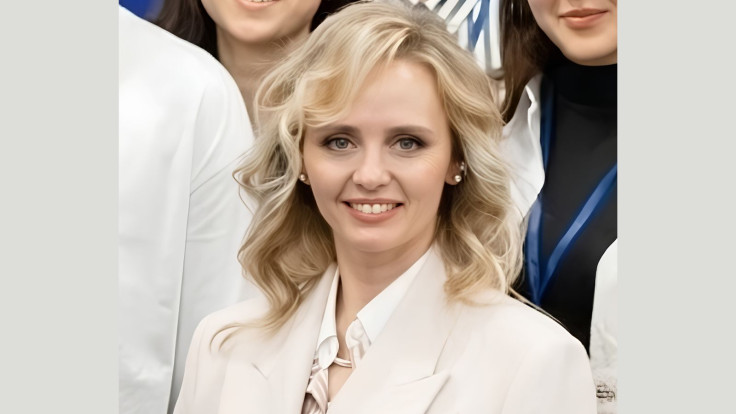
Vladimir Putin's daughter Maria Vorontsova outlined ambitions to extend human life at the recent launch of a longevity laboratory at the Skolkovo Moscow School of Management, describing research aimed at helping people 'cheat God or nature'.
The endocrinologist, 41, had previously appeared on Russian state television to discuss the prospect of a pill against ageing and the criteria for prescribing it. Her latest remarks outlined plans spanning everyday health and experimental ambitions, with Russia seeking to increase average life expectancy through modern medicine as well as habits established in childhood.
Vorontsova did not refer to her father at the launch. She linked future demand for treatments to the 'universal human fear of death', which she suggested could encourage healthcare providers to develop responses over the next two decades.
Anti-Ageing Pill Would Need Prescription Criteria
'Russia has every chance of being the first to invent a pill against ageing,' Vorontsova stated during her television appearance. 'It is important to establish the criteria for who should be prescribed this pill.'
'I think that within the next 10 to 20 years, we will definitely develop this new component of the healthcare system,' she continued.
'This will allow us to make further progress in this area within a more formal framework.'
That forecast concerned a new component of healthcare, leaving open when any particular medicine might become available. Her remarks expressed confidence in Russia's prospects without establishing that a treatment had been developed.
At the laboratory launch, Vorontsova also identified a barrier to the research itself. Ageing is not currently regarded as a disease, she explained. She argued that this creates regulatory difficulties for scientists seeking to launch clinical trials and investigate whether potential treatments can fulfil the ambitions being discussed.
Childhood Health Underpins Anti-Ageing Ambitions
Vorontsova's approach begins well before a person might seek medical treatment for ageing. She called for attention to health from childhood onwards, identifying a balanced diet, regular physical activity and medical check-ups as priorities. She also advocated reinforcing those habits through the education system, with the aim of allowing future generations to outlive their ancestors.
Such measures could support people in reaching 'their natural potential', which she estimated at 85 to 90 years, according to Vedomosti.
The estimate described the lifespan she believed people could reach through attention to their health. Vorontsova's more ambitious vision involves finding ways to exceed those natural limits, although the new Skolkovo laboratory will focus on the broader effects of longer lives on society.
Vorontsova is the daughter of Putin and his former wife Lyudmila Putina. Her academic background spans biology, which she studied at St Petersburg University, and medicine, which she studied at Moscow State University.
Putin Discussed Anti-Ageing Advances With Xi
The prospect of extending human life has also featured in the Russian president's own discussions about the direction of medical technology.
Putin discussed medical technology with Chinese President Xi Jinping on 3 September 2025, during a conversation captured on a hot microphone as they walked alongside North Korean leader Kim Jong Un.
Speaking through a translator, Putin suggested that 'human organs can be constantly transplanted, to the extent that people can get younger, perhaps even immortal'.
Xi responded, 'Some predict that in this century humans may live to 150 years old.'
At Skolkovo, the research agenda extends beyond individual treatment. A representative of the Skolkovo Moscow School of Management told Vedomosti that the laboratory would examine how increasing life expectancy affects healthcare, employment and public policy.
© Copyright IBTimes 2026. All rights reserved.