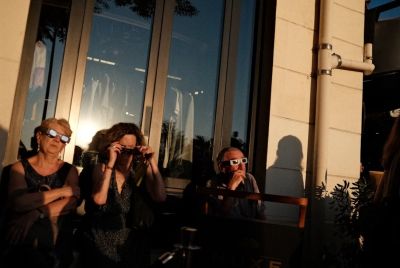
Total Solar Eclipse Hits Europe for First Time Since 1999 as Millions Watch From Spain to Iceland
Millions gather across Europe to witness a once-in-a-generation celestial event
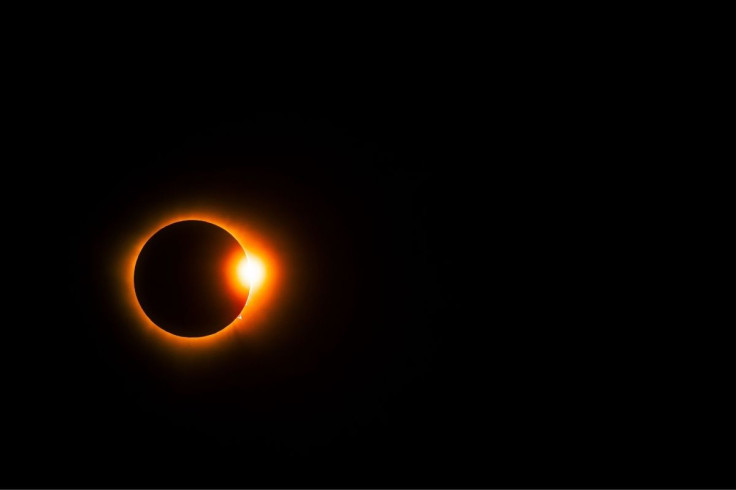
Millions of skywatchers across Europe looked to the heavens on Wednesday as a rare total solar eclipse swept across parts of the continent, marking the first time since 1999 that mainland Western Europe has witnessed such an event.
The eclipse's path of totality stretched from the Arctic through Greenland and Iceland before crossing northern Spain and a small part of Portugal. In these areas, the Moon completely obscured the Sun, plunging locations into temporary darkness and revealing the Sun's outer atmosphere, known as the corona. Elsewhere, including the UK, Ireland and much of continental Europe, observers experienced a dramatic partial eclipse.
Astronomers described the event as one of the most significant celestial spectacles visible from Europe in decades, drawing tourists, scientists and eclipse enthusiasts to key viewing locations across Spain and Iceland.
Millions Gather Along the Path of Totality
Northern Spain emerged as one of the most popular destinations for eclipse chasers, with visitors travelling from around the world to witness totality shortly before sunset.
Cities including Bilbao and A Coruña fell within the eclipse path, offering some of the most accessible viewing opportunities in Europe. Iceland also attracted significant interest, with Reykjavík among the largest population centres to experience complete totality.
Scientists noted that total solar eclipses are relatively rare for any given location, making the event a once-in-a-generation experience for many observers. The August 2026 eclipse is the first total eclipse visible from this part of Europe since the widely remembered eclipse of August 1999.
🇪🇸🇮🇸 A rare total solar eclipse is hitting parts of Europe today, with millions getting a chance to watch the sky go dark.
— Mario Nawfal (@MarioNawfal) August 12, 2026
Iceland and northern Spain are among the best spots, with totality lasting around 2 minutes.
Spain gets an especially wild view because the eclipse happens… pic.twitter.com/HUuw6B5m82
Why This Eclipse Was So Special
A total solar eclipse occurs when the Moon passes directly between the Earth and the Sun, completely blocking the Sun's visible disc for observers located within a narrow corridor known as the path of totality.
During totality, daylight briefly fades, temperatures can drop, and stars may become visible in the daytime sky. The event also provides a rare opportunity to observe the solar corona without specialised instruments.
NASA and the European Space Agency identified the eclipse as one of several major solar events scheduled to cross Europe over the coming years, but Wednesday's spectacle stood out because of its visibility across multiple European countries and its significance as the first major eclipse of its kind in nearly three decades.
UK Observers Witness Dramatic Partial Eclipse
Although Britain was outside the path of totality, large parts of the UK experienced one of the deepest partial solar eclipses seen in decades.
Skywatchers across England, Scotland, Wales and Northern Ireland were able to observe a substantial portion of the Sun obscured by the Moon, creating unusual lighting conditions during the afternoon and evening. Experts urged people to use approved eclipse glasses or indirect viewing methods to avoid eye damage.
The eclipse also generated widespread interest online, with observatories, broadcasters and scientific organisations providing live coverage for audiences unable to travel to the path of totality.
When Europe Will See Another Total Eclipse
For many viewers, Wednesday's event represented a rare opportunity that may not return for years.
While Europe is set to experience additional solar eclipses in the coming years, including another total eclipse crossing parts of Spain in 2027, astronomers say the 2026 eclipse will be remembered as the moment totality returned to Western Europe for the first time since 1999. The combination of accessible viewing locations, favourable weather conditions and widespread public interest transformed the celestial event into one of the continent's most anticipated scientific spectacles of the year.
© Copyright IBTimes 2026. All rights reserved.
- Recommended For You