Google Searches for 'Eye Damage' and 'Eyes Hurt' Soar in UK as Brits Stare at Solar Eclipse Without Glasses
Google searches for 'eyes hurt' jumped 5,000 per cent and 'eye damage' rose 700 per cent in the UK after the solar eclipse, as some viewers reported worrying vision problems.
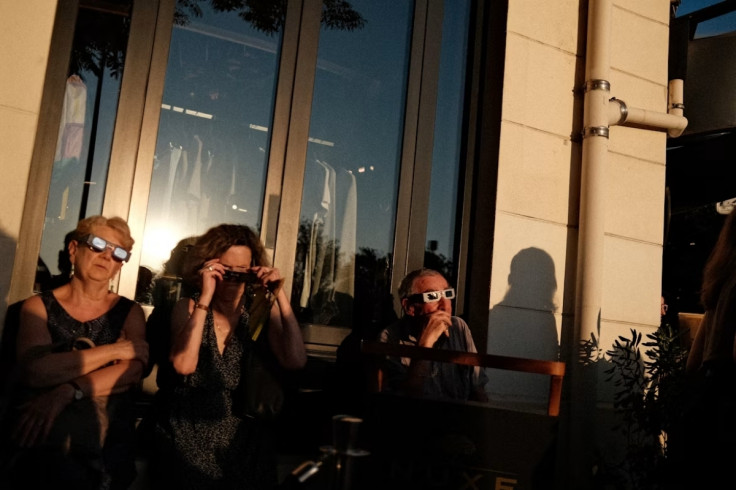
Google searches for 'eyes hurt' and 'eye damage' surged in the UK after thousands of people watched the solar eclipse without proper eye protection, with people reporting symptoms including blurred vision and eye discomfort following the event.
The spike came after the eclipse reached its peak across parts of Britain, with up to 95 per cent of the Sun obscured by the Moon in some areas. The rare spectacle drew large crowds to parks, beaches and open spaces, but experts had repeatedly warned that looking directly at the Sun could cause serious retinal damage.
According to data circulating on X, searches for 'eyes hurt' rose by 5,000 per cent compared with the same period a year earlier, while searches for 'eye damage' increased by 700 per cent. Searches for 'eclipse eye injury' were also reportedly rising as people began looking for answers about changes to their vision.
You can see what time Google searches for hurt eyes peaked. pic.twitter.com/HDlHfxPIVz
— Jono Read (@jonoread) August 12, 2026
The figures show just how quickly concern spread online after the event. They do not, however, establish how many people actually suffered permanent eye damage.
Brits Report Eye Problems After Watching the Eclipse
The reported search surge was accompanied by accounts from people who said they had watched the eclipse without suitable protection and later noticed changes in their vision.
One person claimed they had watched the eclipse without glasses while attempting to film it through a phone, saying they subsequently experienced serious problems with their eyesight. Another said they had stared at the event for around 20 minutes and experienced visual disturbances afterwards.
Google searches for ‘eyes hurt’ spiked immediately after Wednesday’s solar eclipse
— RTVisual (@RT_Visual_on_X) August 13, 2026
Millions had been warned to use proper eye protection, but a few heard it
The Sun briefly disappeared and common sense went with it pic.twitter.com/WT1wsI3Qr3
The reports remain individual accounts and should not be treated as medical diagnoses.
There was, however, evidence that some people sought professional help. Gordon Hay, clinical director of A&E at Moorfields Eye Hospital, said fewer than 30 people had either attended the hospital's A&E department or used its video consultation service by 9 am following the eclipse.
That figure covers Moorfields' own services rather than the whole of the UK, so it cannot be used to establish a nationwide total. The concern centres on solar retinopathy, which occurs when intense sunlight damages the retina. One of the more worrying features is that the injury may not hurt when it happens.
Mohamed Elalfy, president of the Royal College of Ophthalmologists, said the retina does not contain pain receptors, meaning people may not immediately realise that damage has occurred.
'Looking directly at the Sun during a solar eclipse can cause damage to the retina, potentially damaging the cells responsible for sharp central vision,' he said.
Symptoms can appear later and may include blurred or distorted vision, dark or blind spots, reduced colour perception and increased sensitivity to light.
Why Eclipse Eye Damage Can Be Difficult To Spot
The absence of immediate pain is particularly important because it can create a false sense that everything is fine.
Elalfy said symptoms could become apparent several hours after exposure. Some people recover over weeks or months, while others can experience permanent visual impairment.
That makes the Google search figures significant as a measure of public concern, but not proof of the scale of injury. A person searching 'eye damage' may simply be worried after looking at the eclipse, while someone with genuine retinal damage may not immediately recognise what has happened.
Experts had urged people to use certified eclipse glasses or indirect viewing methods rather than looking directly at the Sun. Some viewers improvised with household objects, including modified cereal boxes, while others used safer indirect techniques.
The eclipse itself was a major public event across Britain, with crowds gathering despite the warnings issued beforehand. Shops also reportedly struggled to keep up with demand for specialist eclipse glasses as people prepared to watch the phenomenon.
For anyone experiencing new visual symptoms after looking directly at the Sun, the reported guidance is to seek urgent medical attention rather than relying on online searches to determine whether damage has occurred.
© Copyright IBTimes 2026. All rights reserved.
- Recommended For You